
Everything seems to be advancing at an amazing speed nowadays. Why would you prepare a grilled cheese sandwich on an actual grill when you can just throw it into an automatic sandwich maker? Why would you have your mom over to show off your new apartment when you can just jump into FaceTime for a quick video call? Why would you drop by at the library when you can visit Wikipedia or simply do a Google search?
There is no doubt that we have become far more dependent on technology. In the 21st century, technology has evolved to accommodate a more convenient lifestyle and meet every need that could possibly need fulfilling. It makes our lives easier. You could even argue that technology has made us complacent; that we have come to depend on it to solve our problems.
Of course, these advancements are not just limited to our lifestyle, but it also revolutionalizes other aspects of life including the event industry. Here are five exciting, innovative event technologies that are gathering pace and adoption, and could redefine the industry in 2018.
Multi-Functional App
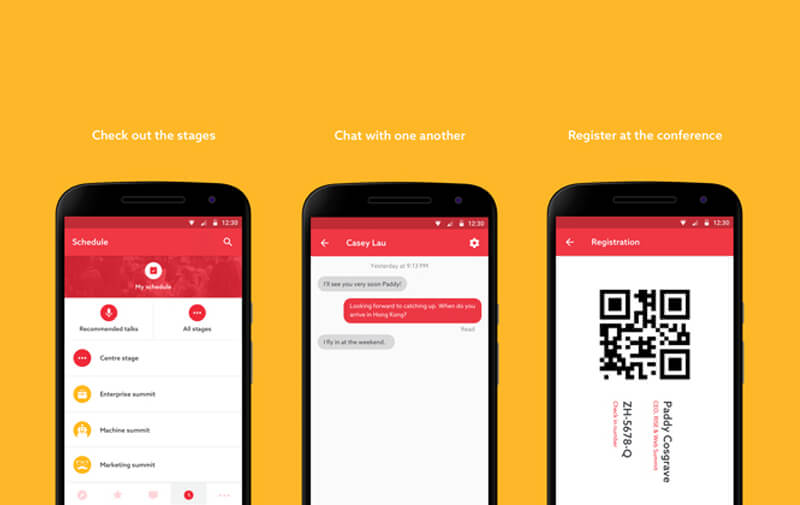
Event apps have taken the event industry by storm in recent years. Gone are the days where bulky, paper event brochures are handed out to participants to explain different activities, break down of the event schedule, and provide speakers’ information. Instead, event technologies like the event apps have incorporated all these aspects, while simultaneously giving participants the ability to socialize with other event participants and expand their network, before, during and after the event. The RISE app is one of such apps that demonstrated great potential during their 2017 event in Hong Kong.
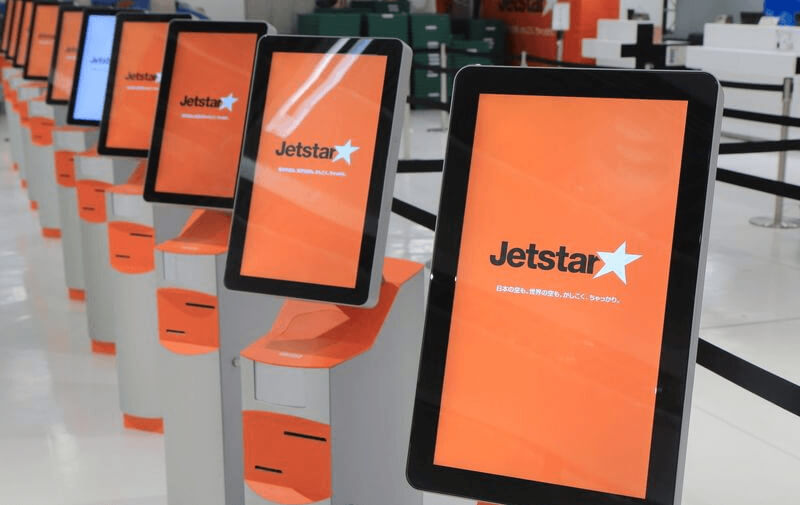
Self-Registration Kiosk
Nearly all airlines have switched to use self-service check-in kiosks. This technology can also be used in the event industry whereby it allows event participants to register themselves and print out their event badges. Not only it can be integrated into the multi-functional app; it can shorten lines and reducing wait times. With the self-registration kiosk, event organizers can also cut down on human resources that manage the registration. It can also streamline the registration process such that it is paperless and data can be transmitted directly to the system for easy tracking. Cvent is one of such technology provider.
Scheduling with Push Notification
With the multi-functional app, features like scheduling can be built that allows participants to read more about the different activities in an event, register for them, and to schedule them within their account. This feature acts as a reminder to notify the participants if the activity will be happening soon, or when the activity is over. As such, participants can customize their schedule based on their needs to optimize their event experience. It also provides participants or organizers the information, if a particular activity is over-subscribed. This kind of information will feed into the big data that will be discussed later on.
Interactive Q&A
There was a time when talks consisted of passive audience members. Thanks to technology, however, that has completely changed. Interactive Q&A tools such as Pigeonhole Live allows for text-to-screen and text-to-moderator communications so that moderators have control over what questions are being asked. With this technology (can also be included in the app), participants can now ask questions with ease, and moderators can quickly filter out ones that do not make sense or that disrupt the flow. Furthermore, because speakers can see the questions, they can choose when to answer the questions such that they do not get lost among the noise of status updates.

Big Data or Analytics
Big data is king in most of the industries; however, its potential remains unrealized in the event industry. Event organizers that gather data, before, during and after events, and capturing data from all sources (hashtags, social media, etc.), will be able to understand the event participants, analyze sentiments or movements within events. Some insights that organizers can derive are for example, who are the event participants, where are they from, what kinds of activity do they like, how engaged are they, etc. and these information allows event organizers to create better (or even customized) events in the future.
Bonus: Event Automation
Automation refers to the software and tactics that exists with the aim of streamlining, automating, and measuring tasks and workflows, so to increase operational efficiency and grow revenue faster. In the area of marketing, many departments have to automate repetitive processes or tasks such as social media, emails, and other website actions. The technology of automation makes these tasks easier for marketers. Therefore, the term “marketing automation” has grown to be a buzz-word, where marketers find marketing automation tools necessary for growth, including those capable of generating new leads, rolled up under the hood of marketing automation. Many might wonder what has this got to do with events?
Events also have their own kind of automation. GEVME is an excellent example of an event management and marketing tool that is dedicated to the automation of event planning processes. They are able to power the entire event lifecycle and create the best event experiences. These include website building, registration, email marketing, survey, etc.