


Apple is expected to begin 2026 with a wave of product launches, including a new iPhone model and refreshed iPad and Mac line-ups. Recent reports suggest the company is preparing several announcements in quick succession, following the introduction of second-generation AirTags earlier this year.
Industry observers say the scale and timing of the upcoming releases point to one of Apple’s most active periods in recent years, with updates across its smartphone, tablet and computer ranges. Much of the information comes from Bloomberg’s Mark Gurman, who has a long track record of reporting on Apple’s product plans.
iPhone 17e expected to arrive within weeks
Apple’s next smartphone launch is likely to be the iPhone 17e, which is expected to sit at the more affordable end of the iPhone 17 family. Gurman has described the launch as “imminent”, although Apple has not confirmed a date publicly. Separate reports suggest the device could be announced as early as 19 February.
The iPhone 17e is widely expected to follow Apple’s recent strategy of offering a lower-cost model that retains key features while using slightly older or less premium components. Analysts believe this approach allows Apple to compete more effectively in price-sensitive markets and maintain strong unit sales across a broad range of customers.
While full specifications have not been confirmed, the device is expected to inherit much of the iPhone 17 series’ design language. Apple has increasingly focused on incremental upgrades, such as improved cameras, battery life and performance, rather than radical redesigns. Observers say this approach reflects a mature smartphone market in which consumers prioritise reliability and long-term software support.
The timing of the iPhone 17e launch could also be strategic. Early-year releases allow Apple to sustain interest beyond its traditional September iPhone events while boosting sales during the first half of the year. If the device arrives in February, it would set the tone for a packed product calendar.
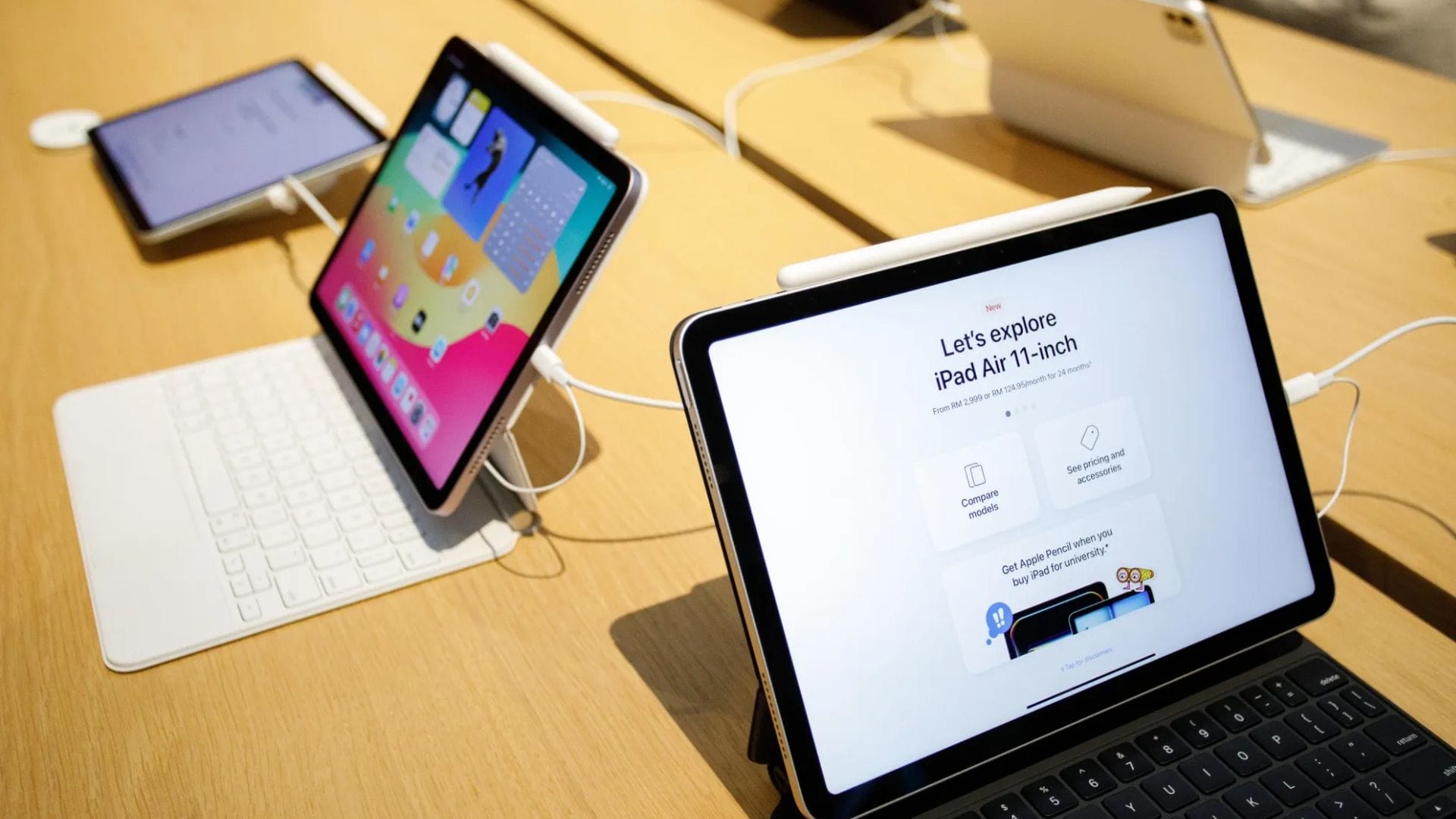
Entry-level iPad and iPad Air updates on the way
Alongside the new iPhone, Apple is expected to refresh its tablet line-up with updated versions of the entry-level iPad and the iPad Air. Gurman has suggested these updates will be relatively modest, focusing on internal improvements rather than major design changes.
The standard iPad is reportedly set to receive Apple’s A18 chip, which would deliver a noticeable performance boost over its predecessor. This would help keep the device competitive in education and consumer markets, where Apple continues to face pressure from lower-cost Android tablets and Chromebooks.
The iPad Air is expected to move to the M4 chip, aligning it more closely with Apple’s current-generation Macs. This would further blur the line between tablets and laptops, particularly for users who rely on the iPad Air for creative and productivity tasks. Apple has increasingly positioned the iPad Air as a powerful yet portable alternative to traditional computers.
These spec-bump updates suggest Apple is focusing on maintaining momentum across its tablet portfolio without introducing major design overhauls. The company has historically used incremental hardware upgrades to extend the lifespan of existing product designs, while relying on software features and accessories to drive differentiation.
Market analysts believe that continued improvements to Apple’s silicon will remain a key selling point for iPads. The company’s in-house chips have consistently outperformed competitors in benchmarks, reinforcing Apple’s control over both hardware and software performance.
New Macs and displays expected from early March
Apple’s Mac line is also expected to receive significant attention in the coming weeks. Gurman has reported that new MacBook Air and MacBook Pro models powered by Apple’s next-generation M5 chips could be announced as early as 2 March.
The MacBook Air is likely to feature the base M5 chip, while the MacBook Pro range could adopt M5 Pro and M5 Max variants. These upgrades would continue Apple’s rapid transition to its own silicon, which began in 2020 and has since reshaped the company’s computer portfolio.
In addition to laptops, Apple is reportedly preparing updates for the Mac Studio and Mac mini. These desktop systems are popular among professionals and power users who need high performance in compact form factors. A refresh would ensure Apple remains competitive in creative and enterprise markets, where performance and efficiency are critical.
There is also speculation about a long-awaited update to the Studio Display. The current model has not been refreshed since its launch, and rumours suggest a new version could finally introduce a 120Hz panel. Such a feature would appeal to creative professionals and users accustomed to high-refresh-rate displays on other Apple devices.
If these launches proceed as expected, Apple’s first half of 2026 could be hectic. The company typically spreads major announcements across the year, but the clustering of smartphones, tablets, laptops and desktops suggests a coordinated strategy to maintain consumer interest and stimulate upgrades.
Analysts say the rapid release cadence reflects Apple’s confidence in its silicon roadmap and its ability to differentiate products through performance and ecosystem integration. It also highlights the growing importance of Apple’s services and software platforms, which benefit from a large and active installed base of devices.
As anticipation builds, industry watchers will be looking for official invitations and press releases from Apple to confirm dates and details. Until then, reports from reliable sources provide the clearest picture of what could be one of Apple’s most active periods in recent memory.