


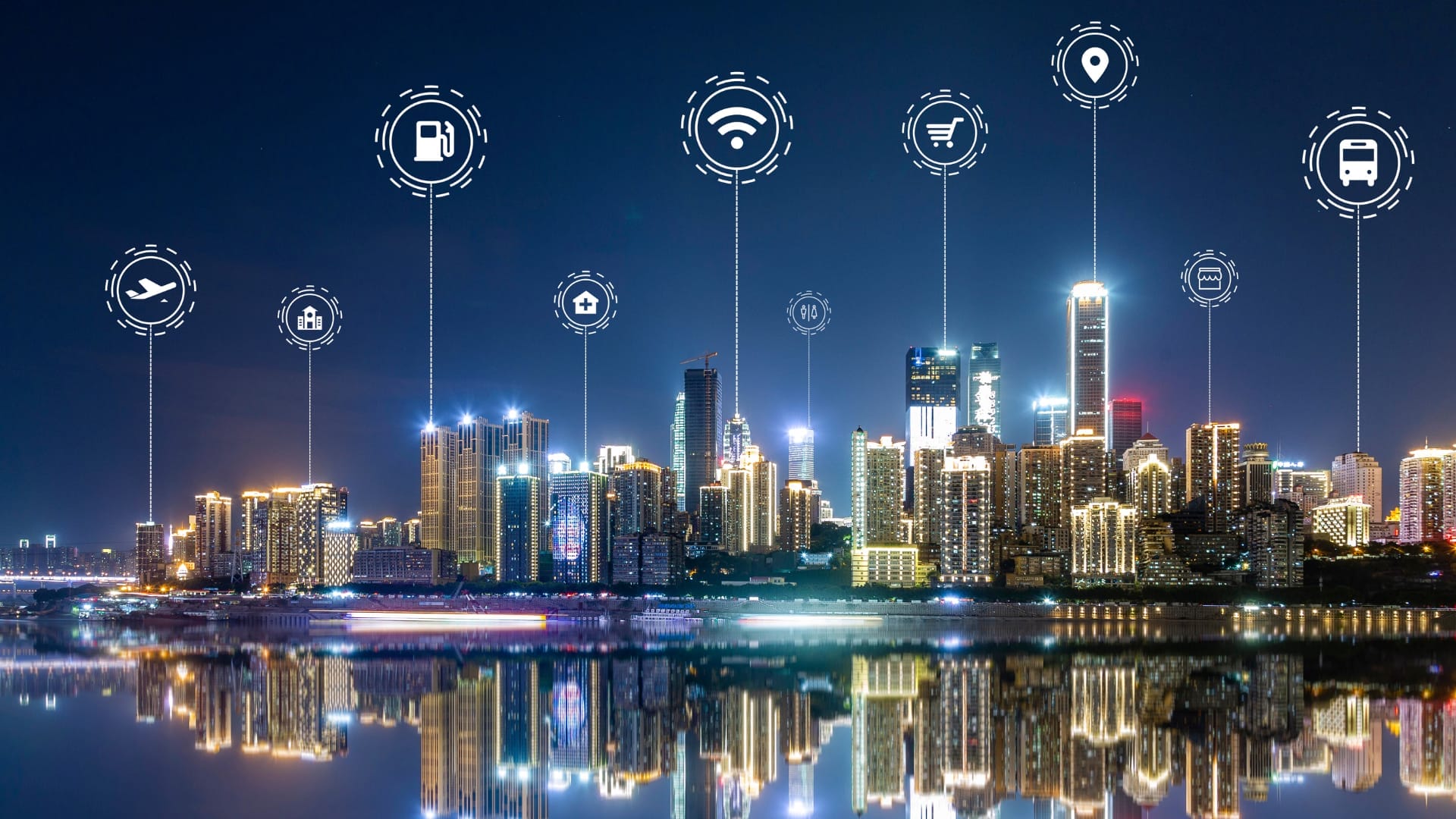
Southeast Asia’s cities are approaching a defining decade. Rapid urbanisation continues across the region, and earlier projections from McKinsey Global Institute suggest that Southeast Asia’s urban areas could see around 90 million more residents by 2030. This growth drives economic opportunity but also heightens pressure on transport, energy, public safety, and municipal services. Even cities that have invested in digital tools struggle with rising complexity as climate risks and population demands increase.
Governments and enterprises are turning to artificial intelligence to manage these challenges. AI supports smarter transport control, environmental monitoring, predictive maintenance, and faster emergency response. Yet AI’s effectiveness depends on a factor that remains uneven across Southeast Asia: access to real-time, connected data. Many urban systems still rely on legacy platforms built for batch reporting rather than continuous information flows. Without timely data, AI behaves more like a historical analyst than a live decision-maker.
Industry studies also reflect this gap. McKinsey reports that cities with integrated real-time data networks can improve emergency response by up to 30% and reduce operational costs across transport and utilities. This reinforces the need to move from scattered digital projects to connected, data-driven operations.
One of the clearest explanations comes from Sumeet Puri, Chief Technology Solutions Officer at Solace, who describes smart cities as requiring a “real-time digital nervous system” that moves information to wherever it is needed without delay. His view captures an emerging regional consensus: AI cannot meaningfully transform urban life unless cities modernise the networks that carry data between agencies and systems.
The shift to AI-driven urban systems
Cities across Southeast Asia are investing heavily in digitalisation. Singapore’s Smart Nation initiative, Jakarta’s transport modernisation, and Ho Chi Minh City’s data platform projects all reflect a regional commitment to using technology to strengthen livability and competitiveness. As urban challenges become more complex, the need for timely and accurate information grows.
AI plays a central role in this transition by making sense of large volumes of data in real time. Rather than relying on manual reporting, AI models can monitor network loads, identify anomalies, and detect risks without human intervention. Recent studies from industry and government bodies across the Asia Pacific indicate that public-sector agencies are increasingly prioritising AI to strengthen operational resilience, improve service delivery, and manage rising urban complexity.
A newer development is the use of agentic AI. These systems can take autonomous actions under human oversight, such as adjusting bus frequencies, rerouting traffic, or issuing warnings about environmental hazards. Their ability to act depends on the live context. If the data feeding these systems is hours or minutes old, the recommendations become far less reliable.
The challenge is that many Southeast Asian cities still operate with fragmented infrastructure. Different agencies manage their own systems for transport, utilities, public safety, and community services. These systems rarely communicate seamlessly, and data often moves slowly through outdated processes. As a result, even well-designed AI tools struggle to deliver accurate insights.
This is why the shift towards real-time, connected data is so important. AI works best when it operates within an environment that reflects current conditions. Without this foundation, cities remain reactive rather than predictive, limiting the benefits of digital transformation.
Why data fragmentation limits smart-city progress
Fragmented data is one of the biggest obstacles to effective smart-city development. Many urban systems are rich in information, but they operate independently. Traffic control systems monitor congestion, utility operators track grid performance, and emergency teams manage incidents within their own environments. These platforms often follow incompatible standards or rely on manual exchanges of information.
When data cannot move easily between systems, coordination suffers. A road accident detected by a traffic camera may not reach bus operators or emergency responders quickly enough to adjust routes or dispatch support. According to the Asian Development Bank, fragmented data environments make it harder for agencies to develop a unified view of city operations, thereby slowing decision-making and reducing the effectiveness of urban management.
Data fragmentation also reduces the power of predictive analytics. AI models rely on timely information to anticipate risk or identify emerging problems. If a sensor reading takes minutes to be processed and shared, the opportunity to prevent disruption may be lost. As Sumeet Puri notes, the value of an event declines rapidly if it does not reach the systems that need to act on it.
These challenges extend to emergency response. Floods, fires, and severe weather demand immediate coordination between police, fire services, utilities, and municipal departments. United Nations research identifies data interoperability as a top barrier preventing cities from scaling their smart-city programmes. The issue is not the lack of data but the inability to share it consistently and quickly.
Some governments have set up centralised command centres to consolidate information. While these centres improve visibility, they still depend on the speed and reliability of incoming data. Slow updates limit what these platforms can achieve. This reinforces the need to modernise the foundation rather than build new systems on top of fragmented structures.
The role of a real-time digital backbone
Southeast Asian cities moving towards AI-enabled operations increasingly recognise the need for a real-time digital backbone. This backbone serves as an event-driven layer that moves information instantly between systems, applications, and agencies. Instead of waiting for scheduled updates, events are published and consumed the moment they occur.
Event-driven architecture (EDA) is one approach that supports this shift. It allows data to move quickly and consistently across the urban ecosystem. Sumeet Puri describes this model as similar to the human nervous system, where signals travel instantly to support immediate responses. In this analogy, AI serves as the decision-making layer, while the data backbone provides a continuous flow of information to enable accurate action.
Some Southeast Asian cities already demonstrate the benefits. Singapore’s transport operations use real-time data exchange to adjust bus schedules, monitor congestion, and analyse demand patterns. The Land Transport Authority reports that these systems have improved journey reliability and reduced travel delays.
Climate-exposed cities are also benefiting from real-time data. In the Philippines, local authorities use live weather and hydrological data to support quicker evacuation decisions. Vietnam’s Intelligent Transportation Systems rely on connected data to enhance vehicle recognition, improve road safety, and optimise traffic flow.
These examples show that a real-time backbone is more than a technical upgrade. It strengthens coordination, speeds up decision-making, and enables AI systems to operate with greater precision. As more Southeast Asian cities embrace automation, the ability to move data quickly and reliably will become a defining competitive advantage.
Practical applications reshaping Southeast Asian cities
Real-time, AI-enabled systems are beginning to influence everyday urban life across the region. Mobility remains the most visible area of transformation. Cities such as Jakarta, Bangkok, and Manila struggle with chronic congestion, and early pilot programmes using AI-driven signal control and predictive modelling have shown potential to ease bottlenecks. Given that Jakarta consistently ranks among the world’s most congested cities in the TomTom Traffic Index, the impact of even modest improvements can be substantial.
Public safety is another area of progress. Malaysia, Thailand, and Vietnam are testing real-time analytics for CCTV networks and acoustic sensors to enable faster incident detection. When these systems are connected to a real-time backbone, emergency teams can coordinate across departments more effectively.
Environmental sustainability is gaining similar attention. The International Energy Agency expects Southeast Asia’s energy demand to grow by nearly 60% by 2040. Real-time energy management tools help operators balance loads, optimise consumption, and plan responses during extreme weather. Flood-monitoring platforms in Indonesia and Malaysia use live sensor readings to help communities prepare earlier for rising water levels.
Citizen services are also becoming more responsive. Mobile applications providing live transport updates, weather alerts, and community reports rely on timely data to function reliably. Some cities are integrating citizen-submitted information, such as road damage or service disruptions, into their central systems to support faster repairs and improve engagement.
These initiatives demonstrate that real-time systems are no longer experimental. As Sumeet Puri observes, the ability of systems to react to the latest context enables cities to shift from reactive management to proactive, automated workflows that improve daily life.
Building the next phase of AI-ready urban infrastructure
The next stage of smart-city development in Southeast Asia will depend on strengthening governance, infrastructure, and human capability. Many governments are updating data-sharing frameworks to encourage greater interoperability between agencies. According to Deloitte, strong data standards and effective governance provide a foundation for smart-city initiatives, enabling cities to coordinate systems more effectively and support scalable digital transformation.
Modernising infrastructure remains essential. Many older systems cannot effectively publish or process real-time information. Upgrading sensors, communication networks, and software interfaces will be critical to supporting AI applications that rely on continuous data flows.
Human oversight will continue to play an important role. Even as agentic AI becomes more capable, decisions affecting public safety and essential services must remain accountable. Public-sector teams will need training to understand how AI interacts with operational workflows and how real-time systems change day-to-day processes.
Cities may achieve faster progress by starting with focused pilots. Projects that target high-impact areas—such as traffic optimisation, emergency coordination, or energy management—create early wins and build momentum for broader change. Lessons from markets like Singapore and Seoul suggest that incremental expansion often leads to more sustainable adoption than large-scale transformations attempted in a single phase.
Southeast Asia’s cities will face increasingly complex demands in the years ahead. Those that treat real-time data as foundational infrastructure will be best positioned to benefit from AI-enabled innovation. As experts such as Sumeet Puri emphasise, building systems that can sense, adapt, and respond in the moment is key to creating urban environments that are more resilient, efficient, and livable.