
Wednesday, 10 December 2025
30.2 C
Singapore
28.6 C
Thailand
26.6 C
Indonesia
27.6 C
Philippines

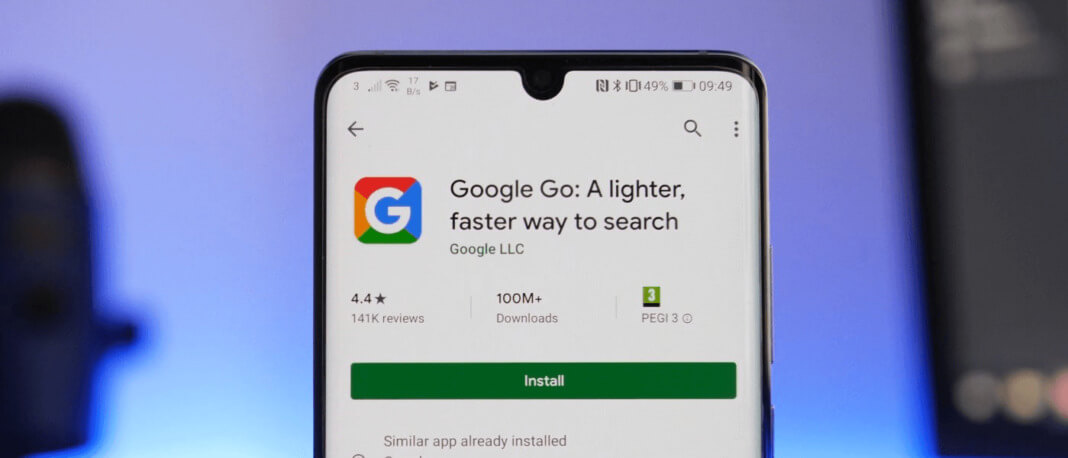
In brief: Google’s lightweight search app, Google Go, launches to Android users worldwide

Google Go, a lightweight version of Google’s search app, is today becoming available to all Android users worldwide. First launched in 2017 after months of beta testing, the app had been designed primarily for use in emerging markets where people are often accessing the internet for the first time on unstable connections by way of low-end […]
  • Google Go, a lightweight version of Google’s search app, is today becoming available to all Android users worldwide.
  • First launched in 2017 after months of beta testing, the app had been designed primarily for use in emerging markets where people are often accessing the internet for the first time on unstable connections by way of low-end Android devices.
  • Like many of the “Lite” versions of apps built for emerging markets, Google Go takes up less space on phones — now at just over 7MB — and it includes offline features to aid those with slow and intermittent internet connections.
  • The app’s search results are optimized to save up to 40% data, Google also claims.
  • Beyond web search, Google Go includes other discovery features, as well — like the ability to tap through trending topics, voice search, image and GIF search, an easy way to switch between languages, and the ability to have web pages read aloud, powered by AI.
  • At Google’s I/O developer conference this spring, the company announced it was also bringing Lens to Google Go.
  • Lens allows users to point their smartphone camera at real-world objects in order to bring up relevant information.
  • In Google Go, the Lens feature will help users who struggle to read. When the camera is pointed at text — like a bus schedule, sign or bank form, for example — Lens can read the text out loud, highlighting the words as they’re spoken.
  • Users can also tap on a particular word to learn its definition or have the text translated.
  • Google Go is one of many lightweight apps Google has built for emerging markets, along with YouTube Go, Files Go, Gmail Go, Google Maps Go, Gallery Go and Google Assistant Go, for example.
  • The Google Go app will be available on the Play Store to global users running Android Lollipop or higher.
Hot this week

Nintendo launches official eShop and Switch Online service in Singapore

Nintendo launches the Singapore eShop and Switch Online service, giving local players full access to digital games, subscriptions, and regional deals.

EOY music, comics and arts festival returns with new venue and expanded programme

EOY 2025 returns with a new venue, international guests and expanded activities celebrating Japanese pop culture in Singapore.

UnionBank adopts Amazon Quick Suite to accelerate data-driven decision making

UnionBank deploys Amazon Quick Suite to expand access to data analytics and speed up decision making across its organisation.

Antigravity enters the drone market with the A1, a lightweight FPV model with 360-degree 8K recording

Antigravity launches its first drone, the A1, combining FPV controls with 360-degree 8K imaging in a compact 249g design.

Kargo Technologies outlines plan for 40,000-vehicle EV shift by 2035

Kargo Technologies sets a 2035 target to deploy 40,000 electric vehicles and build an AI-driven Electrified Silk Road across Asia.

ByteDance faces growing resistance as Chinese apps block its AI-driven smartphone

Chinese apps restrict ByteDance’s new AI smartphone as developers raise concerns over automation, security and privacy.

Pudu Robotics unveils new robot dog as it expands global presence

Pudu Robotics unveils its new D5 robot dog in Tokyo as part of its global push into service and industrial robotics.

Nintendo launches official eShop and Switch Online service in Singapore

Nintendo launches the Singapore eShop and Switch Online service, giving local players full access to digital games, subscriptions, and regional deals.

2026 Predictions Part 1: The five forces reshaping Asia’s digital economy

Five forces are redefining Asia’s digital economy in 2026, from AI adoption and data sovereignty to new security and workforce demands.

Related Articles

Popular Categories