


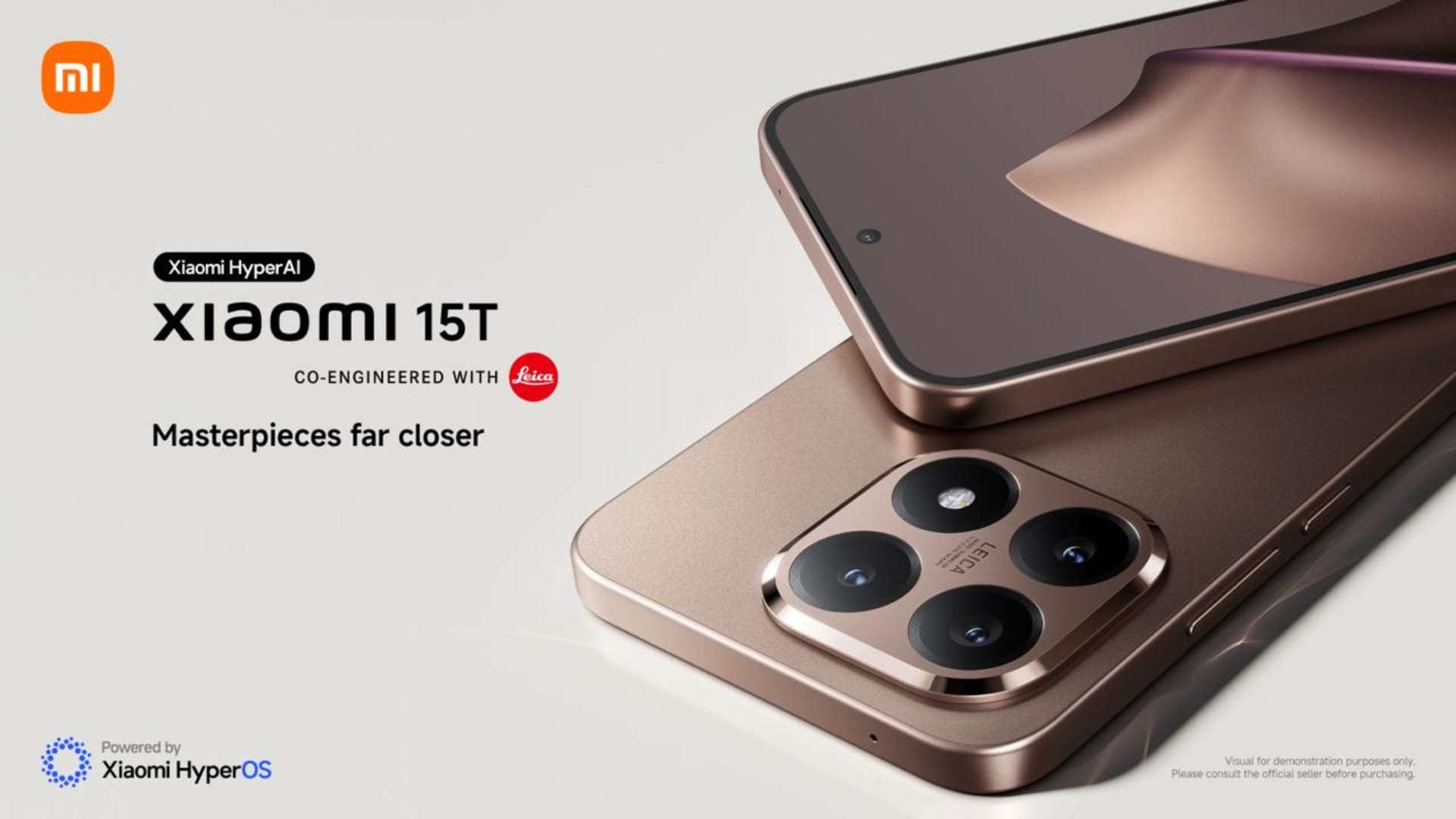
Xiaomi has launched its latest flagship smartphones, the Xiaomi 15T and Xiaomi 15T Pro, in Singapore. The new series marks a step forward for the brand’s T line, blending premium design with high-performance hardware and next-generation imaging systems.
Enhanced photography with Leica technology
Both models feature a triple camera system co-engineered with Leica. The Xiaomi 15T comes with main, ultra-wide, and telephoto cameras, while the 15T Pro includes a Leica 5x Pro telephoto lens. The Pro model covers focal lengths from 15mm to 230mm, while the standard version ranges from 15mm to 92mm, giving users flexibility from wide landscapes to detailed close-ups.
At the core of the camera system is a 50MP Leica Summilux main lens with an ƒ/1.7 aperture on the Xiaomi 15T and an ƒ/1.62 aperture on the Pro model. The 15T Pro also features a Light Fusion 900 sensor with a 13.5 EV dynamic range for improved clarity and colour accuracy, even in low light. A new Leica 5x Pro telephoto camera debuts on the 15T Pro, offering 5x optical zoom, 10x optical-level zoom, and up to 20x Ultra Zoom. Both devices include a 32MP front camera.
Xiaomi’s new AISP 2.0 computational photography platform powers features such as PortraitLM 2.0 and ColorLM 2.0, improving depth, tone, and colour fidelity. The Master Portrait mode introduces adjustable bokeh effects, while Leica street photography mode offers quick access to popular focal lengths for spontaneous shots. Video capabilities include 4K HDR10+ recording on both models, with the 15T Pro extending to 4K 120fps and 8K recording for cinematic production.
New connectivity features and improved performance
The Xiaomi 15T series introduces Xiaomi Astral Communication, designed to maintain connectivity in challenging conditions. Its new Offline Communication feature enables direct voice calls between 15T devices over distances of up to 1.9km on the Pro and 1.3km on the standard model without cellular or Wi-Fi. The Surge T1S Tuner and Super Antenna Array optimise signal performance for stable streaming, navigation, and gaming.
The phones also debut Xiaomi HyperOS 3, providing faster multitasking, redesigned interfaces, and better integration with Xiaomi HyperAI for improved productivity and cross-device connectivity.
Under the hood, the Xiaomi 15T Pro is powered by the MediaTek Dimensity 9400+ chipset built on a 3nm process, while the Xiaomi 15T uses the Dimensity 8400-Ultra. Both models feature a 5500mAh battery, with the Pro supporting 90W wired and 50W wireless HyperCharge, and the standard model offering 67W wired charging. Xiaomi says the batteries retain up to 80% capacity after 1,600 charging cycles.
Premium design with durability in mind
Both models feature a slim, unified glass fibre back and flat edges for a modern look. They also include Corning Gorilla Glass 7i for improved scratch resistance and IP68 water and dust resistance, withstanding depths of up to 3 metres in freshwater. The 15T Pro adds a 6M13 aluminium alloy frame for extra protection.
Display upgrades include a 6.83-inch AMOLED screen with up to 3,200 nits peak brightness and sharp 1.5K resolution. The 15T Pro features ultra-thin bezels enabled by LIPO technology and a 144Hz refresh rate, while the 15T supports up to 120Hz with 3,840Hz PWM dimming for eye comfort.
The Xiaomi 15T Pro is offered in Black, Gray, and Mocha Gold, while the Xiaomi 15T comes in Black, Gray, and Rose Gold.
Availability and pricing in Singapore
The Xiaomi 15T Pro is priced at S$799 for the 12GB+256GB version and S$899 for the 12GB+512GB version. The Xiaomi 15T costs S$599 for the 12GB+256GB model and S$699 for the 12GB+512GB model. Pre-orders run from 24 September at 9:30 PM until 10 October 2025 via Xiaomi Store, mi.com, Shopee, and Lazada. Pre-order promotions include free accessories, trade-in rebates, and extended quality assurance plans.