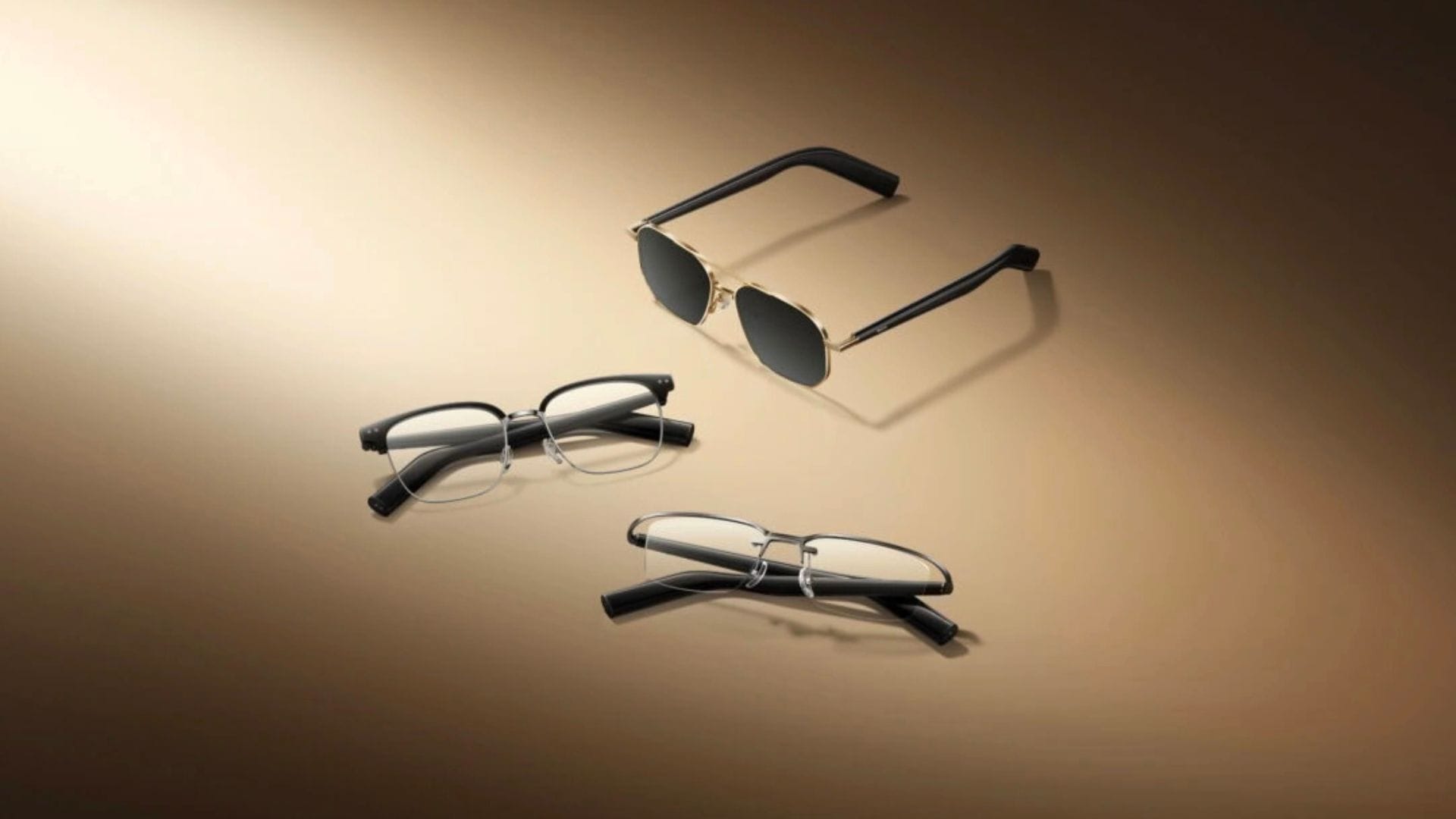
Xiaomi has expanded its smart hardware portfolio with the launch of the second-generation Mijia Smart Audio Glasses, introduced alongside the Redmi Note 15 series and the Mijia Smart Air Purifier Max. The new wearable builds on the company’s first attempt at audio-focused eyewear, bringing refinements to design, durability, sound quality and battery performance.
Positioned as a lifestyle device for everyday use and work, the updated glasses focus on comfort and practicality while adding new features, such as built-in audio recording and improved privacy controls. Xiaomi says the changes are aimed at making the glasses easier to wear for longer periods and more useful in professional settings.
Refined design and improved durability
The most noticeable change in the new Mijia Smart Audio Glasses is the redesigned temple structure. Xiaomi has adopted a slimmer unibody design that reduces the temples’ width by 22% at their narrowest point and 27% at their widest point compared with the previous generation. This results in a more understated appearance intended to resemble traditional eyewear rather than a piece of wearable technology.
The glasses are available in three frame styles: Titanium, Browline and Pilot-style. The Titanium version is the lightest option, weighing 27.6g without lenses, down from 33.4g for the first-generation model. Xiaomi says the reduced weight makes the glasses more comfortable for all-day wear, particularly for users who already rely on prescription eyewear.
Xiaomi has also focused on build quality. The second-generation model uses an ultra-resilient piano-wire hinge rated for up to 15,000 flexes, which should improve long-term reliability. An IP54 rating protects against dust and light splashes, allowing the glasses to be worn in humid conditions or light rain without concern. This combination of lighter materials and tougher construction reflects Xiaomi’s effort to make the device suitable for everyday environments rather than controlled indoor use.
Enhanced audio performance and privacy features
Audio performance has been upgraded through a revised acoustic structure and updated audio algorithms. Xiaomi says these changes are designed to create a more immersive listening experience, similar to being in front of a speaker rather than wearing open-ear audio hardware. The glasses use directional sound to deliver audio while keeping the ears open to surrounding noise.
Call quality has also been improved. The glasses include four built-in microphones supported by intelligent noise-cancellation algorithms. According to Xiaomi, this setup improves call clarity and offers wind resistance at up to 4.5 m/s, making outdoor conversations clearer than before.
Privacy has been a key area of development. The new model introduces a sound-leakage-reduction system that uses a reverse sound field and a leak-proof membrane. This approach is designed to keep audio focused on the wearer while reducing the chance of nearby people hearing calls or media playback. Xiaomi positions this as an important feature for use in offices, public transport and shared spaces.
Recording, battery life and availability
A major addition to the second-generation glasses is built-in audio recording. Users can start recording by pressing and holding the touch bar along the temple. To address privacy concerns, an indicator light activates whenever recording is in progress, providing a visible signal to others nearby. Xiaomi says this feature is intended for situations such as in-person meetings or quick voice notes.
The recording function works across several scenarios, including voice calls, audio playback and video playback. The glasses also support dual-device connectivity, allowing them to connect to two devices simultaneously. Users can switch between devices seamlessly, which Xiaomi says is useful for people who frequently switch between a smartphone and a laptop throughout the day.
Despite the slimmer profile, battery life has increased. The glasses use a custom pair of 114mAh non-coaxial steel-cased batteries. Xiaomi claims up to 13 hours of continuous music playback, up from 10 on the previous model, as well as up to 9 hours of call time. Standby time is rated at up to 12 days, with typical usage lasting about 1.5 days.
Charging is handled via 2C magnetic fast charging. A 10-minute charge can deliver up to four hours of playback, while a full charge from empty takes about an hour. The Mijia Smart Audio Glasses are available on mi.com, Xiaomi Stores, official online stores on Shopee and Lazada, and partner retailers. The Browline and Pilot-style models are priced at S$249, while the Titanium version retails for S$289.