

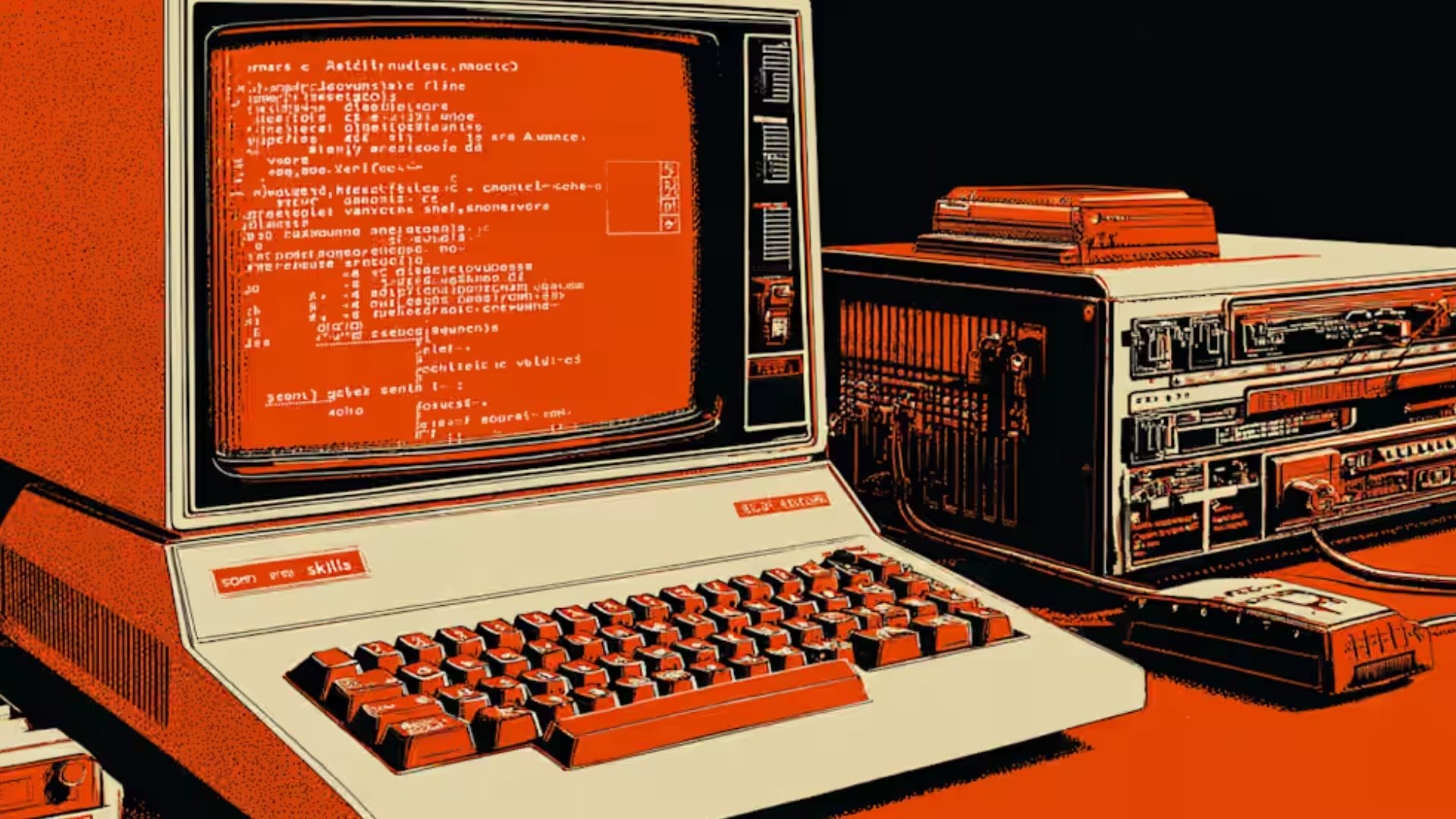
A Los Angeles-based startup has revealed a Linux computer designed almost entirely by artificial intelligence, marking a notable moment for hardware engineering. Quilter announced the completion of Project Speedrun, a fully working computer built with the help of an AI system that handled most of the design work. The machine contains 843 individual components spread across two printed circuit boards and was conceived, designed, and assembled in just one week.
What makes the project stand out is not only its rapid development but also its immediate success. When powered on for the first time, the computer booted directly into Debian Linux without requiring troubleshooting or rework. According to Quilter, the entire process needed only 38.5 hours of direct human involvement, a fraction of the time generally required for a project of this complexity.
The company describes Project Speedrun as a demonstration rather than a commercial product. Its goal was to test whether AI could take on the most time-consuming parts of hardware design while still producing a reliable, functional system. In doing so, Quilter aimed to challenge assumptions about how long it takes to build custom computers and how dependent such work must be on large teams of experienced engineers.
A week-long build that challenges traditional timelines
In conventional hardware development, designing a similar Linux workstation takes several months. Engineers must select components, design circuit layouts, validate power and signal integrity, and fix errors that appear late in the process. Quilter estimates that a comparable project would typically require around three months of expert human labour, even for an experienced team.
Project Speedrun compressed that timeline into seven days by handing much of the work to AI. The system was responsible for iterative design decisions, layout adjustments, and what Quilter refers to as execution and cleanup tasks. These stages often slow projects down, as mistakes discovered late in development can force teams to revisit earlier decisions.
By automating these steps, the AI reduced friction throughout the process. Instead of engineers repeatedly adjusting designs and correcting errors, the system continuously refined the layout as it progressed. This allowed the small human team to focus on oversight rather than hands-on execution, stepping in mainly to guide creative direction and ensure practical constraints were respected.
The final result was a compact Linux computer that functioned as intended from the start. Booting Debian on the first attempt is unusual even in traditional projects, where minor faults often require several test cycles to resolve. Quilter views this outcome as evidence that AI-driven design can reach a level of precision that rivals, and in some cases exceeds, standard workflows.
Training AI to follow physics rather than people
Quilter says the key to the project lies in how its AI was trained. Unlike large language models such as GPT-5 or Claude, which learn by analysing vast amounts of human-created content, Quilter’s system was not trained primarily on existing circuit board designs. The company argues that human-designed boards often contain compromises and mistakes that can limit what an AI learns from them.
Instead, the AI was trained to optimise directly against the physical laws that govern electronics. This includes principles such as signal integrity, power distribution, thermal behaviour, and electromagnetic constraints. By grounding the system in physics-based optimisation, Quilter aimed to remove human limitations from the training process.
This approach allowed the AI to suggest layouts and component arrangements that engineers might not normally consider. Rather than copying established patterns, the system explored new ways of organising the 843 components across the dual PCBs. Quilter claims this led to designs that were both efficient and unconventional, while still meeting practical manufacturing requirements.
Engineers remained involved throughout the process, but their role changed significantly. Instead of manually routing traces or fixing repeated errors, they supervised the AI’s decisions and refined higher-level goals. This shift, according to Quilter, enables faster experimentation and encourages more ambitious designs, as the cost of iteration is significantly reduced.
The company also points out that traditional workflows often introduce errors during execution, requiring additional cleanup. Each correction adds time and complexity, sometimes creating new issues elsewhere in the system. By handling execution and cleanup automatically, the AI reduced the likelihood of cascading mistakes and helped maintain consistency across the design.
Implications for startups and future hardware design
Quilter believes its approach could lower barriers for smaller companies looking to build custom hardware. Designing bespoke workstations, mini PCs, or mobile computing devices is often out of reach for startups due to cost and time constraints. If AI can reliably take on much of the design workload, smaller teams could produce complex systems without the need for large engineering departments.
The company’s chief executive, Sergiy Nesterenko, sees long-term potential in this direction. He has suggested that AI could eventually outperform human engineers in circuit board design, stating that it may “come up with better designs for circuit boards than humans have ever tried to do.” While this vision remains aspirational, Project Speedrun offers a tangible example of what may be possible.
However, Quilter also acknowledges that the technology is still at an early stage. Project Speedrun, while complex, is a controlled demonstration rather than a mass-produced product. Questions remain about how well the AI would perform on larger, more intricate systems, or under strict regulatory and reliability requirements.
Long-term durability, maintenance, and real-world stress testing will be critical factors in determining whether AI-designed hardware can be trusted at scale. There is also the challenge of accountability, as engineers must still understand and verify designs generated by systems that may propose unconventional solutions.
Despite these uncertainties, the project highlights a shift in how hardware could be developed in the future. By reducing repetitive work and accelerating iteration, AI can shift engineers’ roles from executors to supervisors and innovators. For now, Project Speedrun stands as a proof of concept that complex computers can be designed faster than previously thought, without sacrificing basic functionality.