

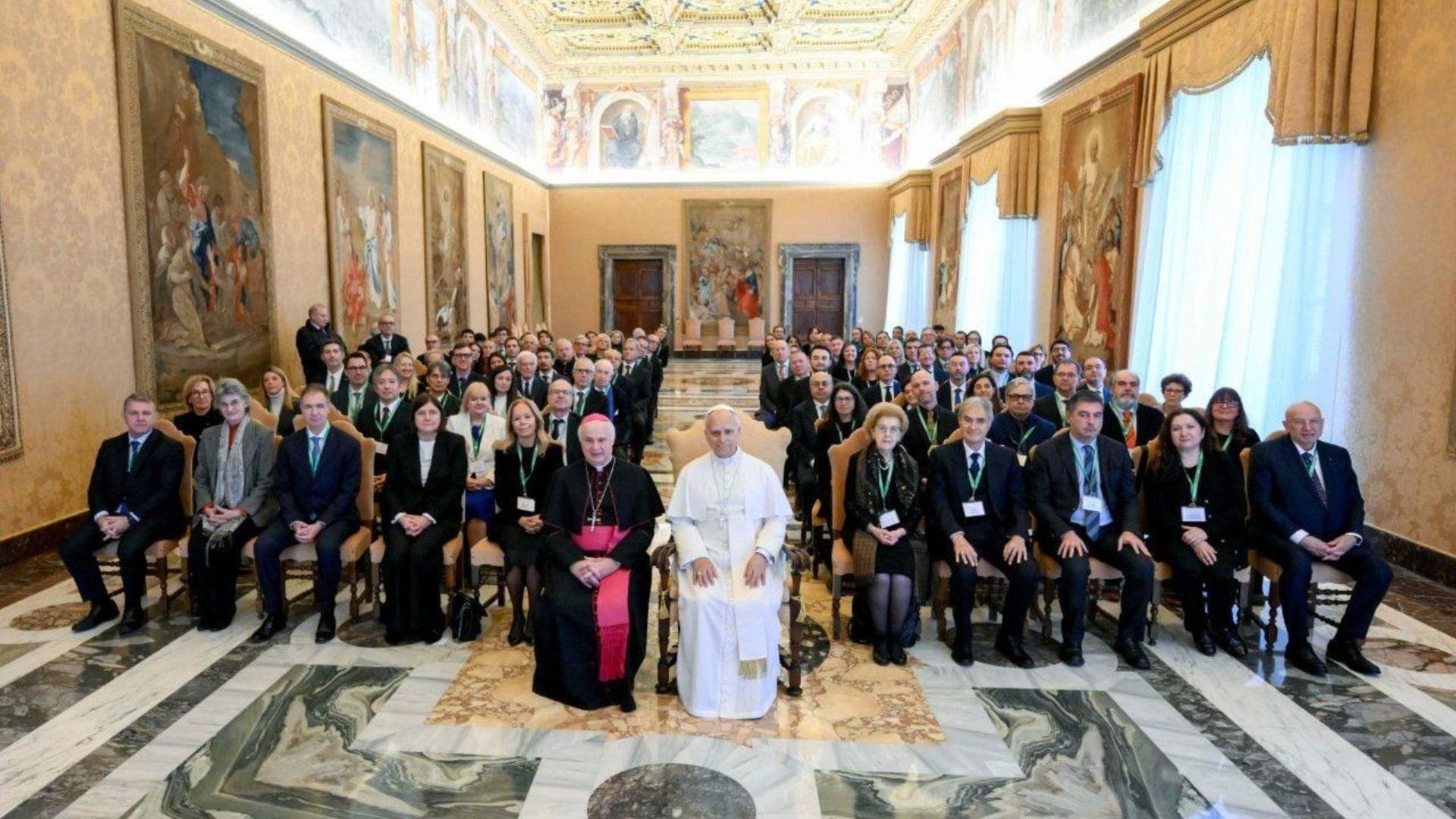
The Vatican has introduced an artificial intelligence-assisted live translation service designed to help visitors and worshippers understand Holy Mass at Saint Peter’s Basilica. The initiative aims to make the Catholic liturgy more accessible to the millions of pilgrims and tourists who visit the Vatican each year, many of whom do not speak Latin or Italian.
The Papal Basilica of Saint Peter has partnered with language service provider Translated to deliver real-time translations in 60 languages. Attendees can scan a QR code to access live audio and text translations of the liturgy directly on a web page, without downloading an app. The service is intended to support those attending Mass in person and those seeking a deeper understanding of the words spoken during the service.
The move reflects a broader interest in digital tools within religious institutions, particularly those that help bridge language barriers. Saint Peter’s Basilica has long been a focal point for international worshippers, and the Vatican says the technology will help them feel more included in the religious experience.
Vatican views AI as a tool for inclusion
Cardinal Mauro Gambetti, Archpriest of the Papal Basilica of Saint Peter, described the project as part of the Church’s universal mission to reach people across nations and cultures. In a statement, he said: “Saint Peter’s Basilica has, for centuries, welcomed the faithful from every nation and tongue. In making available a tool that helps many to understand the words of the liturgy, we wish to serve the mission that defines the centre of the Catholic Church, universal by its very vocation.”
He also emphasised the importance of approaching new technologies with care and responsibility. “I am very happy with the collaboration with Translated. In this centenary year, we look to the future with prudence and discernment, confident that human ingenuity, when guided by faith, may become an instrument of communion,” he added.
The Vatican’s engagement with artificial intelligence has increased in recent years, particularly in areas such as communication, education and administration. Church leaders have repeatedly highlighted both the opportunities and ethical challenges posed by AI, urging developers and users to ensure technology serves human dignity and social good.
By focusing on translation during religious services, the Vatican prioritises practical applications that directly benefit worshippers. The initiative also aligns with the Church’s long-standing emphasis on inclusivity and global outreach, especially in a city-state that serves as a spiritual centre for Catholics worldwide.
Technology behind the translation system
The translation service is powered by Lara, an AI tool launched by Translated in 2024. The company says the system draws on the experience of more than 500,000 native-speaking professional translators to produce accurate and context-sensitive translations. The technology combines machine learning with large datasets of human-translated text to improve its ability to handle religious terminology and complex liturgical language.
Translated claims Lara can adapt to the tone and nuances of different languages, which is particularly important in a religious setting where phrasing and meaning carry theological significance. The company has previously promoted Lara for use at international conferences, corporate communications, and public events, but its deployment at a major religious institution marks a notable step.
For users, the process is designed to be simple. Visitors scan a QR code displayed within the basilica, which directs them to a web interface that streams the translated text and audio in real time. The Vatican says this approach avoids technical barriers for older visitors or those unfamiliar with mobile apps, while still offering a modern digital service.
The introduction of AI-driven translation in a sacred setting may raise questions about accuracy, privacy and the role of technology in worship. Experts often caution that automated translations can struggle with context, idiomatic expressions and specialised vocabulary. However, supporters argue that even imperfect translations can help people feel more connected and informed during services they might otherwise struggle to follow.
The Vatican has not indicated whether the service will be expanded to other churches or events. Still, the project could serve as a model for religious institutions seeking to engage global audiences. As international travel continues to recover and digital expectations grow, real-time translation tools may become increasingly common in places of worship, museums and cultural institutions.
While the Church has historically relied on human interpreters and printed materials, AI-powered translation offers scalability and immediacy that traditional methods cannot easily match. The Vatican’s collaboration with a commercial language technology provider also highlights the growing intersection between faith-based organisations and private tech companies.
For now, the Vatican’s AI-assisted translation system represents a cautious but significant step towards integrating advanced technology into religious practice. It reflects a broader trend in which institutions with deep historical roots are experimenting with modern tools to remain accessible in a global, multilingual world.