







Vivo unveils X300 Ultra with 400mm Zeiss telephoto lens for global markets
Vivo unveils X300 Ultra with 400mm Zeiss lens and pro video tools, marking its first major global flagship launch.


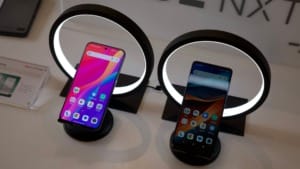
Vivo has revealed plans to expand beyond its limited presence outside China with the launch of its latest flagship smartphone, the X300 Ultra. The device was introduced at the Mobile World Conference 2026 in Barcelona and marks the first X-series model to be positioned for a broader international rollout.
Table Of Content
The company presented the handset as a tool aimed squarely at professional photographers and content creators. Central to that strategy is a new 200MP telephoto sensor and a range of dedicated accessories, including a camera cage developed with SmallRig and a 400mm equivalent Zeiss telephoto extender lens.
Focus on pro-grade imaging and video
Vivo did not disclose the full technical specifications of the X300 Ultra during its presentation. However, it suggested that the handset would feature high-end components across the board, including a flagship processor, a premium display, and a large battery. More detailed specifications are expected to be announced closer to the device’s official release.
The company confirmed that, like the earlier X300 Pro, the X300 Ultra will include a 200MP telephoto sensor. It is also expected to support advanced video features such as 4K recording at 120 frames per second with Dolby Vision HDR. Daniel Goetz of Vivo said the company could not yet share details of the primary camera sensor, which is likely to play a key role in the device’s video capabilities.
A key highlight is the optional Vivo Zeiss Telephoto Extender Gen 2 Ultra, a 400mm equivalent lens accessory designed to attach directly to the phone. According to Vivo, the lens offers around 8x optical zoom compared to the native field of view, with further reach available through digital zoom. The accessory also provides what the company describes as “gimbal-grade” optical image stabilisation and motion-tracking focus technology.
The camera mount is part of an ecosystem carried over from the X200 Pro, allowing the handset to detect and adjust to attached lenses automatically. This means the first-generation telephoto extender remains compatible with the new flagship. Vivo stated that the large 1/1.4-inch telephoto sensor and high resolution enable shooting at up to 30x zoom, roughly equivalent to 800mm, while maintaining a high level of detail.
Accessories and workflow integration
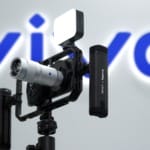
Alongside the new lens, Vivo introduced a professional camera cage created in collaboration with SmallRig, a well-known maker of video accessories. The cage transforms the smartphone into a more versatile filming tool, with multiple cold-shoe mounts and quick-release ports for attaching handles, lights, and microphones.
The cage also includes physical shutter and zoom buttons for more tactile control, as well as a multi-level piezo cooling fan intended to keep temperatures down during extended recording sessions. An external lens expansion frame is provided to securely accommodate the telephoto extender.
Additional accessories developed with SmallRig include Bluetooth-connected grip controllers, which were demonstrated mounted on the X300 Pro. These accessories suggest that Vivo is building a broader ecosystem for creators who prefer the flexibility of a smartphone setup but want hardware controls and modular expansion.
Vivo shared further details about the X300 Ultra’s video features during its presentation. The telephoto camera will offer three degrees of optical image stabilisation, and users will be able to record video in Log format while previewing footage with a chosen LUT applied. The recorded file will remain an unedited Log file, preserving flexibility for post-production.
Colour grading tools will also be available directly on the device. In addition, the phone will natively support ACES (Academy Colour Science), making it easier to integrate footage into professional workflows in software such as DaVinci Resolve and Final Cut Pro without requiring additional colour conversion steps.
International ambitions and market positioning
The unveiling at the Mobile World Conference 2026 in Barcelona drew visible interest from attendees. Vivo used the event to underline its intention to compete more aggressively in the global premium smartphone segment.
The company confirmed that the X300 Ultra will be the first in its series to launch across international markets, including European countries where Vivo already operates. Availability in the US has not yet been confirmed. Pricing details were not disclosed, though the X300 Pro currently sells in Europe for around €1,400, suggesting the Ultra model is likely to sit at a similar or higher price point.
Vivo said the move “signals Vivo’s more proactive and confident approach to expanding its presence in the global premium smartphone segment.” The strategy emphasises imaging performance and accessory support as key differentiators.
However, the expected premium pricing may prompt some professional creators to weigh the cost against investing in a dedicated mirrorless camera and lens system. While the X300 Ultra aims to narrow the gap between smartphones and traditional cameras, it remains to be seen whether it can convince serious videographers and photographers to adopt a mobile-first setup.