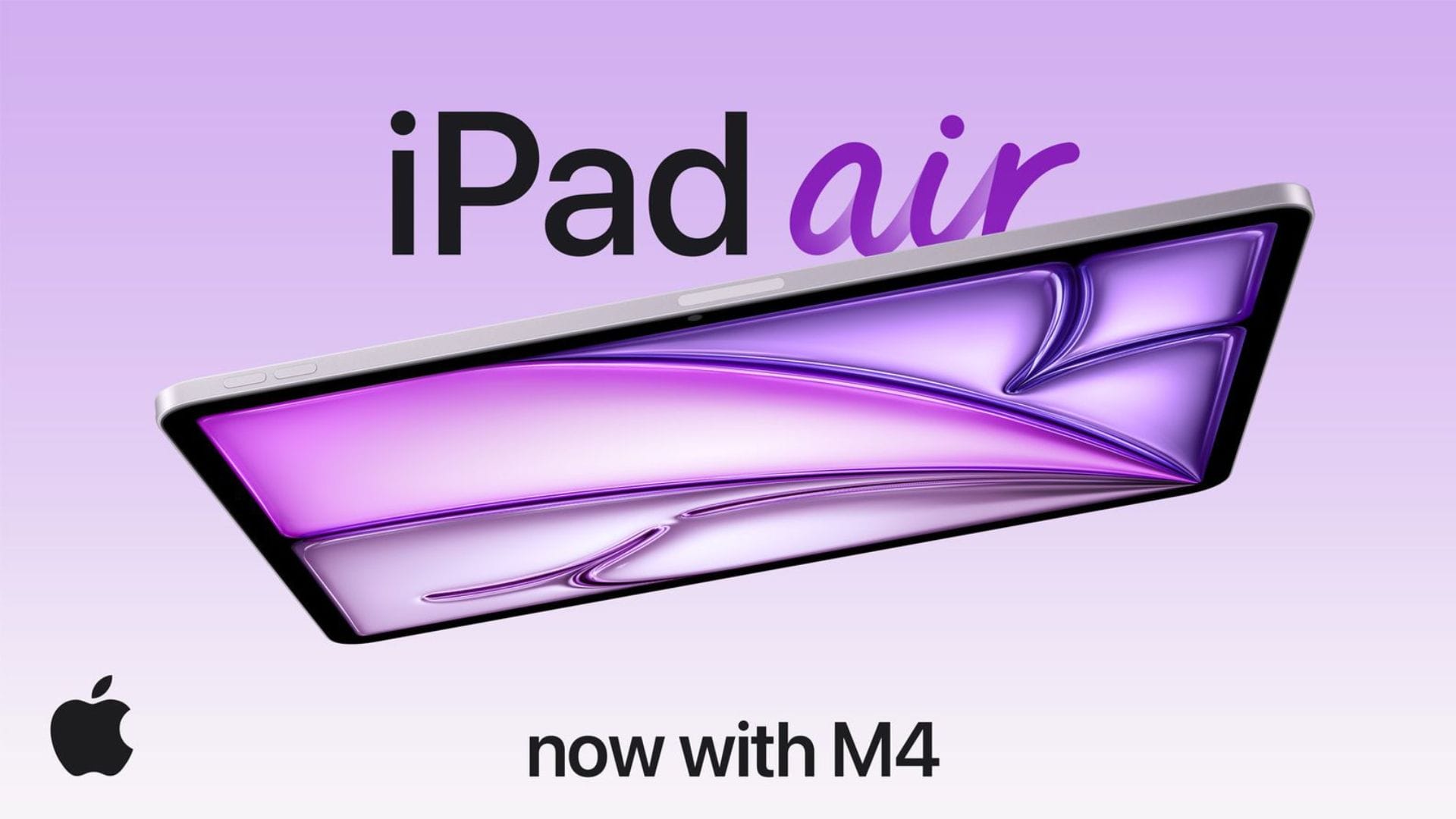
Apple has unveiled a refreshed iPad Air, introducing its latest M4 processor to the mid-range tablet. The announcement marks the start of several days of product updates from the technology giant, with the new model building on last year’s design while focusing largely on internal improvements.
The updated device replaces the previous M3 chip with the more advanced M4, boosting performance for a product that already sat comfortably between the standard iPad and the iPad Pro. While the outward appearance remains familiar, the addition of the newer silicon signals Apple’s continued effort to narrow the performance gap between its tablet ranges.
Alongside the new processor, Apple has incorporated its own in-house networking components, the N1 and C1X chips. These manage Wi-Fi and mobile connectivity, and enable support for the Wi-Fi 7 standard for the first time on the iPad Air. The company has also increased the base memory to 12GB of RAM, up from 8GB in the previous model, offering more headroom for demanding applications and multitasking.
Familiar design with internal upgrades
Externally, the latest iPad Air looks almost identical to its predecessor. It retains the same display options introduced in earlier iterations, with customers able to choose between 11-inch and 13-inch LCD panels. Both screens offer up to 500 nits of brightness and a 60Hz refresh rate, placing them below the higher-end ProMotion displays found in the iPad Pro line.
Storage configurations remain unchanged, ranging from 128GB to 1TB. The tablet continues to feature a dual-stereo speaker arrangement and the same front- and rear-facing camera systems as the previous generation. There are no visible alterations to the chassis or overall design language.
It has been less than two years since Apple redesigned the iPad Air, introducing a larger 13-inch variant powered by the M2 chip. The pace of updates has drawn attention, particularly given that even earlier models still deliver more than enough performance for the typical iPad Air user. Nevertheless, the move to the M4 chip ensures the device stays aligned with Apple’s broader silicon roadmap and offers improved efficiency and speed at the same entry price.
By maintaining the same starting price while upgrading the processor and memory, Apple positions the refreshed Air as a straightforward performance update rather than a radical overhaul. For buyers seeking longevity and improved responsiveness without stepping up to the Pro range, the enhancements may prove appealing.
iPadOS 26 and enhanced multitasking
The new iPad Air ships with iPadOS 26, the operating system released last autumn. The software update represented one of the most significant changes to the iPad platform in recent years, particularly in terms of productivity features.
iPadOS 26 introduced a more capable multitasking system, allowing users greater flexibility when working with multiple apps. Window management has been expanded, making it easier to resize and arrange applications on the screen. The improvements are particularly noticeable on the larger 13-inch model, where the extra screen space better accommodates complex workflows.
Background task handling has also been strengthened, enabling more robust performance when running several applications simultaneously. These changes reflect Apple’s ongoing efforts to make the iPad a more viable tool for both work and entertainment.
The update also brought a visual overhaul known as the Liquid Glass redesign. While the new aesthetic has divided opinion among some users, it represents Apple’s attempt to modernise the interface across its tablet line-up. Combined with the increased RAM and M4 processor, the software enhancements are expected to run smoothly on the updated hardware.
Availability and pricing
Pre-orders for the M4-powered iPad Air open on 4 March, with general availability beginning on 11 March. Apple has retained its previous pricing structure, with the 11-inch model starting at US$599 and the 13-inch version priced from US$799.
As with earlier models, prices will vary depending on storage capacity and whether customers opt for Wi-Fi only or cellular connectivity. The inclusion of Apple’s in-house networking chips and Wi-Fi 7 support may be of particular interest to users seeking faster wireless performance and improved future compatibility.
By focusing on performance and connectivity rather than redesigning the hardware, Apple is refining an already established product category. The iPad Air continues to occupy a middle ground in the company’s tablet portfolio, offering stronger specifications than the entry-level iPad without reaching the premium pricing of the Pro models.
With the addition of the M4 chip and expanded memory, the refreshed iPad Air aims to deliver increased speed and longevity while keeping its familiar design and price point intact.
Apple refreshes the iPad Air with an M4 chip, Wi-Fi 7 support and 12GB of RAM while keeping prices unchanged.