


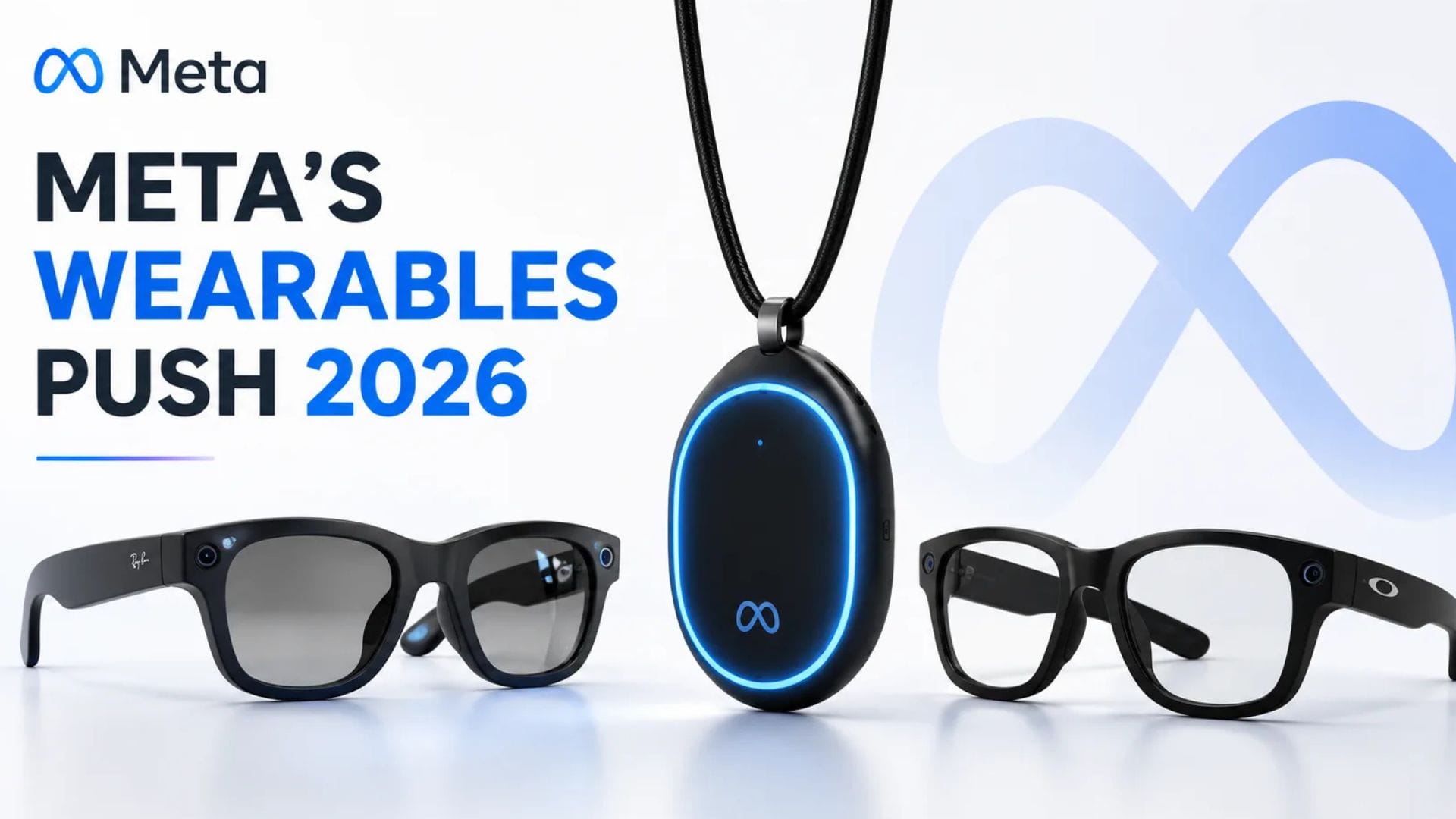
Meta is reportedly preparing a major expansion of its wearable technology portfolio, including an artificial intelligence-powered pendant and several new smart glasses models expected to arrive over the coming months. According to a report by The Information, the company is accelerating its efforts to strengthen its hardware business and increase adoption of its AI services despite ongoing financial challenges within its Reality Labs division.
The reported plans form part of Meta’s broader strategy to integrate artificial intelligence more deeply into everyday consumer devices. The company is also said to be developing new subscription-based services linked to its wearable products, creating additional revenue streams while encouraging wider use of its AI technologies.
AI pendant could become Meta’s next wearable device
Meta has not officially confirmed the reported development of an AI pendant. However, industry observers have long expected such a move following the company’s acquisition of Limitless in 2025.
Limitless developed a wearable device called Pendant, a clip-on Bluetooth microphone designed to listen to continuously and record conversations and audio throughout the day. The device can generate summaries and transcripts while creating a searchable archive of recorded information. Such functionality aligns closely with Meta’s wider ambitions to build AI-powered personal assistants that remain available throughout daily activities.
At the time of the acquisition, Limitless chief executive Dan Siroker highlighted the importance of wearable devices in the future of artificial intelligence. He said, “Meta recently announced a new vision to bring personal superintelligence to everyone, and a key part of that vision is building incredible AI-enabled wearables.”
The Information reports that Meta intends to use wearable devices as a key platform for expanding access to its AI models. The company is also reportedly developing a consumer-focused AI agent, Hatch, which has not yet been released. The wearable ecosystem could eventually serve as a primary gateway for users to access these AI services in daily life.
The report also suggests Meta is exploring subscription opportunities tied to its wearable products. These could include premium AI features and services linked to Hatch, alongside the company’s growing portfolio of subscription offerings across its social media platforms.
New smart glasses models reportedly on the way
Meta is also expected to significantly expand its smart glasses range before the end of 2026. The company has already achieved considerable visibility through its partnerships with Ray-Ban and Oakley, but internal plans reportedly point to a much broader product line.
According to the report, Meta Vice President of Wearables Alex Himel outlined the company’s ambitions in an internal memo. The goal is reportedly to increase consumer use of Meta’s AI models while encouraging users to subscribe to premium services.
Several new smart glasses models are reportedly scheduled for release throughout the year. A model codenamed “Modelo” could arrive as early as June. Additional products, known internally as “Luna” and “RBM2 Refresh”, are reportedly planned for launch during the autumn period.
Another device, codenamed “Mojito VIP”, is expected to debut in December. Beyond those products, Meta is also said to be testing future models known as “Artemis” and “SSG”, the latter reportedly referring to “supersensing” glasses equipped with more advanced capabilities.
The new devices are expected to integrate Meta’s AI technologies, including support for the planned Hatch AI assistant. By expanding its range of wearable products, Meta aims to make AI services more accessible while increasing engagement across its broader ecosystem.
Wearables expected to play larger role in Meta’s future
Meta’s wearable ambitions extend beyond consumer products. The Information reports that the company is preparing a business-focused subscription offering called Wearables for Work, aimed at commercial customers.
The service is expected to help organisations deploy wearable devices across their workforce while leveraging AI-powered features. Meta is reportedly targeting at least 10 business customers for the programme and hopes to secure deployments with at least two large organisations that each require 100 devices.
The company’s growth targets are ambitious. Himel reportedly told employees that Meta aims to sell 10 million wearable devices during the second half of 2026. Achieving that figure would require not only the introduction of new products but also wider international availability.
The push into wearables comes as Meta continues to address substantial losses within Reality Labs, the division responsible for its hardware and metaverse-related projects. The unit reportedly recorded losses of approximately US$19 billion during 2025 alone.
Despite those financial pressures, Meta chief executive Mark Zuckerberg has indicated that wearable technology will remain a central focus for the company. During Meta’s fourth-quarter 2025 earnings call, he told investors that Reality Labs would increasingly focus on glasses and wearable devices, while the company expected the division’s losses to decline gradually.
The reported expansion of smart glasses, AI assistants and wearable subscriptions suggests Meta sees connected devices as a key part of its long-term strategy to bring artificial intelligence into everyday life while building a more sustainable hardware business.