

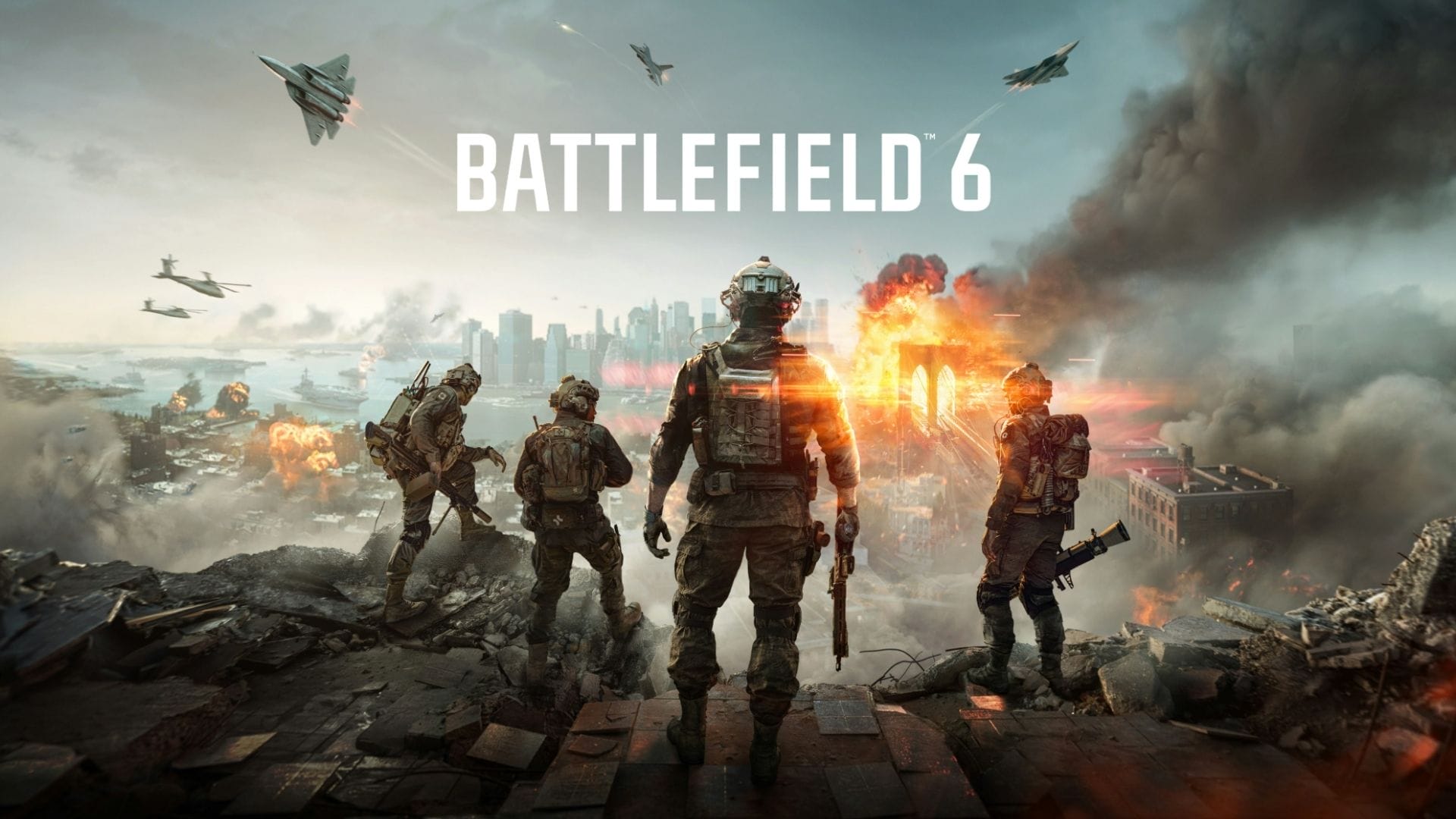
Electronic Arts has delayed the next major update for Battlefield 6, pushing back the launch of Season 2 by one month amid growing concern from parts of the player community. The update, originally scheduled for 20 January, will now arrive on 17 February, extending Season 1 to a total length of four months.
In a blog post published this week, the publisher said the delay was intended to allow additional time to respond to player feedback and improve the overall quality of the next season. “During our ongoing development, we’ve continued to review community feedback and, to keep our promise, determined that our best path forward is to extend Season 1 and give ourselves extra time to polish further and refine Season 2,” the company said.
The decision comes as Battlefield 6, one of the best-selling shooters of its launch window, struggles to maintain momentum. Players have raised concerns about balance issues, progression systems and a perceived lack of meaningful new content. Particular criticism has been directed at specific modes and systems that have not landed as expected since release.
With only two new maps planned across four months, some fans question whether the live service model is being implemented too quickly for a franchise historically built around large-scale, traditional multiplayer experiences. Rivals such as Call of Duty have shifted away from annual releases towards long-term platforms over several years, while Battlefield 6 is attempting a similar transition at launch. The result, according to critics, is a game that feels stretched between maintaining its identity and keeping pace with ongoing content demands.
Eidos Montreal and Warhammer set contrasting creative directions
Away from the battlefield, new information has emerged about Eidos Montreal’s next major project. According to a developer résumé highlighted by Timur222 and later reported by Insider Gaming, the Embracer Group-owned studio has been working on a large-scale title since at least 2019. The project is internally described as an “AAAA” game and is being developed with Unreal Engine 5.
The studio, best known for Marvel’s Guardians of the Galaxy, released in 2021, has not launched a standalone title since then. Instead, it has supported development on several high-profile Microsoft projects, including Grounded 2 and Fable. This period has also been marked by multiple rounds of layoffs, adding pressure to the studio’s next release. Reports suggest the new game has required significant investment, although it is not connected to the Deus Ex franchise.
Meanwhile, Games Workshop has taken a clear stance on the use of generative artificial intelligence in its creative processes. Speaking during a recent earnings meeting following a strong financial quarter, chief executive Kevin Rountree said the company remains cautious about the technology. “We do have a few senior managers that are [experts on AI]: none are that excited about it yet,” he said.
Rountree added that Games Workshop has adopted an internal policy that prohibits the use of AI-generated content in its design processes or official competitions. He also highlighted concerns around data compliance and security, noting that AI and machine learning tools are increasingly embedded in everyday devices. The statement positions the Warhammer owner as one of the more conservative voices in an industry increasingly experimenting with automation and generative tools.
Valve and RPG developers outline future-facing features
Valve is also refining its approach to hardware and platform support, with new details emerging about Steam Machine verification. According to Valve designer Lawrence Yang, developers will face fewer technical constraints when targeting Steam Machines than when targeting Steam Deck handhelds.
Yang said that any game already verified for Steam Deck will automatically qualify for Steam Machine verification, making the process simpler for studios. He added that the company hopes the revised system will yield clearer, more useful compatibility labels for players, addressing criticism that existing verification badges can be misleading or inconsistent.
In the role-playing space, fresh details have surfaced about The Blood of Dawnwalker, an upcoming dark fantasy RPG from developers associated with The Witcher 3. Romance systems will play a role in the game, though specifics remain under wraps.
Game director Mateusz Tomaskiewicz confirmed the feature in a recent interview, saying, “There are romance options, yes. We didn’t delve deep into it with whom yet, and I’ll leave that for the future to talk about. However, yes, you can expect to build relationships with characters.” The title is scheduled for release in 2026 and is already attracting attention from fans of narrative-driven RPGs.
Together, these developments reflect a games industry balancing technical ambition, creative caution and evolving player expectations, as studios and platform holders navigate an increasingly complex landscape.