

Fujifilm has introduced the Instax Mini Evo Cinema, a new hybrid instant camera that combines still photography, short-form video recording and instant photo printing in a single device. The launch reflects the company’s focus on younger users and social media creators who value both physical prints and digital content optimised for online sharing.
Positioned as a three-in-one camera, the Instax Mini Evo Cinema captures still images, records up to 15 seconds of video, and prints Instax mini photos directly from the device. Fujifilm said the camera aims to meet everyday content creation needs, offering a blend of playful design, customisable effects and practical features for platforms such as Instagram, TikTok and XHS (also known as Rednote).
The camera builds on the popularity of Fujifilm’s Instax hybrid range, which combines digital capture with instant printing. With the Mini Evo Cinema, the company has placed greater emphasis on video while retaining the tactile experience that has helped the Instax brand remain relevant in the age of smartphones.
Filters, controls and shooting features inspired by different eras
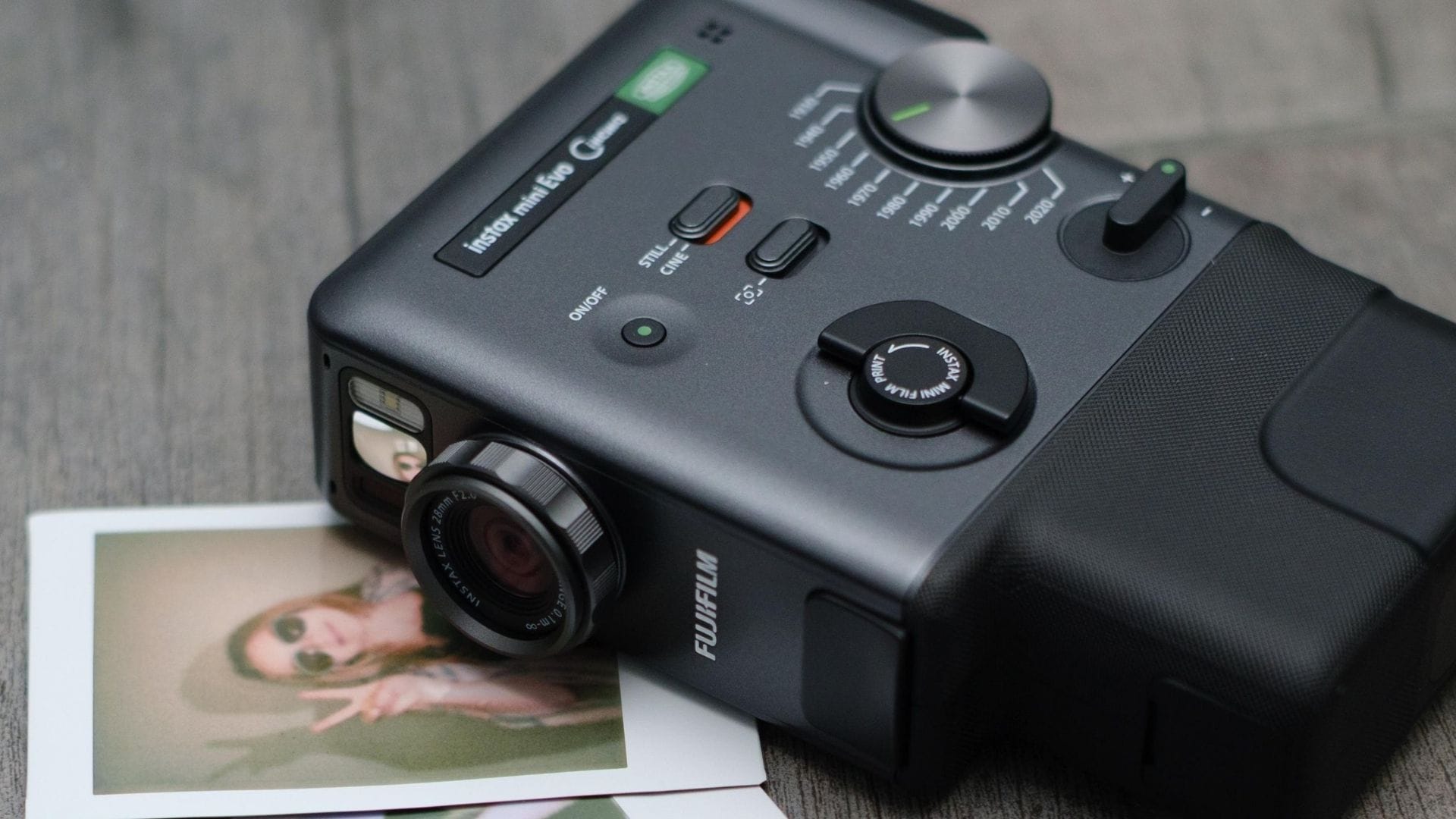
A key feature of the Instax Mini Evo Cinema is its focus on creative control through physical dials. The camera includes a Gen Dial that lets users select from 10 filters, each inspired by a specific era, ranging from the 1930s to the 2020s. These filters are designed to recreate the visual characteristics associated with different periods in photography, from muted tones to more modern, high-contrast looks.
Alongside this is a Degree Control Dial, which provides finer adjustments to colour, contrast and noise. By rotating the dial, users can create up to 10 variations within each era, resulting in up to 10 intensity levels per filter. This approach is intended to give users more granular control over the final look of their photos and videos, without relying on complex menus.
The camera also includes a Frame Switch feature, which lets users add period-inspired frames to both images and videos. These frames are matched to the selected era, mimicking the appearance of cameras and film formats from different decades. Fujifilm said this is meant to enhance the nostalgic feel of both printed and digital outputs.
For framing and composition, the Instax Mini Evo Cinema features a digital zoom controlled by a dedicated Zoom Lever. It also features a built-in selfie mirror, a timer for hands-free shots, and a 1.54-inch LCD screen that allows users to preview images and video clips before printing or saving them.
App connectivity, printing options and Singapore availability
Switching between photo and video capture on the Instax Mini Evo Cinema is handled through Cine and Still modes. The camera can automatically stitch clips together, making it easier to create short videos without additional editing. For more advanced control, Fujifilm offers the free Instax Mini Evo smartphone app, which connects to the camera via Bluetooth.
Through the app, users can reorder clips, extend video length to up to 30 seconds, and send print instructions wirelessly to the camera. Videos and their accompanying audio can be stored for up to 24 months. One notable feature is the ability to print QR codes alongside photos, allowing others to scan the code with their phones to view the corresponding video clip online.
The camera supports file transfers and storage through a USB-C port and a MicroSD card slot, offering flexibility for users who want to back up or edit their content on other devices.
Launching alongside the camera in Singapore is the Instax Mini Link+ smartphone printer. Designed for users who prefer to print directly from their phones, the printer works with the Instax Mini Link app on iOS and Android. Users can customise and preview their images before printing, with Bluetooth 5.1 handling the wireless connection.
The printer supports JPEG, PNG, HEIF and DNG file formats, and uses Fujifilm Instax Mini Instant Film. Each print measures 46 x 46mm, with a resolution of 800 x 600 pixels and a pixel density of 318 dpi. The printer weighs 240g and is rated for up to 100 prints on a full charge, with a charging time of around two to three hours via USB-C.
In Singapore, the Instax Mini Evo Cinema is priced at S$529, while the Instax Mini Link+ printer is available for S$229. Both products are aimed at users who want to bridge the gap between physical instant photography and digital-first content creation.