


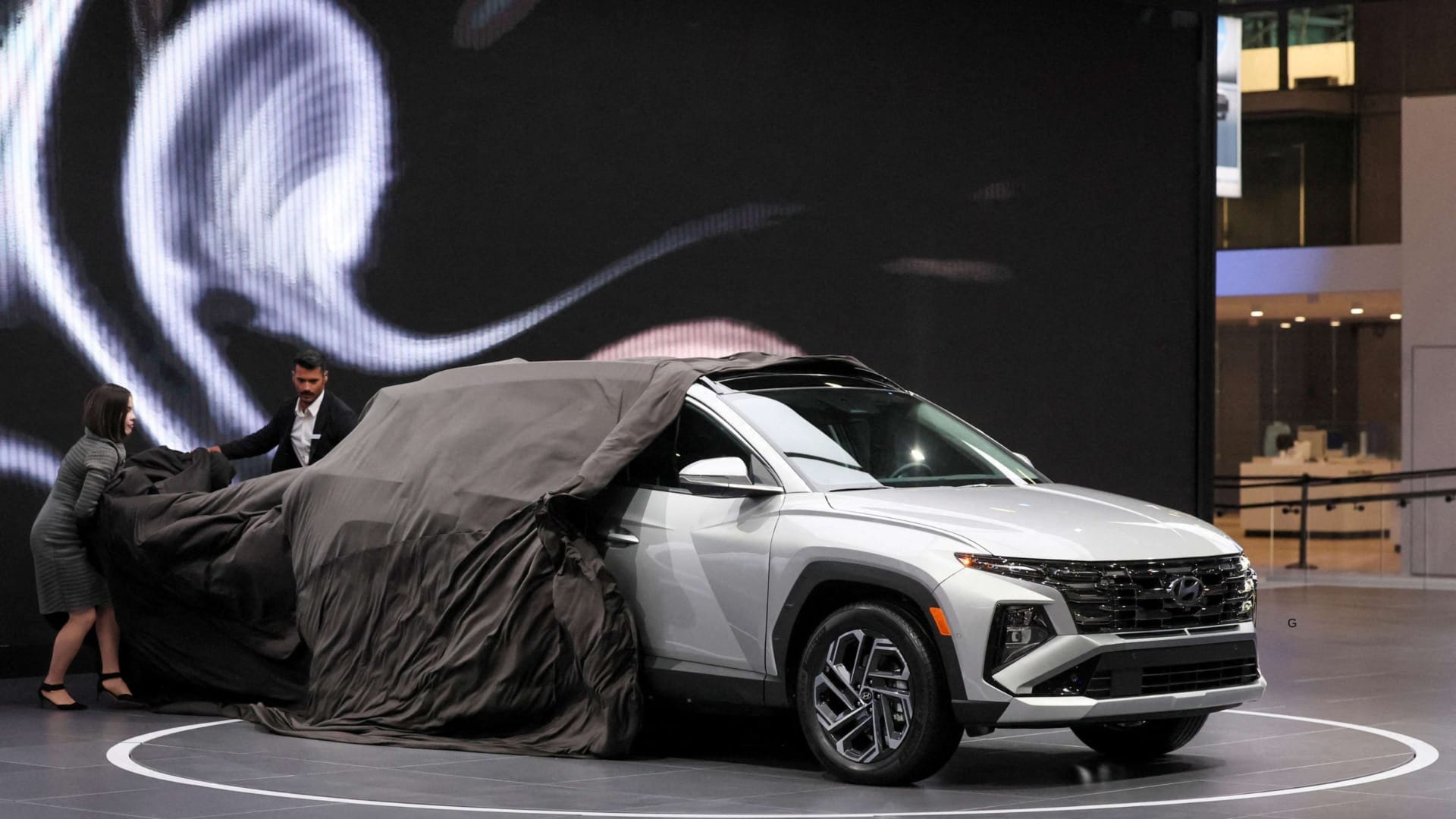
Electric vehicle sales may be experiencing a slowdown, but Hyundai remains undeterred. The South Korean automaker is “doubling down” on its investment in EVs, including a US$7.6 billion manufacturing facility in Georgia, according to Hyundai Motor America CEO Randy Parker.
Commitment to electric vehicles
While other manufacturers are rethinking their electrification strategies, Hyundai continues to focus on its products. “Our products have done extremely well in the marketplace,” Parker said in an interview with The Verge. The company’s popular models include the Hyundai Ioniq 5 and Ioniq 6, as well as the refreshed Kona Electric. Recently, the performance-based Ioniq 5 N won the 2024 World Performance Car Award.
Hyundai’s EV sales have been strong, despite industry challenges. The company sold 14,798 EVs in March 2024 across its battery-electric models, marking a 53 per cent increase over the previous year. In contrast, other automakers have seen sales declines, prompting them to delay factory plans or cut back on investments.
Globally, Hyundai sold 153,519 electrified models in the first quarter of 2024, including hybrids, plug-in hybrids, battery-electric vehicles, and fuel-cell electric vehicles. However, this figure represents a 4.8 per cent decrease compared to the same period last year. Additionally, Hyundai’s global operating profits fell by 2.3 per cent year over year. Despite these figures, Parker remains optimistic about the US market.
Addressing consumer concerns
In the United States, Hyundai is working to address the main issues preventing EV adoption: price and charging availability. Parker highlighted a “very aggressive 24-month lease programme” for the Ioniq 5 and Ioniq 6. These vehicles offer a “class-leading range”—up to 303 miles for the Ioniq 5 and up to 360 miles for some versions of the Ioniq 6—to ease concerns about charging. Both models also feature 800-volt architectures, allowing them to add 100 miles of range in as little as seven minutes, depending on the charger’s speed.
“We’re trying to make driving an EV affordable,” Parker said. “At the same time, we’re removing some of those objections when it comes to range and charging.”
Additionally, Hyundai has partnered with Tesla to give its customers access to Tesla’s Supercharger network. Parker stated that existing Hyundai EV owners will gain access to Tesla Superchargers by the end of 2024, with adapters being mailed out starting in the first quarter of 2025. Despite Tesla’s recent layoffs affecting its Supercharger team, Parker is confident in the partnership. “I haven’t been given any reason to doubt our strategy moving forward,” he said.
Overcoming obstacles
Hyundai faces several challenges as it continues to push for an all-electric future. Currently, Hyundai’s EVs are made in South Korea, making them ineligible for the US$7,500 federal EV tax credit. This situation could change once the new Georgia plant is operational, with the first EVs expected to roll off the assembly line in the fourth quarter of this year. This factory will also produce electric vehicles for Kia and Genesis.
Labour challenges may also arise. The United Auto Workers (UAW) recently succeeded in unionising a Volkswagen plant in Tennessee and are now targeting more Southern factories, including Hyundai’s. Parker noted that Hyundai prides itself on its “very strong culture,” but acknowledged that any unionisation vote would be up to the workers. “The decision to be represented by a union is purely up to the team members, and so far, they’ve spoken, and I’ll just leave it at that,” he said.
Despite these hurdles, Hyundai’s future remains electric. The company may need to sell a mix of hybrids and petrol cars before a complete transition to EVs, but Parker is convinced they are on the right path. “It’s a transition, just like anything else,” he said. “People transitioned from rotary phones to iPhones. The future is electric, and in some regards, we’re already late.”