

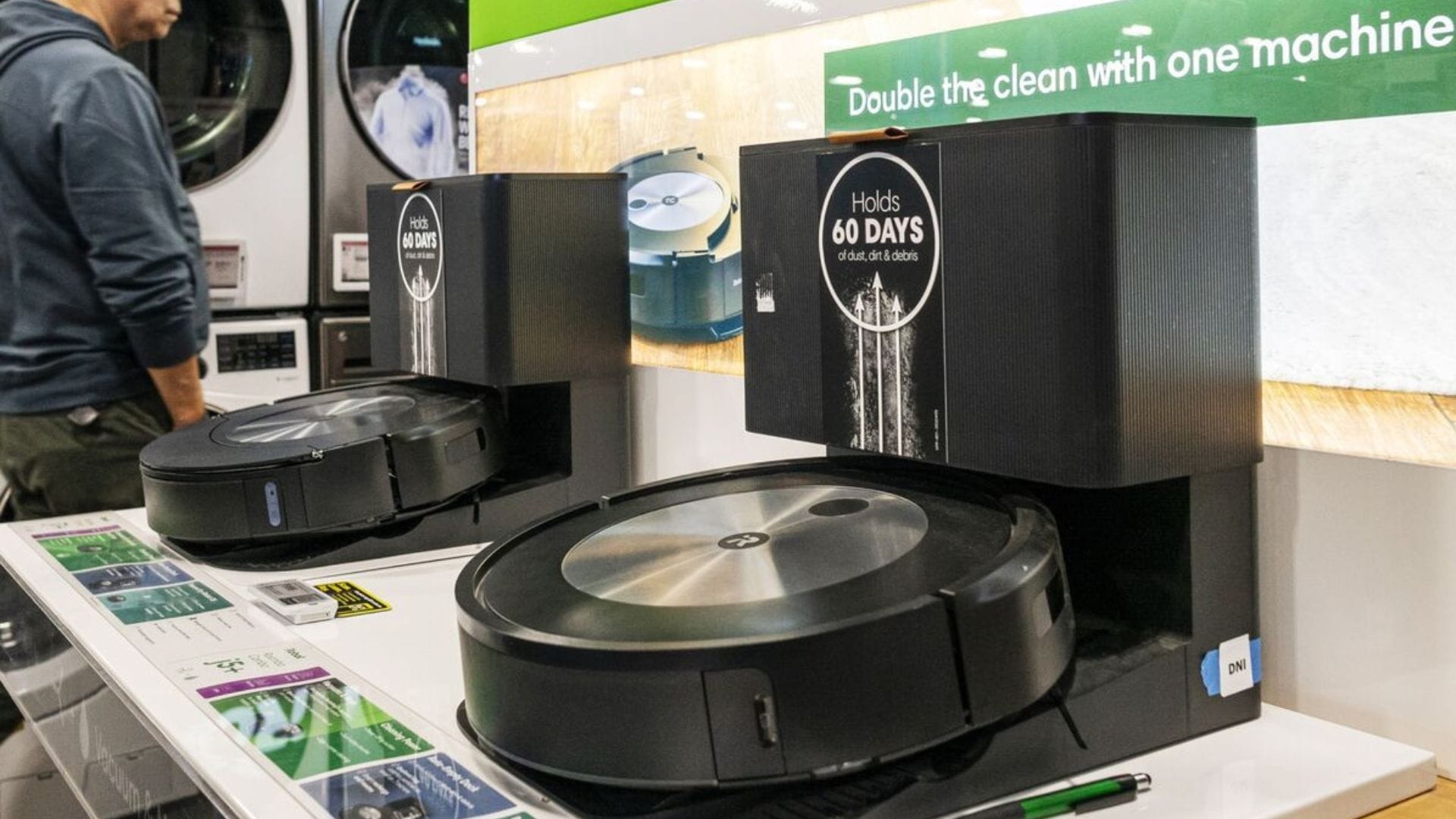
The company behind the Roomba robot vacuum has filed for Chapter 11 bankruptcy protection after years of financial strain, weak sales, and a high-profile acquisition collapse involving Amazon. iRobot, a Massachusetts-based robotics firm that has been operating for 35 years, confirmed on Sunday that it had filed for bankruptcy in the US District Court for the District of Delaware.
In a press release, iRobot said the move was part of a plan to stabilise the business and secure its future through a sale to its main manufacturing partner and lender, Shenzhen PICEA. The transaction, subject to court approval, would see iRobot fully acquired by Picea and taken private, with its shares delisted from public exchanges.
The filing marks a major turning point for one of the most recognisable names in consumer robotics, whose products helped bring automated home cleaning into the mainstream. Once a pioneer in household robotics, iRobot has struggled in recent years to maintain growth amid rising competition, pricing pressure, and limited access to new capital.
Sale to manufacturing partner aims to keep business running
Under the proposed deal, Shenzhen PICEA would assume full ownership of iRobot. Picea is best known as a vacuum cleaner manufacturer and has long served as iRobot’s primary manufacturing partner. The company operates research and development and manufacturing facilities in China and Vietnam, according to iRobot’s statement.
iRobot said the acquisition would allow it to continue operating without interruption while restructuring its finances under bankruptcy protection. The company added that the arrangement would support ongoing product development, enable it to make “timely payments to vendors and creditors,” and allow it to meet its commitments to employees.
As part of the transaction, iRobot would cease to be a publicly listed company. Its common stock would be delisted, effectively wiping out existing shareholder equity. While this outcome is likely to disappoint investors, the company framed the move as the most viable path to preserve the business and its brand.
The Chapter 11 process is designed to allow companies to reorganise while continuing operations, rather than shutting down entirely. iRobot did not provide a timeline for completing the sale, but said it would continue selling products and supporting customers throughout the process.
From robotics pioneer to financial distress
iRobot was founded in 1990 by three roboticists from the Massachusetts Institute of Technology. The company initially focused on advanced robotics for defence and research before turning its attention to consumer products. Its breakthrough came in 2002 with the launch of the Roomba, a disc-shaped robotic vacuum cleaner that could navigate homes autonomously.
The Roomba quickly became synonymous with robot vacuums, helping to establish a new consumer electronics category. Over the following two decades, iRobot sold millions of units worldwide and expanded its product range to include mopping robots and other connected home devices.
Despite its early success, the company struggled to adapt to a changing market. Competition intensified as lower-cost rivals, particularly from China, entered the robot vacuum space with feature-rich alternatives. At the same time, inflation and shifting consumer spending habits put pressure on discretionary purchases, including home electronics.
These challenges were reflected in iRobot’s recent financial performance. In its third-quarter earnings report, the company said its cash balance stood at US$24.8 million as of 27 September, down from US$40.6 million at the end of June. The company also disclosed that it had withdrawn US$5 million in restricted cash on 27 September, after which it had “no sources upon which it can draw for additional capital.”
Revenue trends painted a similarly concerning picture. iRobot reported third-quarter revenue of US$145.8 million, representing a decline of around 25% compared with the same period a year earlier. Sales in the US, its largest market, fell by 33% year on year.
The company warned last month that its financial position had become increasingly precarious after the last potential buyer withdrew from acquisition talks. That development, iRobot said at the time, made a bankruptcy filing increasingly likely.
Amazon deal collapse deepens crisis
iRobot’s difficulties were compounded by the collapse of a proposed acquisition by Amazon, which had once been seen as a potential lifeline for the company. In 2022, Amazon announced plans to acquire iRobot for US$1.7 billion, a move that would have brought the Roomba maker into the tech giant’s smart home ecosystem.
However, the deal faced intense scrutiny from regulators in both the US and Europe, who raised concerns about competition and data privacy. In January 2024, Amazon officially abandoned the acquisition, citing regulatory hurdles that it said could not be resolved.
The termination of the deal had immediate consequences for iRobot. On the same day Amazon pulled out, iRobot announced plans to lay off 31% of its workforce as part of a cost-cutting effort. The company also confirmed that its chief executive, Colin Angle, would step down from his role.
The market reaction was swift and severe. iRobot’s share price fell sharply following the announcement, extending a long-term decline. Over the past year, the company’s stock has dropped by more than 50%. Looking further back, its shares are down by more than 90% over the past five years, reflecting sustained investor concerns about profitability and growth.
The failed Amazon deal removed what many analysts had viewed as iRobot’s best chance to secure long-term stability. Without the backing of a large technology company, iRobot was left to navigate mounting losses and limited cash reserves on its own.
With the Chapter 11 filing and proposed sale to Picea, iRobot is now attempting to reset its business under new ownership. While the move signals the end of its long run as an independent public company, it may offer the brand a chance to survive in a highly competitive market that it once helped to create.