


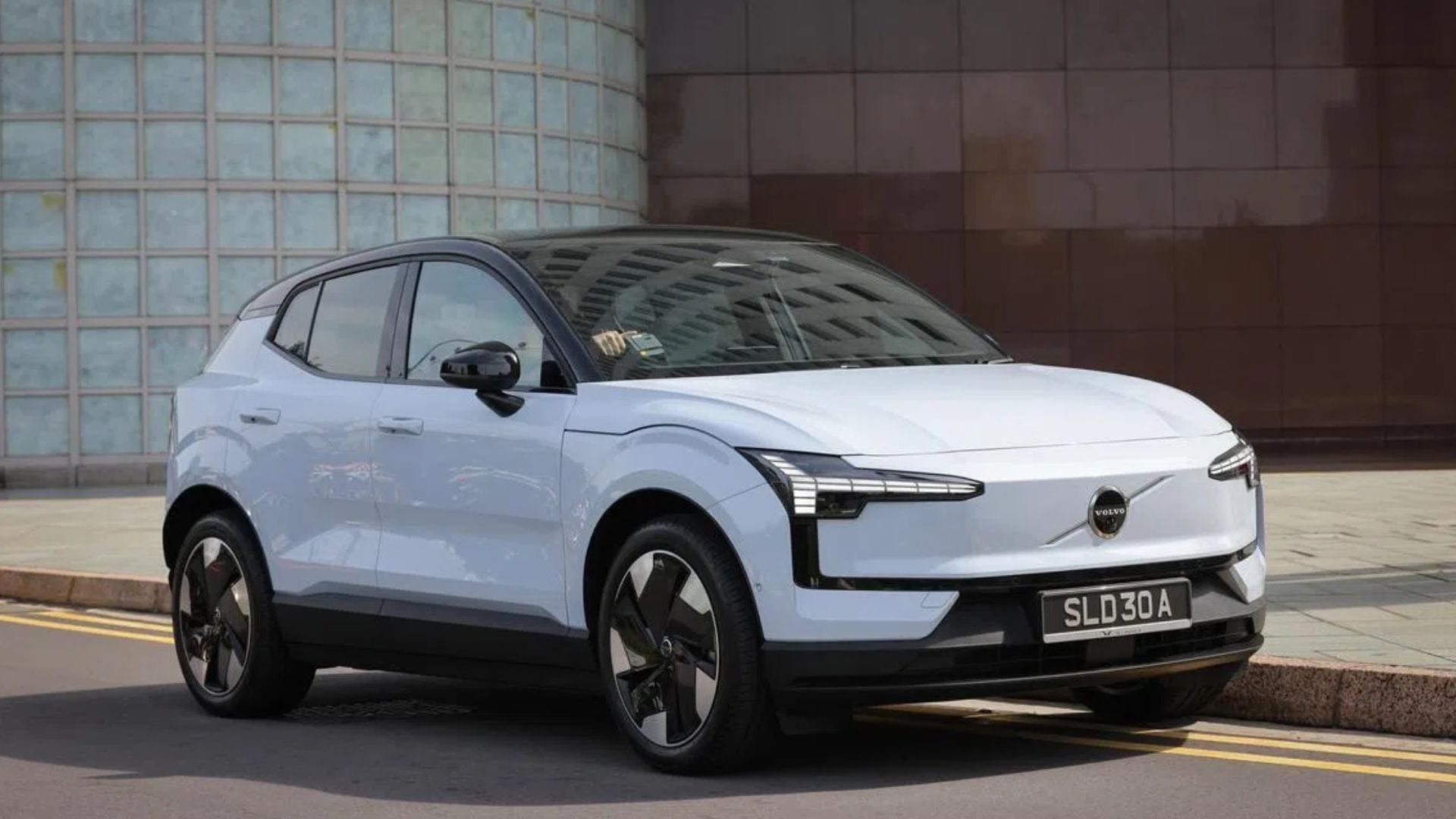
Volvo has advised a small group of electric vehicle owners in Singapore to temporarily limit how much they charge their cars, after identifying a potential battery defect that could, in rare cases, lead to a fire. The guidance applies to certain Volvo EX30 Ultra models and is described as a precautionary step while a permanent solution is developed.
The issue affects a limited number of vehicles locally and has not resulted in any reported incidents in Singapore. Volvo and its local distributor have begun contacting affected customers directly, as similar notifications are rolled out in other markets.
Temporary charging limit issued as a precaution
Around 143 owners of the Volvo EX30 Ultra electric car in Singapore have been told not to charge their vehicles beyond 70 per cent of battery capacity. The advice is intended to reduce the risk of overheating while Volvo continues its investigations and prepares a long-term fix.
Volvo said the charging cap is an interim measure and stressed that it will inform owners once a permanent solution becomes available. At that point, the company will also advise whether a physical recall is required. The Swedish carmaker added that there have been no reports of injuries linked to the issue anywhere in the world.
Globally, 33,777 vehicles are affected. Volvo said that about 0.02 per cent of these cars, equivalent to roughly seven units, have been reported to have caught fire. The company confirmed that none of these incidents occurred in Singapore.
Wearnes Automotive, Volvo’s distributor in Singapore, said the risk arises only in rare circumstances. A spokesperson explained: “In rare cases, the battery can overheat when charged to a high level, which could, in a worst-case scenario, lead to a fire starting in the battery.” The distributor added that it is working closely with Volvo to support customers during this period.
Specific models and production series involved
The issue affects only the 200kW version of the Volvo EX30, commonly known in Singapore as the Category B Certificate of Entitlement model. The lower-powered 110kW version, which is also sold in the country, is not affected by the advisory.
According to Wearnes Automotive, the vehicles involved are MY24 and MY25 models. These model year labels refer to vehicle versions rather than the actual production or sale dates. In the automotive industry, production of a MY25 model typically begins in late 2024, even if the vehicle is sold earlier.
Volvo has emphasised that not all vehicles from these two series are affected, and that the issue is limited to certain units. Owners affected are being notified directly by letters from Wearnes Automotive. Customers can also contact their service consultants or call the Volvo Service Centre for further assistance.
The Volvo EX30 Ultra was launched in Singapore in the first half of 2024 and is positioned as a compact electric SUV aimed at urban drivers. Since its launch, it has attracted attention for its design and performance, making the safety advisory particularly notable despite the small number of cars involved.
Global investigations and next steps
Volvo formally posted the notification on Singapore’s Land Transport Authority electronic vehicle recall system on 30 December. In the notice, the company said “investigations have identified that in very rare cases, overheating of the high-voltage battery cells may occur at high battery charge levels. If this happens, a warning message stating HV-Battery overheating will occur”.
Similar actions are underway in other countries. There are 10,440 affected vehicles in Britain, 2,815 in Australia and 40 in the United States. Volvo said it is applying the same precautionary measures across markets while engineers work on a permanent fix.
The EX30 is part of Volvo’s wider electric vehicle strategy and shares components with other brands under China’s Geely Automotive Group. One of these is the Zeekr X, which is also sold in Singapore. However, Zeekr’s local agent, Premium Automobiles BEV, said on 13 January that the Zeekr X is not affected because it uses a different battery.
Volvo has not provided a timeline for when a permanent solution will be ready, but said affected owners will be contacted as soon as more information is available. For now, the company maintains that the risk remains very low and that the temporary charging limit is a precautionary step to ensure customer safety.