

At Web Summit Qatar, Scale AI CEO Alexandr Wang faced strong opposition to his call for the United States to lead the global AI race. Last month, Wang took out a full-page ad in The Washington Post, urging then-President Trump that “America must win the AI war.” However, the sentiment was not widely shared by the summit’s audience.
During the event’s opening night on Sunday, Wang’s interviewer, Axios journalist Felix Salmon, took a quick poll. When he asked how many agreed with Wang’s statement, only two hands went up. When he asked how many disagreed, most of the audience raised their hands.
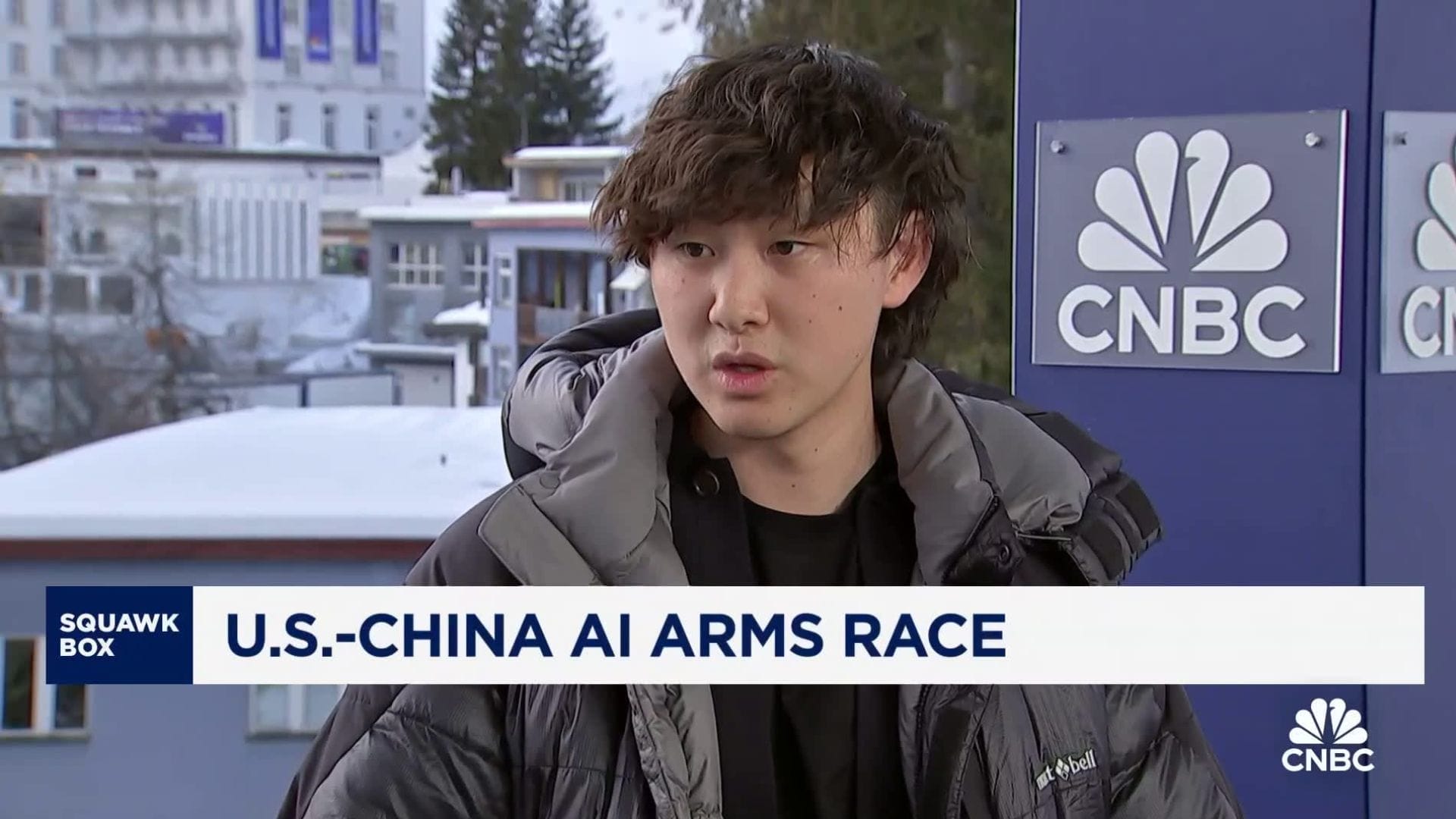
Salmon then challenged Wang to justify his position. Wang argued that AI would dramatically reshape national security, likening its impact to the development of nuclear weapons. He highlighted his upbringing in Los Alamos, New Mexico—home of the atomic bomb’s creation—and mentioned that his parents were physicists at the National Laboratory. Wang believes the U.S. and China are locked in a critical AI arms race and warned that China could “leapfrog” Western military capabilities using AI advancements.
The growing debate on AI and national security
Wang’s perspective aligns with an increasing number of defense tech startups and venture capitalists who advocate for greater autonomy in AI-powered weaponry. They argue that the U.S. should push forward with AI-driven defence technologies, fearing China could develop fully autonomous AI weapons. At the same time, the U.S. remains limited by ethical constraints requiring human oversight before deploying such systems.
Beyond military concerns, Wang also framed the competition as a battle for control over foundational large language models (LLMs). He argued that the race will ultimately come down to two key players: the U.S. and China. According to Wang, American AI models uphold free speech principles, while Chinese models reflect the values of a communist regime. Although research has shown that popular Chinese LLMs contain built-in government censorship, Wang’s stance ignored other AI players, such as France’s Mistral, which are also competing on the global stage.
Scale AI’s role in global AI development
Wang’s argument about government influence in AI gained further significance as his speech coincided with Scale AI’s new partnership with the Qatari government. On Sunday, Scale AI announced an agreement to help Qatar develop 50 AI-powered government applications in sectors like education and healthcare.
Scale AI is best known for its vast workforce of contract workers, many based outside the U.S., who manually assist in training AI models. The company works with major U.S. tech firms like Microsoft, OpenAI, and Meta. It also offers AI data services and applications, including some designed specifically for the defence industry.
While Wang’s pro-American stance may appeal to the U.S. Department of Defense, his Web Summit appearance highlighted a global audience that remains sceptical about any single nation—especially the U.S.—dominating AI development. The debate over ethics, security, and international competition will only grow as AI continues to evolve.