

ASUS Republic of Gamers (ROG) has introduced the ROG Swift OLED PG27UCDM, marking the debut of the world’s first 27-inch 4K OLED gaming monitor. Pre-orders began on 21 January, with the monitor priced at S$1,679 in Singapore. Gamers can expect it to hit shelves by the end of February 2025.
Cutting-edge display features
The ROG Swift OLED PG27UCDM utilises fourth-generation QD-OLED technology, boasting a pixel density of 166ppi. This results in sharper visuals, clearer text, and infinite contrast, delivering an immersive gaming experience. The monitor supports a 240Hz refresh rate and an ultra-fast 0.03ms response time, ensuring smooth and responsive gameplay.
In terms of connectivity, it offers a range of options, including DisplayPort 2.1a UHBR20 with 80Gbps bandwidth for uncompressed image quality, HDMI 2.1, and USB-C with 90-watt power delivery. Additionally, it supports VESA DisplayHDR 400 True Black, Dolby Vision, and HDR10, all accessible via the OSD menu.
Enhanced usability and anti-flicker technology
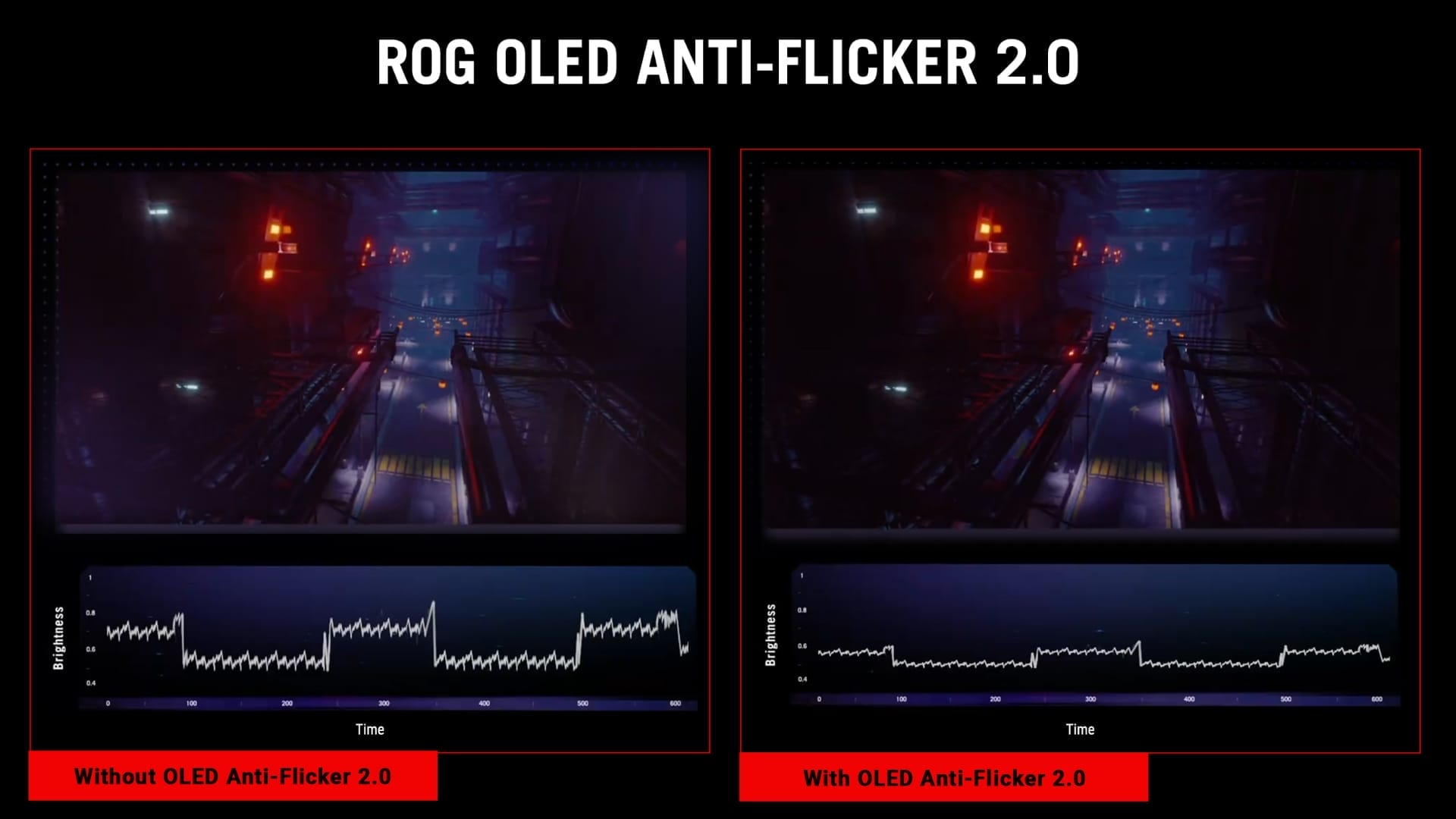
ASUS has equipped the monitor with the ROG OLED Anti-Flicker 2.0 technology, which reduces onscreen flicker by 20% compared to earlier models. By using an advanced luminance-compensation algorithm, the monitor ensures uniform visuals while maintaining low input lag and high refresh rates. Gamers can also adjust the refresh rate cap with three preset ranges to minimise flicker further.
The ROG DisplayWidget Centre provides quick access to monitor settings, allowing users to customise display options easily.
OLED Care Pro and Neo Proximity Sensor
One of the standout features of the ROG Swift OLED PG27UCDM is its OLED Care Pro suite, designed to prolong screen life and prevent burn-in. The newly added Neo Proximity Sensor uses wavelength detection to determine the user’s distance from the monitor. When the user moves away, the display automatically switches to a black screen, minimising potential damage. The detection range can be customised for ergonomic viewing preferences.
Other OLED protection features include pixel cleaning, a screen saver, taskbar detection, and a three-year warranty, ensuring peace of mind for users.