


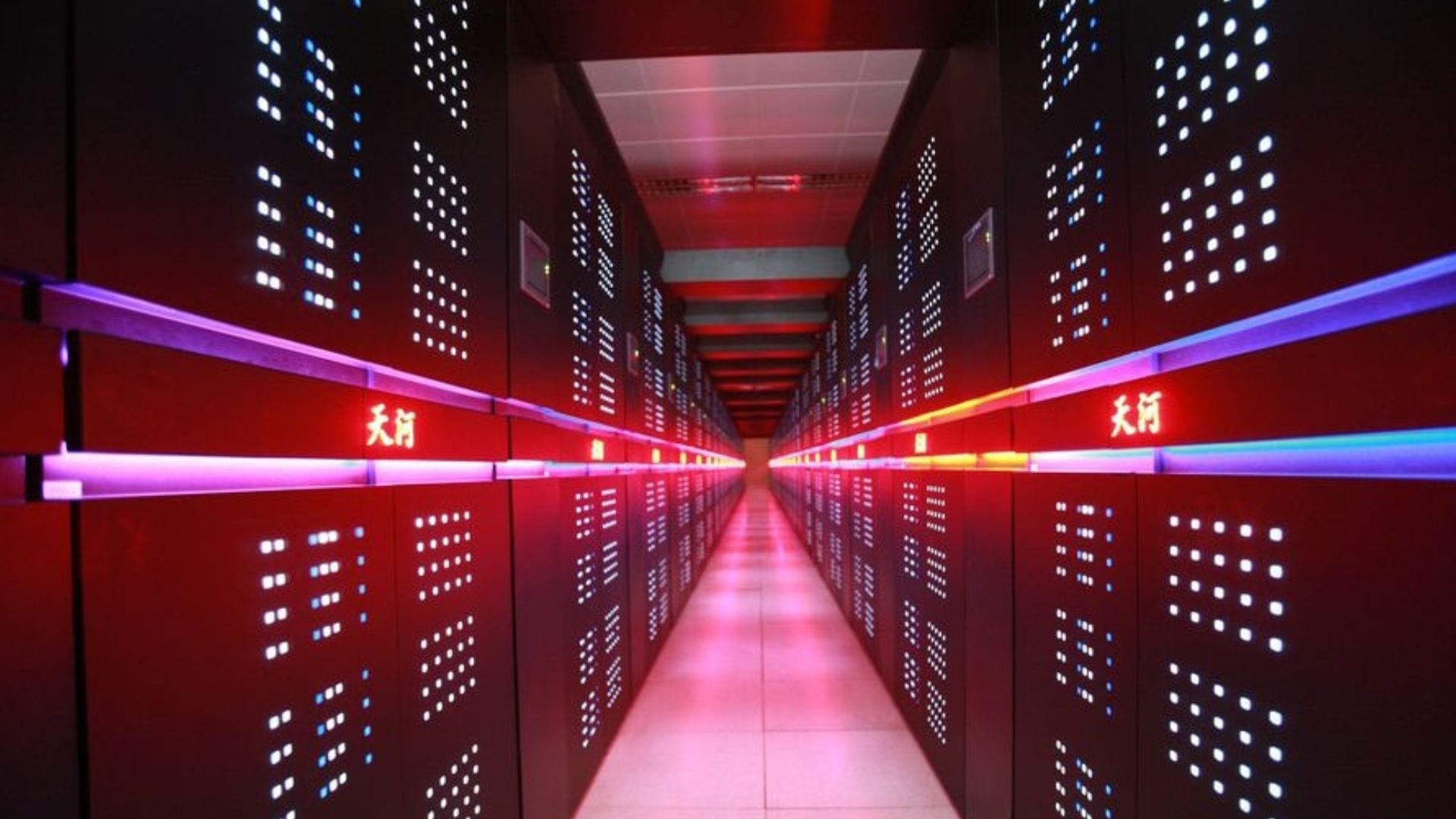
China has reclaimed the title of the world’s fastest supercomputer for the first time since 2017, following the debut of a new system known as LineShine. The machine achieved a sustained performance of 2.198 exaflops, surpassing the previous record holder, El Capitan, which reached 1.809 exaflops at Lawrence Livermore National Laboratory in the United States.
The latest rankings, published by Top500, mark a significant milestone for high-performance computing. LineShine is the first supercomputer to exceed two exaflops of sustained double-precision performance using only central processing units (CPUs), setting it apart from many of the world’s leading systems that rely heavily on graphics processing units (GPUs).
LineShine achieves breakthrough performance
LineShine emerged as a previously unlisted system and immediately moved to the top of the global rankings. Developed at China’s National Supercomputer Centre, the machine demonstrates that alternative computing architectures can compete with, and even surpass, systems built around GPU acceleration.
A custom-designed 304-core processor powers the supercomputer. In total, it operates approximately 13.79 million processing cores running at 1.55 GHz. These cores are connected through a proprietary interconnect system designed specifically for the machine’s architecture.
Despite ongoing technology restrictions and export controls that limit access to some advanced semiconductor technologies, LineShine outperformed its American counterpart without relying on GPUs. The system consumes around 42.2 megawatts of power and delivers an efficiency rating of 52.07 gigaflops per watt.
Commenting on the achievement, Top500 organiser Dr Jack Dongarra told The New York Times: “It’s an impressive system. They upped us by developing a system that is not reliant on GPUs.”
The result highlights China’s continued investment in advanced computing technologies and demonstrates the country’s ability to develop high-performance systems using domestically designed hardware and alternative system architectures.
Exascale computing expands worldwide
Although China now occupies the top position, the latest Top500 rankings show that exascale computing is becoming increasingly widespread. The current list includes five systems capable of exceeding the exascale threshold of one exaflop.
Following LineShine and El Capitan, Oak Ridge National Laboratory’s Frontier system in the United States now ranks third at 1.353 exaflops. Aurora, located at Argonne National Laboratory, remains in fourth place with 1.012 exaflops.
Germany has also strengthened its presence among the world’s most powerful systems. The Jupiter Booster supercomputer at the Jülich Supercomputing Centre reached exactly one exaflop, securing fifth place in the rankings.
The distribution of these systems reflects growing international competition in advanced computing. Governments, research institutions and technology companies increasingly depend on supercomputers to support scientific research, artificial intelligence development, climate modelling and national security projects.
The rankings also reveal that a single technological approach no longer dominates leadership in supercomputing. Different organisations are pursuing a range of hardware strategies to achieve top performance, reflecting rapid innovation across the sector.
Diverse technologies reshape the supercomputing landscape
According to Top500, this year’s rankings showcase a high degree of architectural diversity among leading systems. Manufacturers and research organisations are using a broad mix of processors, accelerators and computing designs to achieve world-class performance.
In its analysis of the latest list, Top500 noted: “There is no single dominant technology path to leadership-class computing; instead, vendors are pursuing a variety of CPU, GPU, APU, and custom-accelerator approaches.”
This diversity signals a shift in the supercomputing industry, where organisations are increasingly experimenting with specialised hardware to meet growing computational demands. Rather than following a standard design model, developers are tailoring systems for specific workloads and performance goals.
China’s approach to LineShine reflects this trend. While many details of the machine remain undisclosed, the project demonstrates that custom processor designs can compete effectively with systems built around more widely used technologies.
Historically, China has maintained strict controls over information related to its most advanced supercomputers. However, reports indicate that LineShine was developed without public funding, allowing its creators greater flexibility to participate in international benchmarking programmes such as Top500.
Even so, some technical information remains confidential. The developers have not disclosed the manufacturer of the processors used in the system or the semiconductor technology behind the chips. As a result, many aspects of LineShine’s design remain unknown, adding to the intrigue surrounding the machine’s record-breaking performance.
The achievement nevertheless represents a major moment in the global race for computing power and highlights the increasingly varied approaches being used to push the limits of modern supercomputing.