

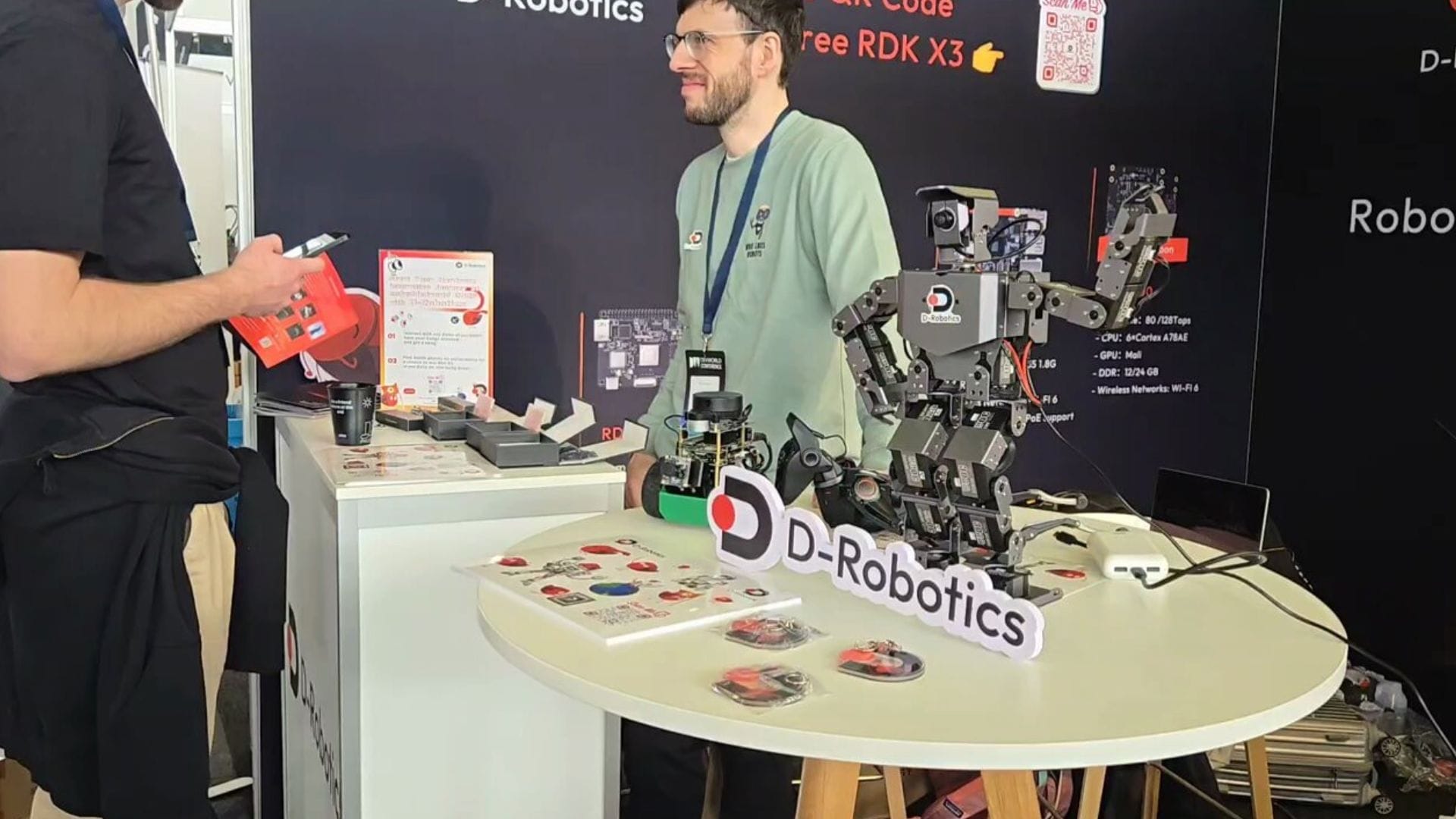
If you’ve ever imagined robots acting with the intuition and control of a human, D-Robotics is one step closer to making that a reality. On June 11, the company launched the RDK S100 — the world’s first all-in-one system-on-chip (SoC) development kit designed to support human-inspired robotic systems. This new solution helps close the loop between perception, decision-making, and action by fusing cognitive processing and motor control within a single chip.
The RDK S100 is built to enable cooperation between large and small artificial intelligence (AI) models. This combination creates a flexible system where a robot can analyse its surroundings, make decisions, and act—all in real-time. It’s a critical breakthrough for those building what’s known as “embodied intelligence”—the idea that machines can both understand the world and physically respond to it with precision.
Unlike traditional robotic systems that separate brainpower from motor control, the RDK S100 combines a central processing unit (CPU), a brain processing unit (BPU), and a microcontroller unit (MCU) on a single chip. This integration helps reduce hardware costs, boost processing efficiency, and enhance robots’ ability to manage tasks in dynamic environments.
Smarter decisions, faster reactions
The new system’s hybrid architecture allows it to use large AI models—such as vision-language or large language models—for tasks like perception and reasoning. At the same time, smaller models manage rapid, low-latency motor commands. According to D-Robotics, this split not only increases speed but also reduces CPU workload by up to 80%, leading to sharper and quicker responses.
For instance, imagine a robot receiving a voice command to fetch a cup. The CPU and BPU process visual and semantic data, factoring in the robot’s surroundings and current state. Based on this, the BPU develops a motion plan. The MCU executes the plan immediately, helping the robot carry out the task efficiently and carefully.
The RDK S100 supports various peripheral interfaces, making it ideal for research, development, and prototype testing. D-Robotics includes a full development suite featuring AI modelling tools, hardware acceleration, and a library of over 200 open-source algorithms and sample applications. This package makes it easier for developers to test ideas, refine performance, and move closer to real-world use.
Designed for a growing robotics market
In an interview, Hu Chunxu, vice president of D-Robotics’ developer ecosystem, described the current robotics world in three main groups. First, you have traditional robots—think factory machines and robotic vacuums—that operate in mature markets. Second, you have newer, niche machines like pool cleaners, ball collectors, or robotic companions that focus on specific tasks. Third, you have the most advanced segment: embodied robots, such as humanoids and quadrupeds, which require complex AI and computing power to succeed.
Hu explained that each area demands different performance levels, so D-Robotics plans to introduce additional boards with tailored specifications. These will work alongside the RDK S100 to serve various applications, from consumer gadgets to high-end research robots.
Over 50 clients are already testing the RDK S100, which is supported by partnerships with more than 20 firms working in embodied intelligence. Priced at US$391.90 (RMB 2,799), the kit is compatible with a range of robotic platforms, including those using bird’ s-eye view (BEV) or multi-stream video processing systems.
Looking ahead, D-Robotics says it will expand its offering with higher-performance systems in early 2026, aiming to push the boundaries of what intelligent machines can do. If you’re working on next-generation robotics, this SoC kit might be the leap forward you’ve been waiting for.