


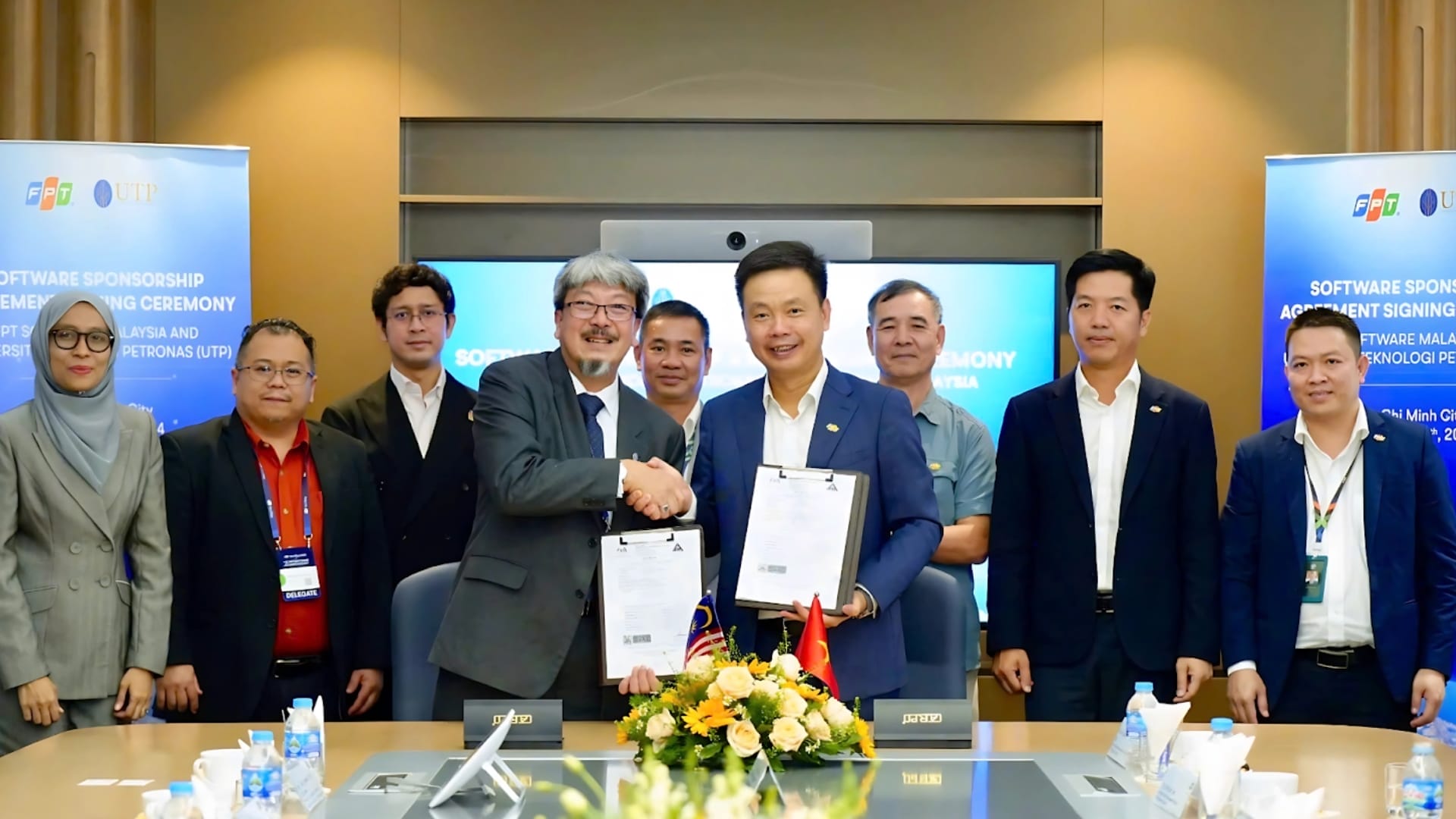
FPT, a global technology corporation, has partnered with Malaysia’s Universiti Teknologi PETRONAS (UTP) to advance the nation’s technology education and accelerate digital transformation, with a strong emphasis on artificial intelligence (AI). The collaboration was formalised through the signing of a Memorandum of Understanding (MOU) in Ho Chi Minh City, Vietnam.
The event was attended by UTP Vice-Chancellor Prof. Dato’ Ir Ts Dr Mohamed Ibrahim Abdul Mutalib, FPT Corporation Executive Vice President and FPT Software CEO Pham Minh Tuan, and senior representatives from both organisations.
Key benefits for UTP students and faculty
Through this partnership, UTP received a software donation valued at US$2 million from FPT. The university will gain access to FPT’s Total Augmented Data Analytics (TADA) solution, an AI-driven data management platform currently used by 20 energy companies. TADA is designed to collect, process, analyse, and visualise large-scale data up to 100 times faster than traditional methods. It is expected to enhance productivity by 50% and provide actionable insights for real-world applications across industries.
With FPT’s training and technical support, UTP staff and students will be equipped to leverage the TADA platform for educational purposes, boosting their analytical skills and preparing them for technology-driven roles.
Collaboration in key sectors
The partnership extends beyond AI tools, focusing on knowledge exchange, internships, and joint research initiatives. These activities align with Malaysia’s critical industries, including healthcare, energy, autonomous systems, and sustainability. UTP will also benefit from FPT’s global network and industry expertise, enabling students to engage in real-world projects and foster innovation.
This collaboration will also help FPT meet the growing demand from its clients while strengthening its presence in East Malaysia and the Brunei region.
Speaking about the partnership, Pham Minh Tuan, Executive Vice President of FPT and CEO of FPT Software, said, “FPT has been a long-term trusted IT partner of Petronas, playing a key role in several digital transformation initiatives. Our collaboration extends beyond technology to include workforce development. By bringing our AI expertise and advanced tools and promoting student exchanges between FPT University and Universiti Teknologi PETRONAS, we aim to empower the next generation of IT talent in both countries with the skills and knowledge needed to drive innovation and growth.”
Prof. Dato’ Ir Ts Dr Mohamed Ibrahim Abdul Mutalib, UTP Vice-Chancellor, remarked, “We are delighted to partner with FPT to advance our technological capabilities and provide our students with state-of-the-art tools and resources. This collaboration underscores our commitment to an advanced curriculum, equipped with cutting-edge software resources, and fosters a strong research and innovation culture. By partnering with industry leaders like FPT, we aim to prepare our students for the demands of the digital age and position UTP as a pioneer in integrating real-world tech partnerships into our academic environment.”
FPT’s growing footprint in Malaysia
Since entering Malaysia in 2006, FPT has established itself as a key player in the country’s digital economy, holding Multimedia Super Corridor (MSC) status. The company employs over 1,300 onsite and offshore professionals, offering AI, managed services, and cloud solutions to high-growth sectors such as BFSI, energy, healthcare, and the public sector.
Recently, FPT expanded its operations in Malaysia by opening a new office in Kuala Lumpur. The company plans to grow its workforce by 300-500 experts and establish a new Global Delivery Centre in Kuching, Sarawak, over the next five years.
This partnership with UTP marks another significant step in FPT’s efforts to drive technological advancement and nurture future-ready talent across Malaysia and the region.