

Microsoft has revealed Project Solara, a new platform designed to support AI agents across a range of connected devices. The announcement was made during Microsoft’s Build 2026 conference, where the company showcased two reference devices built on the platform: a smart display and a smart key badge.
The company believes the technology industry is entering a new era in which AI agents will replace traditional applications as the primary way people interact with digital services. Project Solara has been created to provide the hardware and software foundation for these future AI-first devices.
Rather than focusing on individual applications, the platform is intended to allow AI agents to manage tasks, retrieve information and interact with users across different types of devices. Microsoft said the project is aimed at organisations that require strong security, privacy and management capabilities while also delivering AI-driven experiences.
Microsoft demonstrates AI-powered reference devices
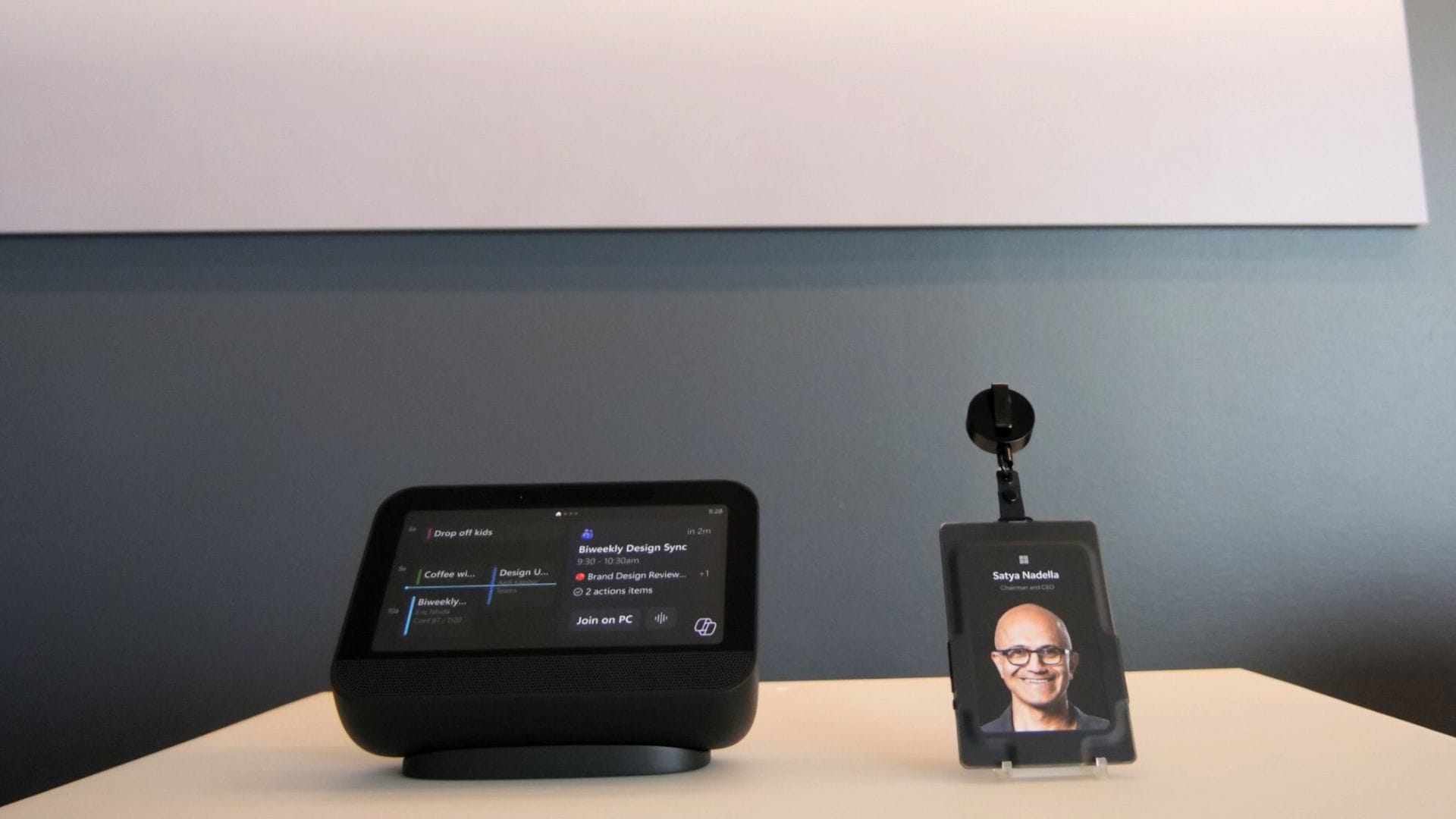
To illustrate Project Solara’s potential, Microsoft presented two reference designs during its keynote. The first was a smart display capable of accessing and presenting information from Microsoft 365 services, including Outlook calendars and Excel spreadsheets.
The display also supports voice commands, allowing users to interact with AI agents through natural conversation. According to Microsoft’s demonstration, the system could eventually perform tasks on behalf of users, reducing the need to navigate software applications manually.
The second reference design was a portable smart key badge equipped with a touchscreen, camera and 5G connectivity. The device offers similar AI-powered features while enabling users to access information and services on the go.
Microsoft stressed that these devices are not planned commercial products. Instead, they serve as examples of what manufacturers could build using Project Solara. The company repeatedly described them as reference designs intended to showcase the possibilities of hardware specifically developed for AI agents rather than conventional apps.
Qualcomm and MediaTek worked with Microsoft on the designs, though Microsoft said the platform itself is not tied to specific hardware partners. Project Solara is expected to support multiple device categories and a variety of components from different manufacturers.
“Project Solara is specifically designed for the new era of agent-first devices,” Microsoft says. “It establishes hardware and software requirements that will meet enterprise needs for manageability, security, and privacy, while ensuring critical user experiences are delivered.”
Flexible AI system avoids reliance on a single agent
One of the key aspects of Project Solara is its flexible approach to AI agents. Unlike some platforms that are built around a single assistant, Microsoft said Solara is designed to support multiple agents, giving users the freedom to choose which services they prefer.
The company explained that the platform does not depend on a “single dominant agent”. Instead, users will be able to select different AI agents depending on their needs. This approach could allow businesses and consumers to adopt specialised agents for different tasks without being locked into a single ecosystem.
Microsoft also outlined plans for future features that would simplify the management of multiple agents. The company said it hopes to introduce an “agent dispatcher and an agent task manager” capable of organising, coordinating and presenting AI services on behalf of users.
Another notable feature is what Microsoft calls “just-in-time UI”. This technology allows interfaces to adapt dynamically to different screen sizes and device formats. In some situations, the system can even generate new interface elements as needed rather than relying on pre-built layouts.
The approach reflects Microsoft’s view that future AI-powered devices will require more flexible user interfaces than traditional software applications. By dynamically generating and adjusting interfaces, the company believes devices can deliver more relevant experiences regardless of size or form factor.
Built on Android and set for real-world trials
Although Project Solara includes a significant amount of Microsoft-developed technology, the platform is built on Android. According to reports, it uses the Microsoft Device Ecosystem Platform (MDEP), Microsoft’s enterprise-focused version of Android.
Using Android as a foundation allows the platform to operate across a broad range of hardware. This could help manufacturers create new AI-powered devices more quickly while maintaining compatibility with existing technologies and enterprise systems.
Microsoft said the platform’s flexibility is one of its main advantages. By supporting a range of device categories and hardware configurations, Solara can be deployed across environments ranging from offices and retail stores to healthcare facilities and mobile workforces.
The company is preparing to test the platform through pilot programmes with several major organisations. Retail and healthcare groups, including Target Corporation, CVS Health and Best Buy, are expected to begin evaluating Solara-powered devices in the coming months.
These pilot projects will provide Microsoft with an opportunity to assess how AI-first hardware performs in real-world environments. The trials may also offer an early indication of whether the company’s vision of agent-based computing can gain traction beyond traditional smartphones and PCs.