


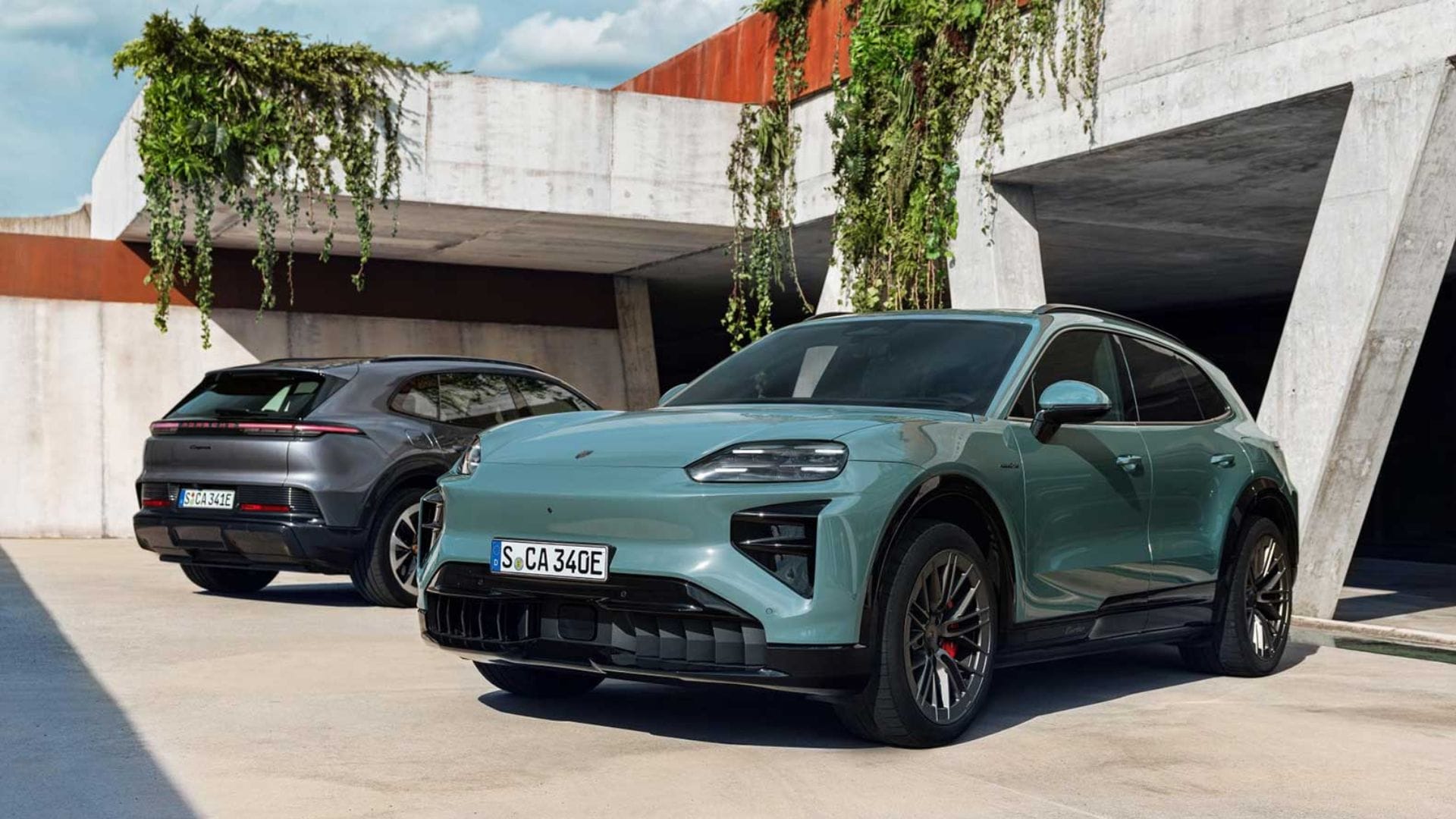
Porsche has introduced the latest generation of the Cayenne, confirming that the popular SUV will now be offered exclusively as an electric model. At launch, customers will be able to choose between two variants: the Cayenne Electric and the high-performance Cayenne Turbo Electric. Both models mark a major step in Porsche’s evolving electric strategy, arriving at a time when the company is navigating shifting global market conditions.
Performance and powertrain
The Cayenne Turbo Electric sits at the top of the line-up and delivers the kind of performance expected from Porsche’s most powerful SUVs. Its dual electric motors produce up to 850kW, which translates to 1,140hp. This allows the vehicle to accelerate from 0 to 100km/h in just 2.5 seconds. With the accelerator held down, it can reach 200km/h in 7.4 seconds before topping out at 260km/h. These figures are even more striking given that the vehicle weighs over 2,600kg.
The standard Cayenne Electric offers a more restrained specification but remains one of the quickest SUVs on the road. It produces up to 435hp and completes the 0-100km/h sprint in 4.8 seconds. Its top speed is 230km/h, making it a strong performer in its class.
Porsche claims a WLTP range of up to 642km for the Cayenne Electric, while the more powerful Cayenne Turbo Electric can achieve up to 623km on a full charge. These figures place both models among the longest-range electric SUVs available.
Charging technology and practicality
Charging is a key area of advancement for the new Cayenne models. With support for up to 400kW DC fast charging, the vehicle can charge from 10% to 80% in under 16 minutes when connected to a compatible high-speed charger. This capability significantly reduces downtime on long journeys.
Porsche also plans to offer optional inductive charging, allowing the vehicle to be charged wirelessly, similar to a smartphone. Using a dedicated floor plate, the system delivers up to 11kW of charging power. While not as fast as DC charging, it matches the speed of many AC home chargers and eliminates the need to handle cables, offering a more convenient day-to-day experience.
The new Cayenne is designed with practicality in mind. It is 55mm longer than the earlier petrol models, bringing its total length to just 15mm below 5 metres. Boot capacity is listed at 781 litres with the rear seats upright and 1,588 litres with them folded down. There is also a 90-litre front luggage compartment, expanding everyday storage options.
Inside the cabin, Porsche has equipped the SUV with a fully digital instrument cluster built around a 14.25-inch OLED display. An optional 14.9-inch passenger display is also available. Despite its shift towards digital controls, Porsche confirms that physical buttons for air-conditioning and volume will remain, addressing concerns from drivers who prefer tactile controls.
Market context and availability
The launch of the electric-only Cayenne comes at a challenging moment for Porsche. The company recently reported a 99% drop in profits, citing a restructuring of its electric vehicle plans and increasing difficulties in key markets. New tariffs in the US and intensified competition in China have both had direct impacts on its performance.
Despite these pressures, Porsche is pressing forward with its next-generation electric models. The Cayenne Electric and Cayenne Turbo Electric are available to order now, with customer deliveries expected to begin next year. Prices start at S$372,788 for the Cayenne Electric and S$668,288 for the Cayenne Turbo Electric.