


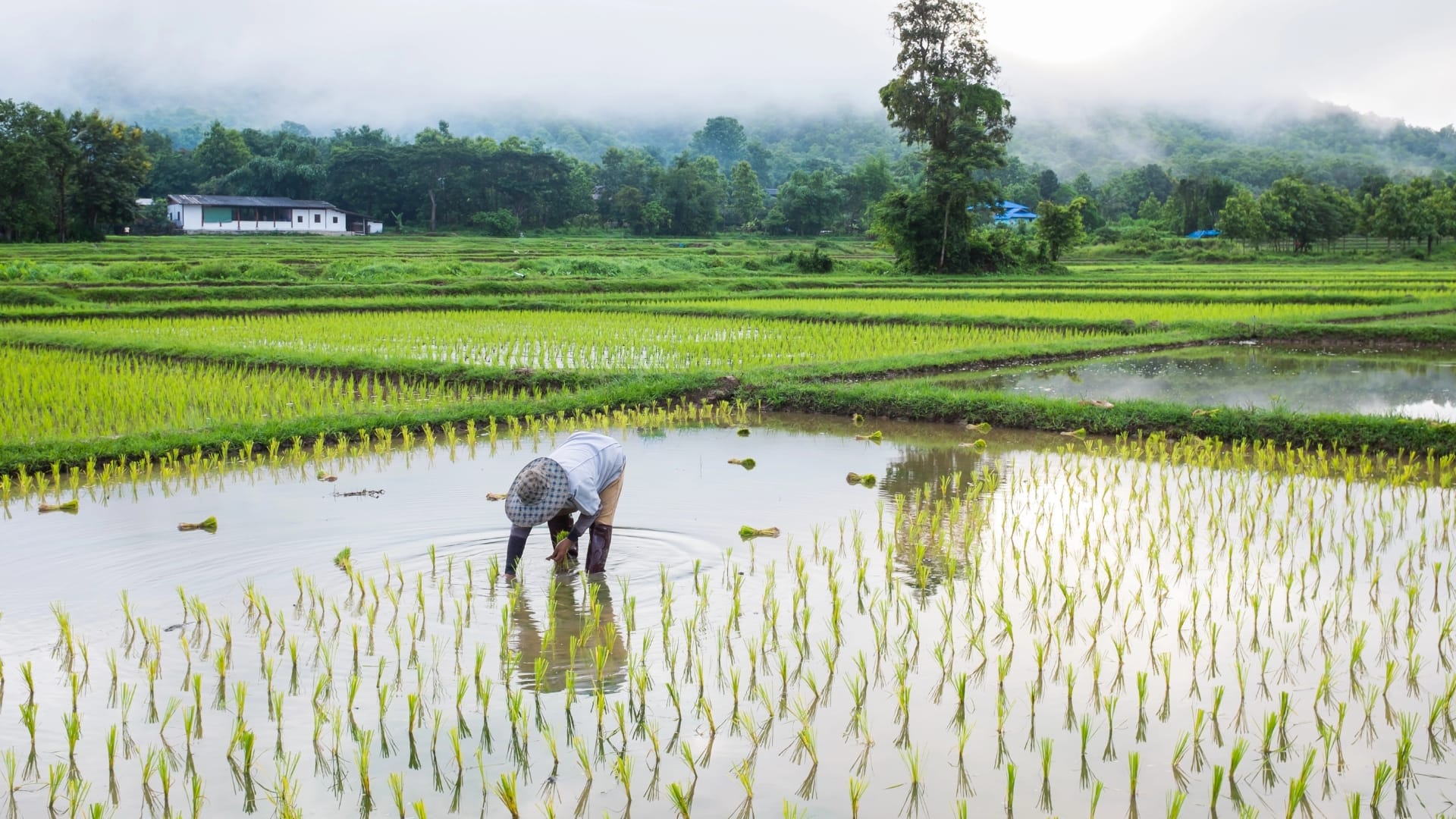
Rize has raised US$31 million in Series B financing to expand its sustainable rice operations across Southeast Asia. The capital will be directed towards driving export growth, strengthening supply-chain traceability, securing carbon certification, and deploying AI-powered tools for farmers and field teams.
The funding round comprises US$20 million in equity led by BNP Paribas Asset Management Alts, with participation from The Rockefeller Foundation, Temasek, and Breakthrough Energy Ventures. UOB, BIDV, and Temasek Foundation provided a further US$11 million in debt financing, bringing Rize’s total funding to US$47 million.
Rize has expanded its operations more than tenfold since its Series A round two years ago. The company now works with 17,000 smallholder farmers across more than 50,000 hectares in Vietnam and Indonesia, supported by a 250-person team spanning technology, agronomy, and field operations. It plans to extend this network to more than 150,000 farmers and 300,000 hectares by 2030.
Connecting farms with export markets
Much of this expansion will depend on Rize’s ability to connect changes in farming practices with the requirements of overseas buyers. To achieve this, the company plans to strengthen its field-to-buyer traceability systems, enabling rice to be tracked throughout the supply chain while helping farmers meet the residue and food safety standards required by export markets.
Rize has already shipped 1,500 metric tonnes of low-emission rice to buyers in Europe, Canada, Australia, and Singapore. The new funding will support further export growth alongside plans to expand beyond Vietnam and Indonesia into additional Southeast Asian markets.
The company also intends to open its farmer network to agricultural technology providers and businesses supplying farming inputs and services. This step will give external partners access to Rize’s existing field operations while broadening the range of products and support available to participating farmers.
AI-powered tools for farmers and field teams form another core component of the investment programme. These tools will sit alongside wider spending on agricultural technology, farming methods, and organisational growth as Rize increases the number of farms operating through its platform.
Linking lower emissions with farmer income
Rize’s farming model centres on Alternate Wetting and Drying, an irrigation method that allows rice fields to dry periodically instead of remaining continuously flooded. This approach is endorsed by the International Rice Research Institute and CGIAR.
According to Rize, the method can reduce methane emissions by up to 50% and water use by 20% to 30%, while increasing farmer income by up to 30% without lowering yields. The company plans to expand the adoption of this technique while helping more farms comply with Maximum Residue Limit standards for food exports.
Traceability and certification are also central to Rize’s carbon programme. Its Sustainable Rice Production in South East and South Asia project has received an A.pre rating from BeZero Carbon, alongside a low project execution risk assessment. This forward-looking rating evaluates the likelihood that future carbon credits will accurately represent the claimed amount of avoided or removed emissions.
The project is currently progressing through Gold Standard certification, with Rize forecasting more than one million carbon credits over the next five years. Furthermore, its low-emission rice remains traceable to the field level, directly linking the company’s export activity with the specific farming practices used to produce each crop.
Rize was established in late 2022 through an initiative involving Temasek, 100×100, and Breakthrough Energy Ventures. Its latest financing will fund the expansion of a model that combines farmer support, export access, agricultural technology, and verified emissions reductions across a larger regional footprint.