

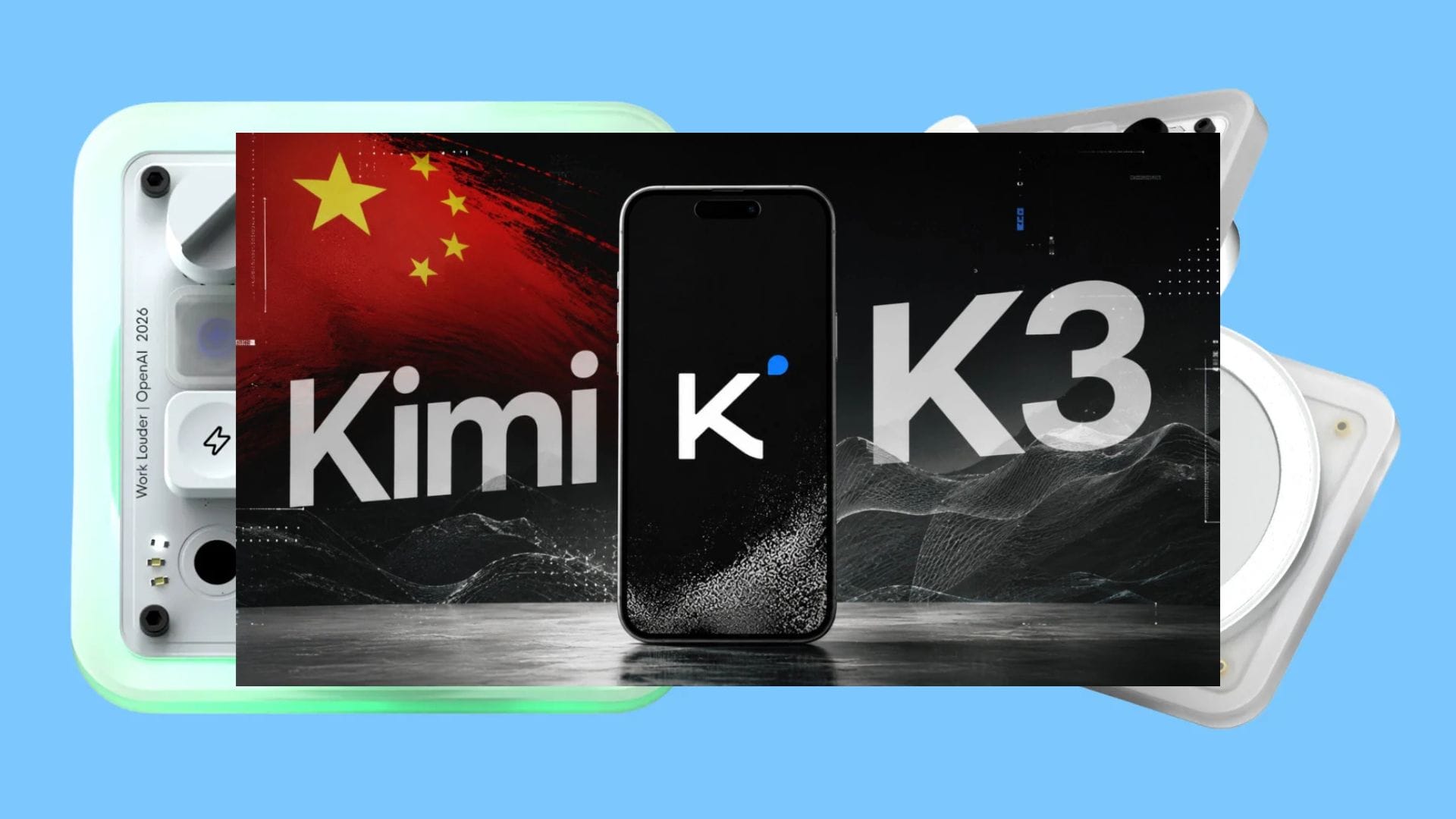
Moonshot AI has introduced Kimi K3, a new large language model from China designed for coding, research, reasoning, and visual tasks. The model contains 2.8 trillion parameters and has entered a highly competitive market dominated by proprietary systems from companies such as OpenAI and Anthropic.
Although Moonshot AI acknowledges that Kimi K3 does not yet surpass the overall performance of Claude Fable 5 or GPT 5.6 Sol, benchmark results suggest that it is closing the gap. In several important tests, the model either matches or exceeds the performance of its leading rivals, highlighting the rapid progress of open-weight artificial intelligence development.
Benchmark results show strong performance across multiple tasks
Moonshot AI reported that Kimi K3 achieved a score of 77.8 on Program Bench, narrowly outperforming Claude Fable 5 (76.8) and GPT 5.6 Sol (77.6). The model also led the BrowseComp benchmark with a score of 91.2 and topped the SWE Marathon evaluation with a score of 42.0, placing it ahead of both competing proprietary models in those categories.
Despite these results, Kimi K3 still falls behind in several other benchmarks. On DeepSWE, the model achieved a score of 67.5, compared with 70.0 for Claude Fable 5 and 73.0 for GPT 5.6 Sol. Moonshot AI also stated that the overall user experience remains behind both closed-source competitors, indicating that benchmark performance does not necessarily reflect every aspect of real-world use.
The company also highlighted that the comparisons should be interpreted carefully. According to Moonshot AI, benchmark results for Claude Fable 5 may include fallback responses generated by another model, while GPT 5.6 Sol may have cybersecurity safeguards that limit certain responses. These differences mean the evaluations are informative but are not based on perfectly identical testing conditions.
Open-weight strategy aims to attract developers
One of the most significant aspects of the Kimi K3 launch is Moonshot AI’s decision to release the model as an open-weight model. The company plans to publish the complete model weights on 27 July, allowing developers and organisations with sufficient computing resources to download and run the model locally.
Making the weights publicly available also enables developers to modify and fine-tune the model for specialised applications. This approach contrasts with proprietary AI systems, which generally restrict access to their underlying models and offer only cloud-based services through application programming interfaces (APIs).
The open-weight strategy is becoming increasingly important within the AI industry, as businesses seek greater flexibility and control over how models are deployed. By enabling local deployment and customisation, Moonshot AI hopes to encourage wider adoption among research organisations, enterprises and software developers seeking alternatives to closed commercial platforms.
Competitive pricing increases pressure on proprietary AI providers
Moonshot AI has also positioned Kimi K3 as a cost-effective alternative to leading US-based AI services. The company has set API pricing at US$0.30 per million cached input tokens, US$3 per million uncached input tokens and US$15 per million output tokens.
While these prices are lower than those of several premium AI offerings from the United States, they are not the lowest available within China’s rapidly expanding AI market. Earlier Chinese models gained attention for offering substantially cheaper access, helping businesses reduce operational costs while maintaining strong performance.
Even without being the least expensive option, Kimi K3’s combination of competitive benchmark results and lower pricing could increase pressure on companies such as OpenAI and Anthropic. As Chinese AI developers continue to narrow the performance gap and offer more affordable alternatives, customers may increasingly question whether premium-priced proprietary models provide sufficient additional value to justify their higher costs.
The release also reflects the growing competition between open and closed AI ecosystems. As more powerful open-weight models become available, organisations may gain greater freedom to choose between fully managed commercial services and self-hosted solutions customised to their requirements.