


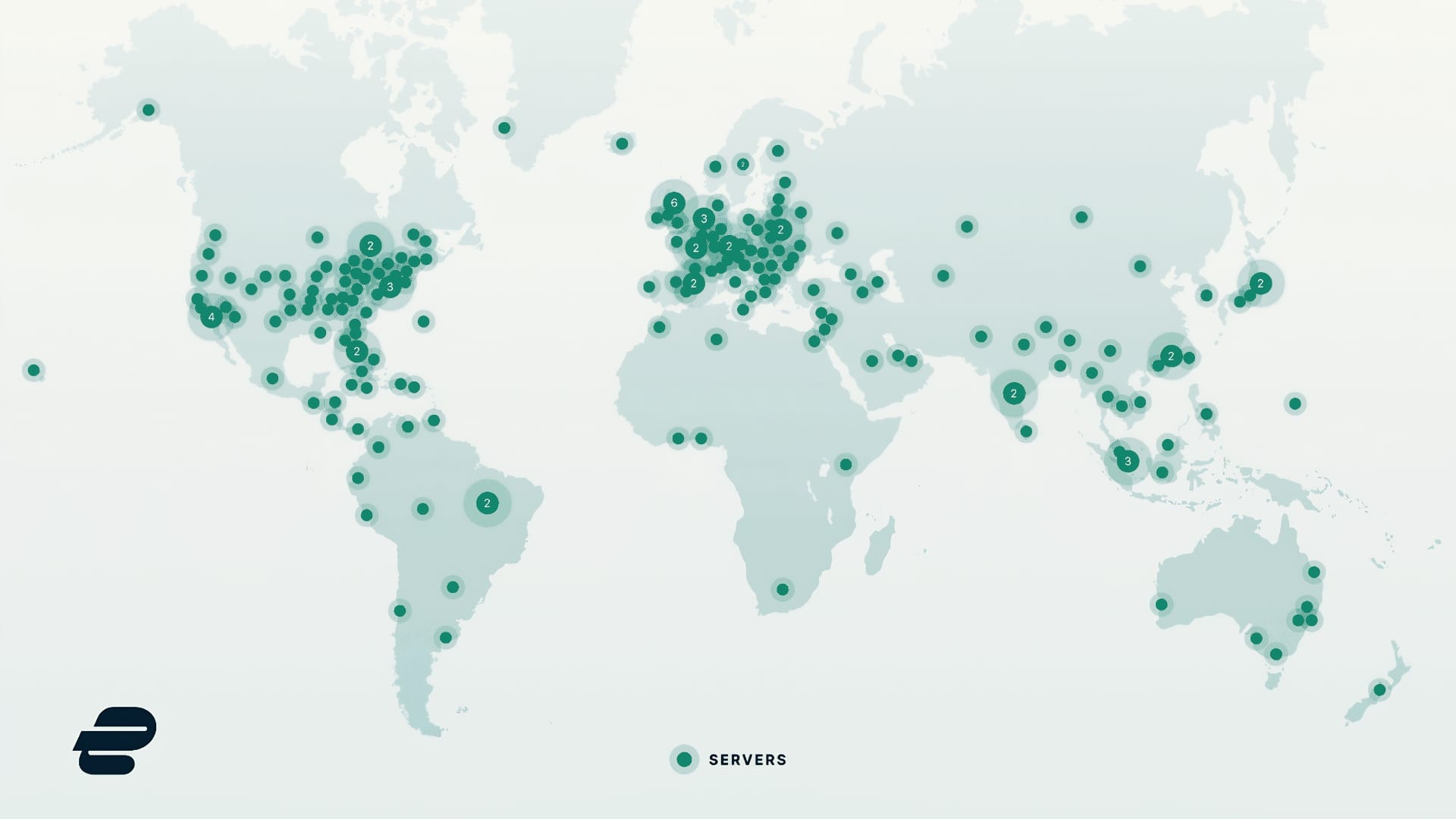
ExpressVPN has expanded its global VPN network to 214 app-selectable locations across 113 countries, giving users more control over where their encrypted connection appears to come from.
The new locations cover Europe, Africa, the Middle East and North America, with Nuuk in Greenland, Lagos in Nigeria, Doha in Qatar, Valencia in Spain and Manchester in the UK among the additions. The update is available now through the latest version of the ExpressVPN app.
The company is putting more emphasis on app-selectable locations than overall server count. A closer connection point may help reduce latency, while more regional options can give users alternatives when a route is busy or unreliable. Location choice can also affect how everyday services respond, from default languages and payment systems to streaming access, shopping, banking and public Wi-Fi use.
“Countries, locations, and servers measure different things,” said Aaron Engel, CISO of ExpressVPN. “Country coverage shows reach. Location count shows what users can actually choose between when they open the app, including routes closer to where they are, alternatives when one is busy, and the option to match a specific city, state, or region to what they’re trying to do. This launch is about making that choice more local and more useful for the people using it.”
More specific choices across key markets
The expansion builds on ExpressVPN’s earlier rollout across all 50 US states and brings the same approach to its wider global network.
In the UK, ExpressVPN’s available locations now include Docklands, East London, London, Manchester, the Midlands, Tottenham and Wembley. Australia includes Adelaide, Brisbane, Melbourne, Perth, Sydney and Woolloomooloo, while Japan includes Osaka, Shibuya, Tokyo and Yokohama. Singapore is listed with CBD, Jurong and Marina Bay locations.
In the US, the network includes major hubs such as New York, Los Angeles, Chicago, Dallas, Miami, San Francisco, Seattle, Atlanta and Washington, D.C., as well as regional locations including Anchorage, Billings, Boise, Burlington, Cheyenne, Fargo, Little Rock, Omaha, Providence, Sioux Falls, Wichita and Wilmington.
ExpressVPN is using those additions to draw a distinction between country coverage and location count. Country coverage shows the markets where a VPN has reach, while location count shows the specific connection points a user can select inside the app.
“People experience the internet locally, even when the services they use are global,” Engel said. “This expansion gives users more control over where their connection appears to come from, whether they want a nearby route, a familiar city while travelling, or a specific city-level option.”
New locations run on TrustedServer
Every new location runs on TrustedServer, ExpressVPN’s RAM-only server architecture. The system is designed to write data to volatile memory rather than hard drives, with data wiped whenever a server reboots. Each restart also loads a fresh software image, which the company said helps ensure servers run the intended stack.
ExpressVPN said it does not keep activity logs or connection logs. It also said its privacy and security claims have been reviewed through independent audits, including by PwC, Cure53 and KPMG.
Most ExpressVPN locations have their physical server and registered IP address in the same country. In a small number of markets, the company uses virtual server locations, where the IP address is registered to the selected country while the physical server operates in a nearby country. ExpressVPN said it lists these virtual server locations on its website and support pages.
Users can access the new locations by updating the ExpressVPN app and opening the location picker to browse the expanded country and city list.