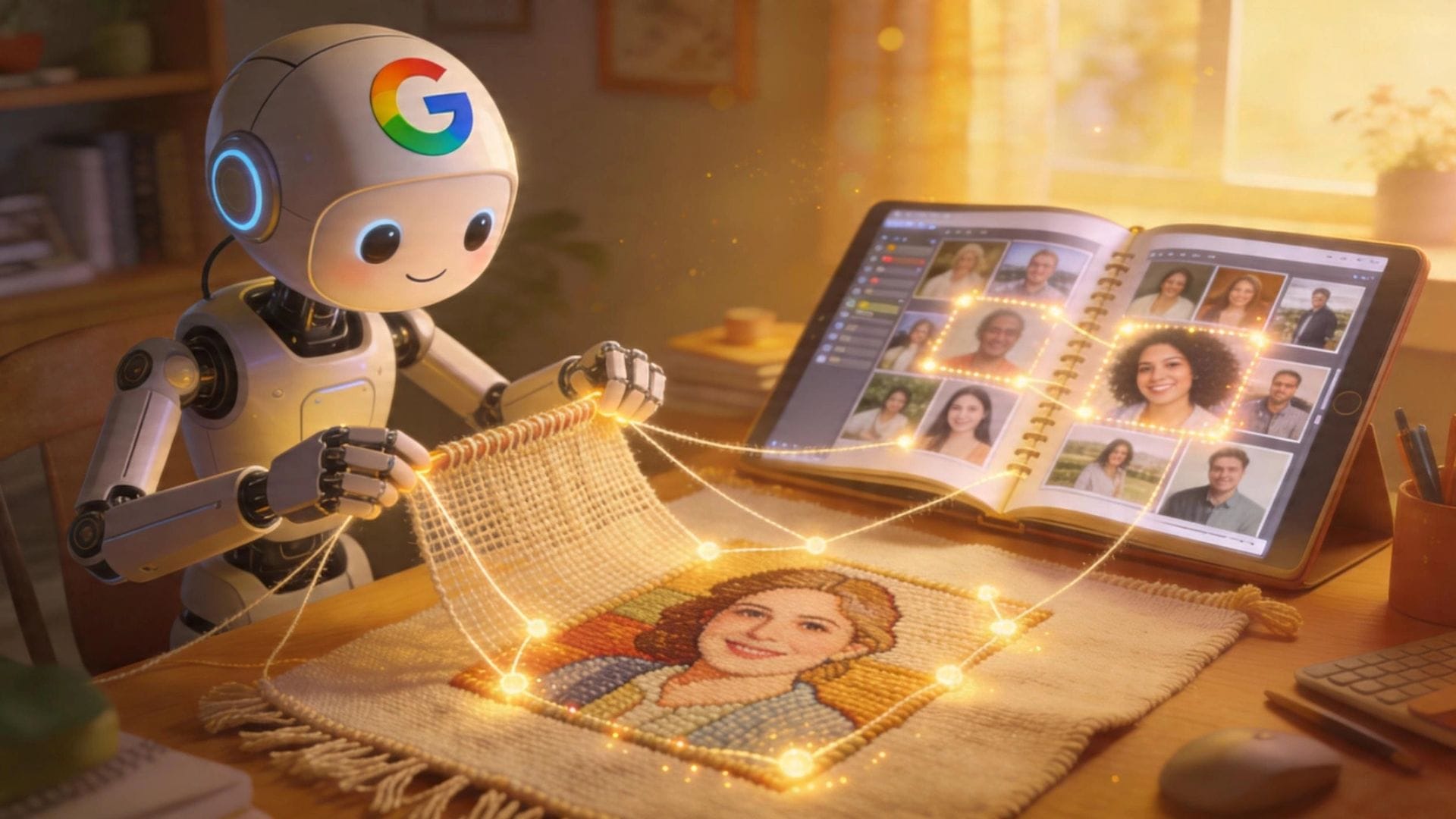
Google is expanding its personalised intelligence features for image creation in the Gemini app, allowing more users in the United States to generate images using information from their own Google services. The update extends support for Nano Banana and Google Photos to eligible users, making it easier for Gemini to understand personal requests involving family members, friends, and everyday life.
The feature was first introduced earlier this spring for subscribers to Google’s AI Pro and AI Ultra plans. It is now becoming available to all eligible users in the US, giving a wider audience access to the personalised image generation capabilities within the Gemini app.
Gemini gains deeper access to personal information
The new personalised intelligence feature allows users to connect Gemini with selected Google services, including Gmail and Google Photos. By drawing on information stored in these services, the AI assistant can better understand image-generation requests that relate to a user’s personal experiences, relationships, and memories.
For example, when someone asks Gemini to create an image featuring themselves, family members or friends, the chatbot can use relevant information from connected Google services to produce results that more closely match the request. This reduces the need for users to repeatedly explain personal details or provide lengthy descriptions during the image creation process.
Google said: “If you’re looking to generate images in the Gemini app, Google is making it easier to reference details about your digital life in your requests.” The company added that personalised intelligence is rolling out to Nano Banana and Google Photos for all eligible users in the United States.
The broader rollout follows the initial launch for premium AI subscribers earlier in the year. By extending access beyond AI Pro and AI Ultra customers, Google is making the personalised image generation experience available to a much larger group of users.
New image creation tools come with age and account requirements
Google has also outlined eligibility requirements for using the new image generation and editing features. Full access to both image creation and editing is limited to users aged 18 or older who use a personal Google account.
Younger users can still access part of the experience. Those aged 13 and above can use the image generation feature, although image editing remains restricted until they reach the required age.
The company has introduced these limits as part of its wider approach to responsible AI use. Restricting editing features to adult users is intended to provide additional safeguards while still allowing younger users to explore AI-generated images within defined boundaries.
The personalised intelligence capability requires user permission before accessing information stored in connected Google services. Once enabled, Gemini can use relevant details from supported services to respond more naturally to image requests based on a person’s digital history.
Support expands across multiple languages
Alongside the wider rollout, Google has confirmed support for a range of languages, making the feature available to users across different regions where Gemini is supported. The current list includes Arabic, Dutch, English, French, German, Indonesian, Japanese, Korean, Portuguese, Spanish and Turkish.
Expanding language support is expected to help more users benefit from personalised image generation without needing to interact with Gemini exclusively in English. The multilingual rollout reflects Google’s continued efforts to make its AI tools accessible to a broader international audience.
The latest update also highlights Google’s ongoing investment in integrating artificial intelligence more deeply into its product and service ecosystem. By allowing Gemini to access information from Gmail and Google Photos, the company aims to create a more personalised and efficient experience while reducing the manual input required from users.
As generative AI continues to evolve, personalised features such as these are becoming increasingly important in how digital assistants interact with users. Google’s expanded rollout marks another step toward making AI-powered image creation more context-aware by using information users have already chosen to store in their Google accounts.