

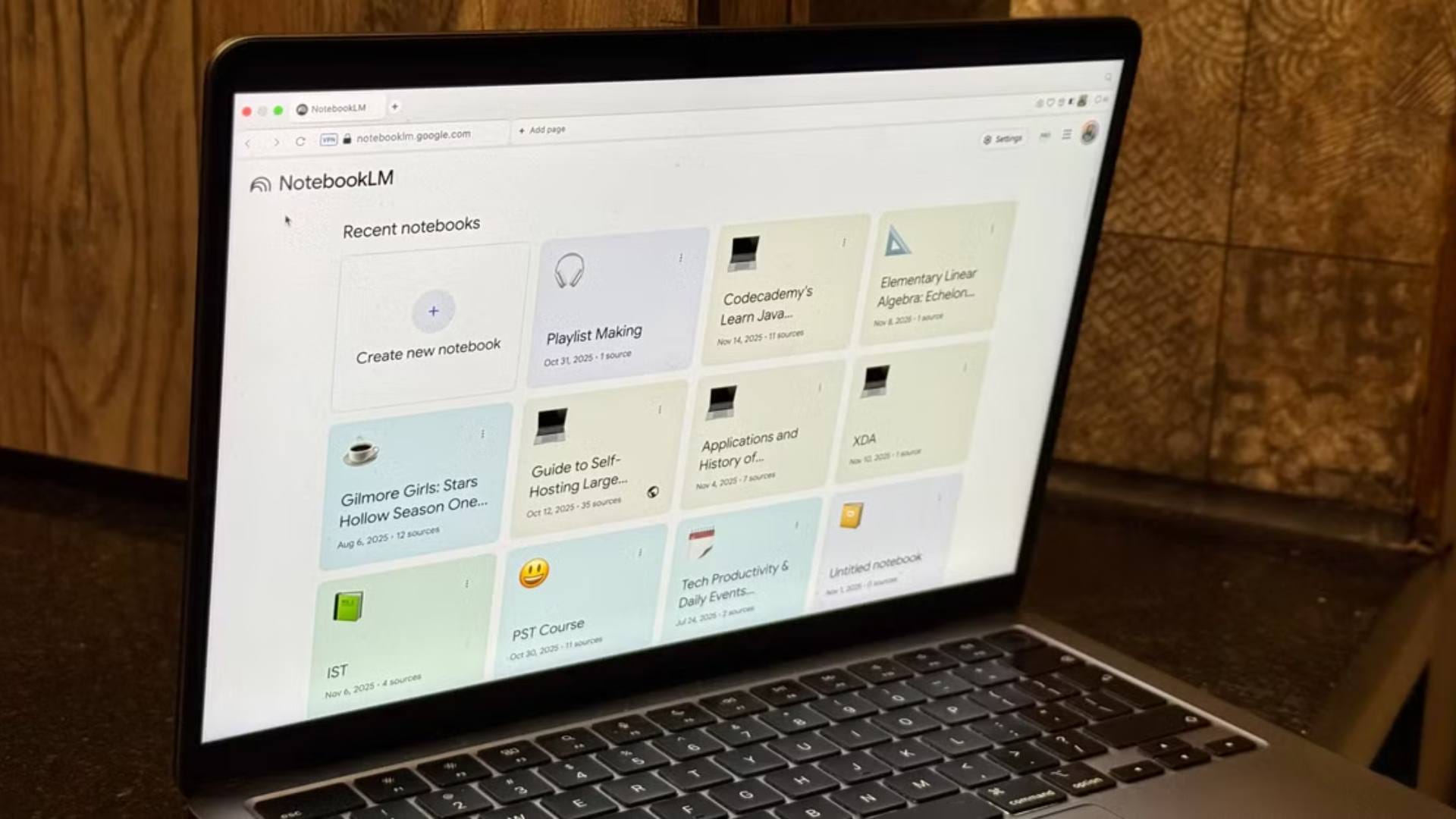
Google has fully integrated its AI-powered research tool, NotebookLM, into the Gemini chatbot, allowing users to create and manage research notebooks directly within the platform.
The move expands Gemini’s capabilities by bringing together document analysis, information management and AI-generated summaries in a single workspace. The company had previously launched NotebookLM as a standalone application and later added it as a source option within Gemini. Still, users can now build notebooks without leaving the chatbot environment.
Google said the change reflects the growing complexity of managing research materials across different formats. In its announcement, the company noted that “keeping track of everything can be a challenge,” highlighting the need for a more unified approach to organising information.
Notebook creation moves directly into Gemini
The latest update introduces a new notebook creation feature in Gemini’s side panel, giving users direct access to tools previously available only in a separate application.
Users can begin by creating a new notebook and adding sources that the system will analyse. These sources can include PDF files, documents, website links, YouTube videos and text pasted directly into the interface. Once added, the tool processes the content and builds a structured repository that can be searched and referenced within the chatbot.
This repository allows users to interact with their collected material in a conversational manner. Instead of manually reviewing multiple files, users can ask Gemini to summarise information, identify key points or extract relevant insights from their stored sources.
Google said the feature aims to simplify the research process for students, professionals and content creators who handle large volumes of information. By keeping notes, references and summaries in a single location, the company believes users will spend less time searching through files and more time working with the information itself.
The integration also reflects a broader trend in AI development, where tools are moving from isolated functions to more comprehensive environments. By embedding NotebookLM into Gemini, Google is positioning the chatbot as a central hub for research and productivity tasks.
AI-generated summaries and multimedia outputs
Beyond storing and organising information, NotebookLM’s integration with Gemini enables users to generate a variety of outputs from their uploaded content.
Users can request the creation of summaries, study guides and other explanatory materials that help make complex information easier to understand. The system can also produce visual and multimedia content, including infographics and video or audio overviews derived from the uploaded sources.
These features are designed to help users quickly digest large amounts of data. For example, a long research report can be condensed into a shorter, more accessible overview, allowing readers to grasp essential points without having to read the entire document.
However, Google has emphasised the importance of verifying information generated by the tool. Within the NotebookLM interface, the company displays a warning that the system may produce inaccurate results and encourages users to double-check any outputs before relying on them.
This caution reflects wider concerns about the reliability of AI-generated content. While such systems can speed up research and content creation, errors can occur if the original data is misinterpreted or the model generates information not supported by the source material.
Industry analysts have noted that these built-in warnings are becoming standard practice among major technology companies. They are intended to remind users that AI tools should be used as assistants, not as authoritative sources.
Gradual rollout expands access across platforms
Google has begun rolling out the full NotebookLM integration into Gemini this week, initially targeting subscribers to its premium AI plans.
The feature is currently available to users on the Google AI Ultra, Pro, and subscription tiers who access Gemini via the web. These early releases allow the company to monitor performance and gather feedback before expanding availability further.
Over the coming weeks, Google plans to extend access to mobile users and introduce the feature in additional regions. The company also intends to make NotebookLM available to free-tier users, although it has not specified an exact timeline for that stage of the rollout.
This phased release strategy mirrors Google’s approach to previous AI updates, allowing for technical adjustments before broader deployment. It also helps manage the demand placed on computing resources, which can increase significantly when advanced AI features become widely available.
The integration of NotebookLM into Gemini highlights Google’s ongoing investment in artificial intelligence tools that combine research, productivity and content generation. By merging these capabilities into a single chatbot interface, the company is signalling its intention to make AI assistants more central to everyday workflows.