

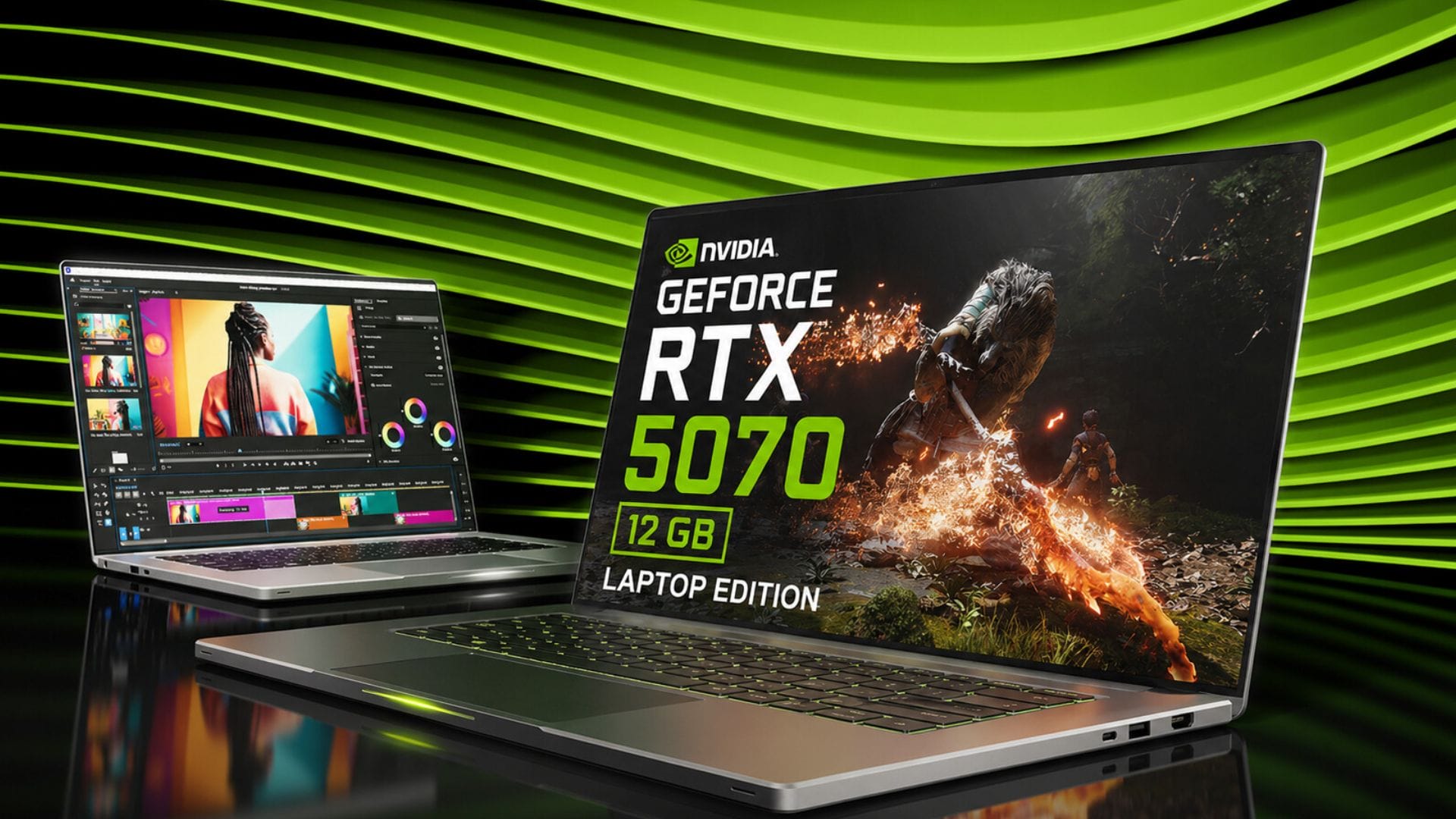
NVIDIA is preparing to release a new 12GB variant of its RTX 5070 laptop graphics processor, expanding its current lineup and addressing ongoing memory supply pressures affecting the gaming hardware market.
The company disclosed the new configuration in a blog post accompanying the latest release of its Game Ready Drivers. According to Nvidia, laptop manufacturers will soon begin offering systems equipped with the RTX 5070 featuring 12GB of video memory, alongside the existing 8GB version that has been available since the launch of the RTX 50-series.
The addition signals Nvidia’s attempt to maintain product availability while managing component shortages, particularly in graphics memory, which has remained in high demand across gaming, artificial intelligence and computing sectors.
NVIDIA adds new memory configuration to support supply demand
In its statement, Nvidia indicated that the decision to launch a 12GB version of the RTX 5070 laptop GPU was driven largely by sustained demand for its GeForce RTX graphics products. The company acknowledged that memory supply has remained constrained, prompting a shift towards alternative configurations that draw on different memory sources.
“Demand for GeForce RTX remains strong, and memory supply is constrained. To maximise memory availability, we are releasing the GeForce RTX 5070 Laptop GPU 12GB configuration with 24GB G7 memory. This gives our partners access to an additional pool of memory to complement the 16Gb G7 supply that currently ships with most GeForce GPUs,” Nvidia said.
The 12GB model uses 24GB G7 memory modules rather than the 16 GB G7 modules used in existing configurations. The difference lies in manufacturing methods and module size. The 24Gb memory modules provide 3GB per chip, while the 16Gb versions deliver 2GB per chip. By tapping into a separate production stream, Nvidia is effectively expanding its access to available memory components.
Recent months have seen improved production output from major memory suppliers, including Samsung and Micron, allowing Nvidia to diversify its sourcing strategy. This shift helps reduce pressure on limited memory resources while ensuring partners can continue to build new laptop models.
Laptop manufacturers are expected to release models in June
The first laptops featuring the 12GB RTX 5070 are expected to begin shipping in June. Major computer manufacturers such as ASUS, Lenovo and MSI are widely expected to integrate the new GPU into selected gaming and performance laptop models.
Although Nvidia has not yet revealed official pricing details for the new configuration, early industry reports suggest that laptops using the 12GB RTX 5070 may be priced similarly to some models equipped with the higher-tier RTX 5070 Ti. However, this pricing outcome will likely vary depending on how manufacturers configure each system.
For example, current gaming laptops fitted with an RTX 5070 Ti can command high prices depending on their specifications. A system such as the Acer Predator Helios Neo 16S AI, when configured with higher memory levels, can cost up to US$2,650. Industry observers suggest that 12GB RTX 5070 laptops may be slightly less expensive overall if manufacturers pair the GPU with lower system memory capacities or other cost-saving components.
The staggered release schedule will allow manufacturers to assess market response and determine how best to position the new GPU within their product lines. The availability of additional memory configurations also gives brands greater flexibility to balance price and performance across different consumer segments.
Performance expectations remain modest despite higher VRAM
While the increase from 8GB to 12GB of video memory may appear significant, the overall performance gains are expected to be moderate rather than transformative. NVIDIA has yet to publish a complete specification sheet for the new 12GB variant, leaving some technical details unconfirmed.
One key factor influencing performance is the graphics processor’s memory interface. Unless Nvidia has redesigned the RTX 5070 laptop GPU to include a wider 192-bit memory bus interface, which industry analysts consider unlikely, the additional memory capacity may not translate into substantially faster data transfer speeds.
As a result, the new model may not match the performance levels of higher-tier GPUs such as the RTX 5070 Ti, which benefit from faster memory access and broader bandwidth. Instead, the added memory capacity is expected to improve handling of larger textures and more demanding workloads in certain scenarios, particularly in modern games that require greater graphical resources.
For most mainstream gaming titles, the difference between the 8GB and 12GB variants is unlikely to be dramatic. However, the additional memory could offer advantages in future software releases, creative workloads and artificial intelligence applications that rely heavily on video memory.
The introduction of the 12GB RTX 5070 laptop GPU reflects a broader industry trend in which hardware makers adapt to supply chain realities while continuing to expand product options. By offering alternative configurations, Nvidia aims to maintain momentum in the competitive gaming laptop market while addressing ongoing shortages in critical components.