


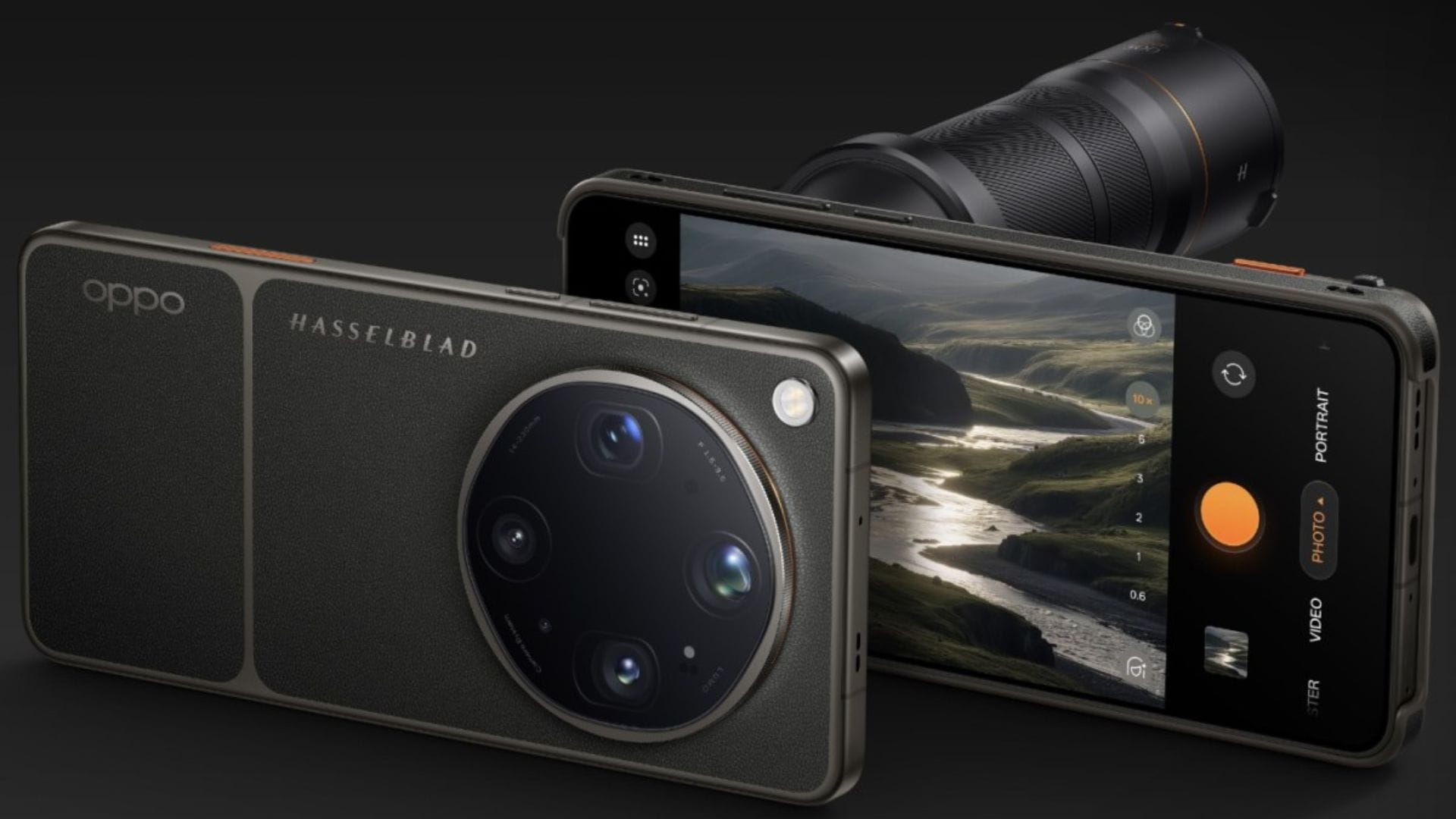
Oppo has unveiled the Find X9 Ultra, the company’s latest flagship smartphone designed with a strong focus on photography. The device arrives amid intense competition in the premium Android segment, joining recent releases from rival brands that have prioritised advanced camera hardware and professional-grade features.
The Find X9 Ultra builds on the foundation set by the Find X9 Pro, which already positioned itself as a capable camera phone. The new Ultra model introduces upgraded hardware, expanded camera capabilities and a range of specialised accessories aimed at photography enthusiasts. The handset has been available for early testing ahead of a more comprehensive review, with further evaluation expected once additional camera accessories are released.
Refined design and flagship hardware upgrades
The Find X9 Ultra introduces noticeable design changes compared with its predecessor, including two distinct colour finishes. One option, called Canyon Orange, features a textured surface inspired by natural rock formations. The second finish, Tundra Umber, draws inspiration from Scandinavian design and camera heritage, reflecting the company’s collaboration with Hasselblad.
The device itself is larger and thicker than previous models, largely due to its extensive camera system. The rear camera housing now features a subtle hexagonal design enclosed by a circular metal frame. The edges around the camera module have been textured to improve grip when holding the phone horizontally for photography. While the camera ring does not double as a zoom control, an optional accessory kit includes a dedicated camera grip with a zoom lever.
Under the hood, the Find X9 Ultra is powered by Qualcomm’s Snapdragon 8 Elite Gen 5 processor, marking a significant upgrade from the chipset used in the earlier Find X9 Pro. The smartphone also includes a large 7,050mAh silicon-carbon battery, supporting 100W fast charging through the company’s SUPERVOOC technology. Oppo stated that it has incorporated what it described as the industry’s first encapsulated thermal unit to manage heat during demanding tasks such as extended high-resolution video recording.
The display also reflects the device’s premium positioning. The 6.82-inch screen supports a 144Hz refresh rate and can reach peak HDR brightness of up to 3,600 nits, while dimming to 1 nit in darker environments. These specifications are intended to deliver improved visibility across a wide range of lighting conditions.
Advanced camera system takes centre stage
Photography remains the central focus of the Find X9 Ultra. The main camera features a 200-megapixel sensor measuring 1/1.12 inches, which Oppo claims is the largest 200MP sensor used in a smartphone to date. The lens features a wide f/1.5 aperture to capture more light and detail, particularly in challenging lighting conditions.
The smartphone also incorporates a new True Colour Camera system intended to improve colour accuracy across both still photography and video recording. Early testing of the main camera showed strong colour reproduction under mixed lighting conditions, including streetlights and neon signage. Users seeking more dramatic results can apply various Hasselblad-inspired filters and visual effects available in the camera’s software.
Alongside the main camera, the Find X9 Ultra features multiple telephoto systems. One includes a 200-megapixel sensor, a 3x optical zoom lens, and an f/2.2 aperture. This lens supports an optional teleconverter, further expanding its capabilities. The camera software provides multiple focal-length equivalents, with Oppo claiming the device supports the equivalent of eight focal lengths across its system.
A second telephoto lens delivers 10x optical zoom using a 50-megapixel sensor. While similar zoom ranges have been seen in earlier smartphones, Oppo has combined this capability with higher resolution and added support for portrait photography at full zoom. Users can zoom further to approximately 20x by cropping, though early impressions suggest image quality at that level varies depending on lighting and distance.
Video features have also received upgrades. The Find X9 Ultra supports 4K video recording at 60 frames per second with Dolby Vision, as well as 8K recording at 30 frames per second. The company has introduced a new O-Log2 video profile, which it said is designed to improve shadow detail and reduce image artefacts during editing.
Accessories and availability target photography enthusiasts
To complement the smartphone’s imaging capabilities, Oppo has introduced several accessories to enhance photography workflows. Among them is the Hasselblad Explorer case, which includes a two-stage shutter button and additional zoom controls. The case shares design elements with the Tundra Umber colour option, maintaining a consistent visual theme.
Another key accessory is the Hasselblad 300mm Explorer Teleconverter. This add-on increases the optical magnification of the 3x telephoto camera to approximately 13x, offering extended reach for distant subjects. The teleconverter represents a notable improvement over the previous generation, which limited magnification to around 3.28x. The accessory mounts directly onto the telephoto lens, making it one of the largest smartphone telephoto attachments currently available.
Oppo noted that earlier teleconverter accessories are not compatible with the Find X9 Ultra. According to the company, the decision was made to ensure optimal image quality with the updated camera hardware. However, the lack of cross-compatibility may disappoint existing users who invested in previous accessories. The new telephoto adapter has been redesigned so it can remain attached without blocking other camera lenses, addressing usability concerns seen in earlier models.
Initial impressions suggest the Find X9 Ultra is positioned as a high-end photography-focused smartphone, though availability may be limited in some regions. The device is scheduled to launch in selected parts of Asia and Europe. In the United Kingdom, sales are set to begin on 8 May with a starting price of £1,449, equivalent to approximately US$1,959. No release has yet been announced for the United States, though the company indicated that further details about global availability may follow.