

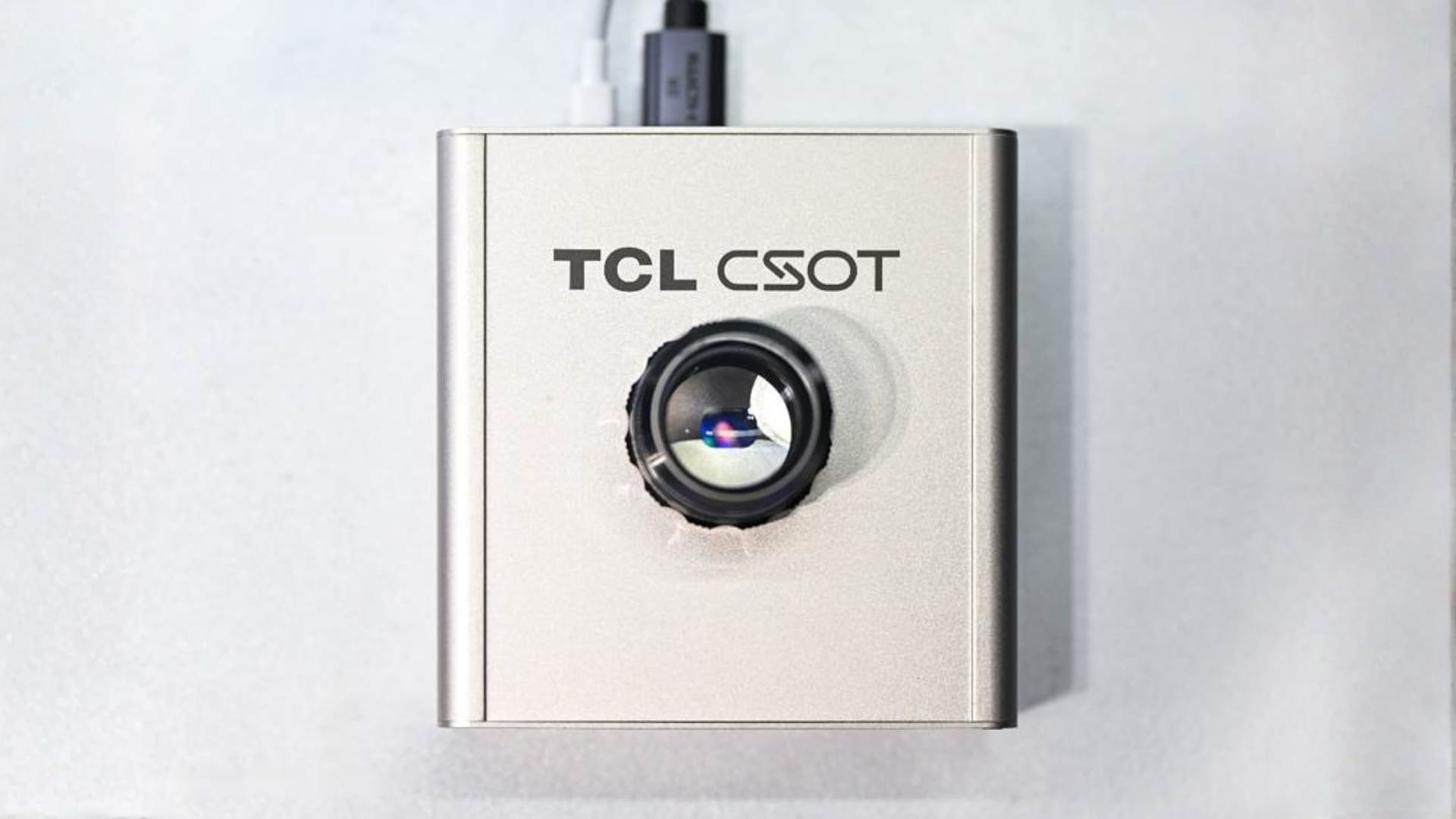
TCL CSOT has presented a set of XR display technologies at SID Display Week 2026, led by a 0.28-inch full-colour silicon-based Micro LED display with 5131PPI and a 2.24-inch Real RGB G-OLED display with 1700PPI.
The showcase sits under the company’s APEX philosophy, specifically its X-Unlimited Imaginative Potential pillar, which covers future-oriented display forms designed for immersive and near-eye applications. The focus is on higher pixel density, compact display design and visual performance for devices such as AR glasses, AI glasses and ultra-thin VR products.
Micro LED display targets compact near-eye devices
The main display in TCL CSOT’s showcase is the World’s Highest PPI Single-Chip Full-Color Si-Micro LED Display (0.28″). Built on a silicon substrate with monolithic full-colour Micro LED integration, the panel has a 1280×720 resolution and a stated pixel density of 5131PPI.
The panel is designed for near-eye applications, where display size, clarity and power efficiency have a direct effect on device design. TCL CSOT says the display delivers sharp visuals with no visible pixilation, supported by the self-emissive qualities of Micro LED, including high brightness, deep contrast and a wide colour gamut.
“XR devices are driving the next revolution in human-machine interaction.” said Zhifu Li, VP of TCL CSOT, GM of XR BU of TCL CSOT. “Within an ultra-compact 0.28-inch form factor, TCL CSOT has achieved a retina-level pixel density of 5131PPI. Powered by full-colour silicon-based Micro LED technology, we have set a new benchmark for next-generation lightweight, high-performance displays, creating a true ‘smart window’ into immersive digital experiences for AR and AI glasses.”
The specification is aimed at lightweight XR hardware, where image quality has to be balanced against device thickness, battery requirements and physical comfort. TCL CSOT says the display’s miniaturised form factor, ultra-high resolution and low power consumption make it suitable for AR glasses and ultra-thin VR devices.
G-OLED panel adds a larger display path for XR
Beyond the 0.28-inch Micro LED display, TCL CSOT is also showing the World’s Highest 1700PPI Real RGB G-OLED Display (2.24″). The panel is built on a glass-based OLED architecture and has a 2600×2784 real RGB resolution.
The display is designed for ultra-high-definition XR experiences, with a stated 1M:1 contrast ratio and 120Hz refresh rate. TCL CSOT says the panel benefits from OLED characteristics such as microsecond response time, deep contrast and low power consumption, which support fluid motion and detailed imagery.
The G-OLED display gives TCL CSOT a second XR display approach alongside silicon-based Micro LED. While the Micro LED panel focuses on an ultra-compact form factor for near-eye products, the G-OLED panel places more emphasis on higher-fidelity visuals through a larger 2.24-inch display size and real RGB resolution.
TCL CSOT also says the display’s ultra-high-density circuit technology can be adapted for premium consumer electronics and industrial applications, extending the technology beyond XR devices.
Portfolio spans Micro LED, OLED and LCD approaches
The two lead displays form part of a broader XR portfolio being shown by TCL CSOT at SID Display Week 2026. The company is also presenting the World’s Highest-Res Single-Chip Multi-Color Si-Micro LED Display (0.28″), the World’s Highest 2200PPI LCD XR Display (2.48″) and the World’s Highest MP 1512PPI XR Display Paired With Cockpit (3.59″).
The wider showcase points to several display paths for XR hardware rather than a single technology route. Across Micro LED, OLED and LCD-based displays, TCL CSOT is targeting different balances of pixel density, device size, response time, power consumption and visual performance.
For XR devices, those trade-offs remain central to product design. Higher pixel density can improve clarity in near-eye displays, but manufacturers still have to manage power consumption, physical size and the quality of motion and contrast. TCL CSOT’s SID Display Week 2026 showcase places those constraints at the centre of its display development.