


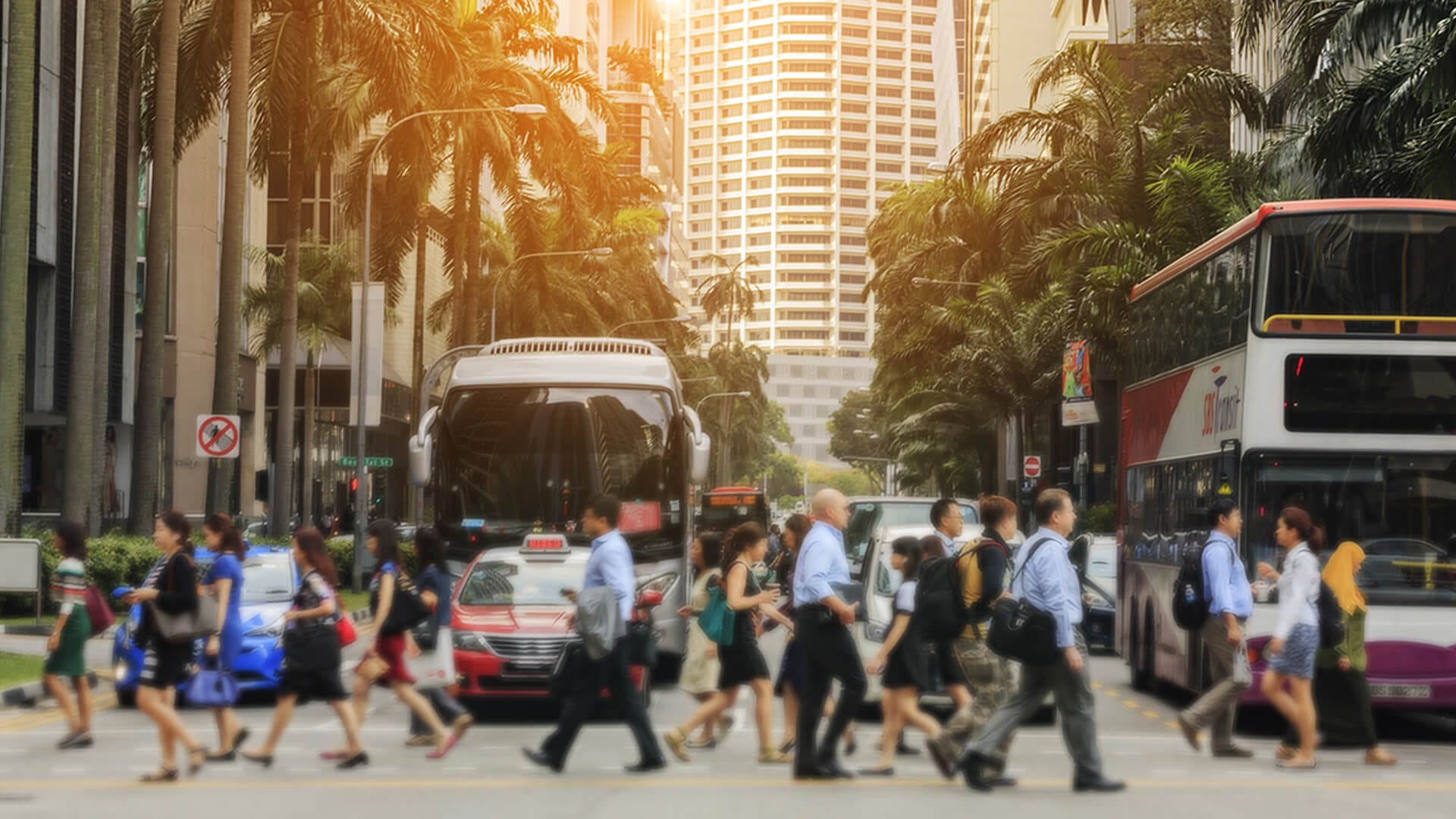
The dawn of technology has breathed new life into every nook and cranny of our existence, and the Singaporean workforce is no exception. Automation and digitisation are rapidly reconfiguring the role of humans in the job market. With the shift of routine tasks to machines, humans find themselves standing on the shores of new professional landscapes, where their role revolves around complex, value-adding jobs.
But this technological transformation also unfolds a new challenge – reskilling. The escalating pace of technological advancements demands employees to master new skills to maintain their professional relevance.
The age of new technologies in Singaporean workplaces
In the fast-paced corporate landscape of Singapore, integrating new technology is not an elective decision; it is a necessity that underpins survival and growth. With global competition growing sharper daily, businesses are using technology as the fulcrum to lift productivity and efficiency levels. The once-hyped jargon of the digital age – artificial intelligence (AI), machine learning, blockchain, and big data, has now evolved into fundamental pillars bolstering Singapore’s global competitiveness.
Enterprises are harnessing the power of these technological advancements to refurbish their processes, optimise their resources, and enhance the experiences they offer to their customers. They use artificial intelligence to automate repetitive tasks and improve decision-making, machine learning to predict trends and personalise services, and blockchain to enhance transparency and security. Big data is central to this transformative journey, providing businesses a granular understanding of consumer behaviour. This intelligence allows them to customise their services or products to maximise satisfaction, strengthening customer loyalty and boosting market share.
Moreover, the integration of these technologies is not confined to the towering high-rises of multinational corporations. Small and medium enterprises (SMEs), the pulsating heart of Singapore’s economy, are also embracing this digital revolution. From deploying AI-powered chatbots to handle customer queries to using cloud-based solutions for seamless data management, SMEs are strategically shifting their operational models. These shifts enhance their productivity and expand market reach, leading to substantial economic gains.
This technological transformation is, however, more than just a survival strategy in the face of rigorous competition. It reflects Singapore’s broader vision of creating an innovative, digitally-enabled economy. By fostering an ecosystem that encourages technological adoption, the city-state is ensuring that its workplaces are equipped to withstand the pressures of today and prepared to seize tomorrow’s opportunities. Thus, the age of new technologies in Singaporean workplaces is shaping into an exciting era that promises a blend of progress, prosperity, and endless possibilities.
Sowing the seeds for the future of work in Singapore
Preparing for the future of work in Singapore is a multidimensional approach that stretches beyond the adaptation of advanced technology. The cornerstone of this preparation is shaping the minds of the workforce, instilling in them the skills and attitudes necessary for a digital-first future. This monumental task is executed through a triad of interwoven strategies: targeted education, strategic training initiatives, and progressive policy-making.
Academic institutions, from primary schools to universities, are setting the groundwork for this futuristic vision. They are nurturing the fundamental skills required for the jobs of tomorrow – creativity, problem-solving, and digital literacy. An emphasis is being placed on experiential learning and interdisciplinary studies, sparking innovative thinking and the ability to navigate complex problems. Furthermore, coding, data analysis, and digital design are becoming staples of the curriculum, embedding digital literacy in the DNA of the future workforce.
Beyond the realm of formal education, the government has taken progressive strides in the promotion of lifelong learning and skill development. One such initiative is the SkillsFuture Credit programme. This ground-breaking scheme incentivises the continuous learning journey, providing a S$500 credit for Singaporeans over 25 to invest in skills-related courses. This programme aligns with Singapore’s drive to foster a culture of ongoing personal and professional growth, keeping its workforce resilient despite rapid technological advances.
However, this preparation isn’t solely the responsibility of the government and academic institutions. Singapore’s forward-looking approach has engaged the active participation of businesses and individuals in workforce reskilling. Kuok Singapore has boldly committed to a S$25-million workforce transformation initiative. This project unites global talent and collaborates with industry partners, creating a melting pot of ideas and expertise to groom the leaders of tomorrow. In the same spirit, Flex, a leading global manufacturing firm, ensures its workforce stays ahead of the curve. Employees can acquire and hone new skills through structured on-the-job training programmes, aligning their competencies with the evolving industry demands.
Singapore’s preparation for the future of work is not an abrupt response to emerging trends but a deeply ingrained ethos that has shaped its journey since its inception. This multifaceted approach, involving all societal stakeholders, reflects Singapore’s commitment to cultivating a future-ready workforce. It paints a promising picture of a nation whose people, policies, and practices harmoniously synchronise to embrace the opportunities and challenges that the future of work presents.
Shaping a new horizon
Amid the tectonic shifts in the world of work, the office environment has emerged as a critical component of employee engagement. According to recent surveys, the ideal number of days employees would like to work from the office has increased from 1.7 days in October 2020 to 2.3 days in March 2021. However, only 45% of respondents are satisfied with their current offices, a significant drop from 60% in April 2020.
The future office environment must cater to these changing expectations. Offices need to be more humane and resilient, with 71% of respondents expressing their desire to work in an environment that prioritises health and wellbeing. In response, companies are redesigning workplaces to enhance their employees’ physical, mental and emotional wellness.
In conclusion, as we navigate this brave new world, it is evident that the future of work in Singapore is not a mere by-product of technological advancements but a testament to the nation’s vision, dedication, and resilience. And as part of this workforce, the citizens are not just bystanders in this transformation; they are the architects.
Their resilience, adaptability, and ceaseless innovation continue to redefine Singapore’s story. In this grand tale, a small island exhibits grand ambitions, underlining the essence of the future of work – it’s not about replacing humans with machines but about harmonising their capabilities for a prosperous tomorrow.