


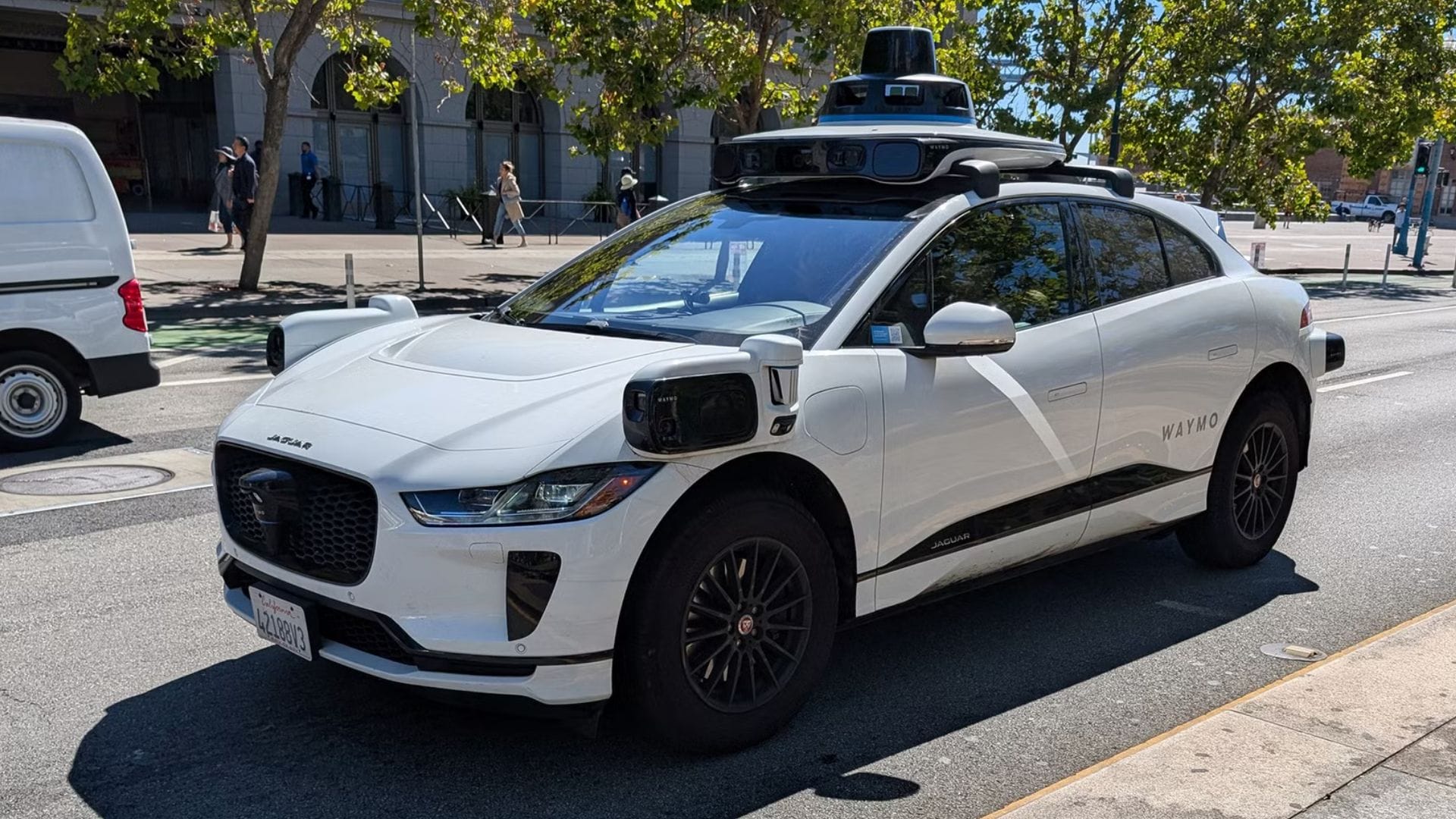
Waymo has introduced a new cognitive system designed to model how careful human drivers respond to hazards on the road, as the company seeks to improve the safety performance of its autonomous vehicles.
Known as ReD, short for Reference Driver, the system has been developed to simulate the behaviour of a competent human driver in potentially dangerous situations. Waymo plans to use the model as a benchmark to compare its autonomous driving technology, helping engineers better understand how robotaxis respond to complex traffic scenarios and identify opportunities for improvement.
The project reflects a broader challenge facing the autonomous vehicle industry: understanding what human drivers still do better than automated systems when it comes to avoiding accidents and responding to uncertainty.
A new benchmark for autonomous vehicle safety
Waymo developed ReD in partnership with researchers from the Delft University of Technology in the Netherlands. The findings have been published in a research paper in the scientific journal Nature.
According to the company, the system serves a similar purpose to a crash test dummy. Still, instead of measuring the effects of a collision, it is designed to study how crashes can be prevented altogether. By recreating the decision-making process of a skilled human driver, ReD offers a new way to evaluate how autonomous vehicles handle risk and conflict on the road.
“Evaluating AV safety is multifaceted, and understanding how a human handles conflict is a critical piece of the puzzle,” said Waymo safety chief Mauricio Pena. “By establishing this reference model of a competent human response, we can help the industry move toward a shared, scientifically grounded approach for evaluating collision-avoidance behaviour.”
The company believes that comparing autonomous systems with a consistent human reference model could help create more reliable safety standards across the industry. Such standards may also assist regulators and safety organisations as autonomous vehicle technology becomes more widely deployed.
How the ReD model mirrors human decision-making
The ReD system is built on a neuroscientific theory known as active inference. The concept suggests that people constantly attempt to reduce uncertainty and avoid unexpected outcomes by updating their understanding of the world around them.
Using this framework, the model simulates how a careful human driver interprets changing situations, predicts the actions of other road users and selects the most appropriate response. These responses may include braking, steering away from danger or combining several actions at once.
Waymo said the system expands on previous driver models by representing “how a careful and competent human driver updates their beliefs as a situation evolves, manages uncertainty about other road users’ intentions, and selects the evasive manoeuvre, whether that is braking, swerving, or a combination of both.”
To achieve this, ReD incorporates several characteristics associated with human driving behaviour. One feature, known as “looming”, assesses potential threats by measuring how quickly an object appears to grow in a driver’s field of vision, which can indicate an approaching collision.
Another feature focuses on traffic norms. This allows the system to recognise behaviour that falls outside expected or law-abiding actions, enabling it to prepare for situations in which another road user behaves unpredictably.
The model even accounts for physical aspects of driving. For example, it simulates the slight delay that occurs when a driver moves a single foot from the accelerator to the brake pedal, creating a pause of around 0.2 seconds between actions.
Open-source plans aim to accelerate research
A key aspect of the project is its emphasis on proactive risk avoidance rather than simply reacting to danger once it appears. Waymo said the model reflects the common driving principle of anticipating problems before they occur.
“ReD can model proactive avoidance, showing how a competent driver anticipates potential risks to avoid entering into a conflict in the first place,” the Waymo team explains.
By focusing on prevention, the company hopes to understand better how experienced drivers avoid hazardous situations before emergency manoeuvres are necessary. This information could help improve the behaviour of autonomous vehicles in real-world environments where uncertainty is common.
Waymo is continuing to collaborate with researchers, regulators and safety organisations to refine the model and ensure it accurately represents what the company describes as a “careful and competent” human driver. The long-term goal is to establish a widely accepted reference standard for the autonomous vehicle sector.
To encourage further development and independent research, Waymo has announced plans to release ReD as open-source software under a non-commercial academic licence. By making the model available to the research community, the company hopes to accelerate progress in evaluating and improving collision-avoidance systems across the industry.