


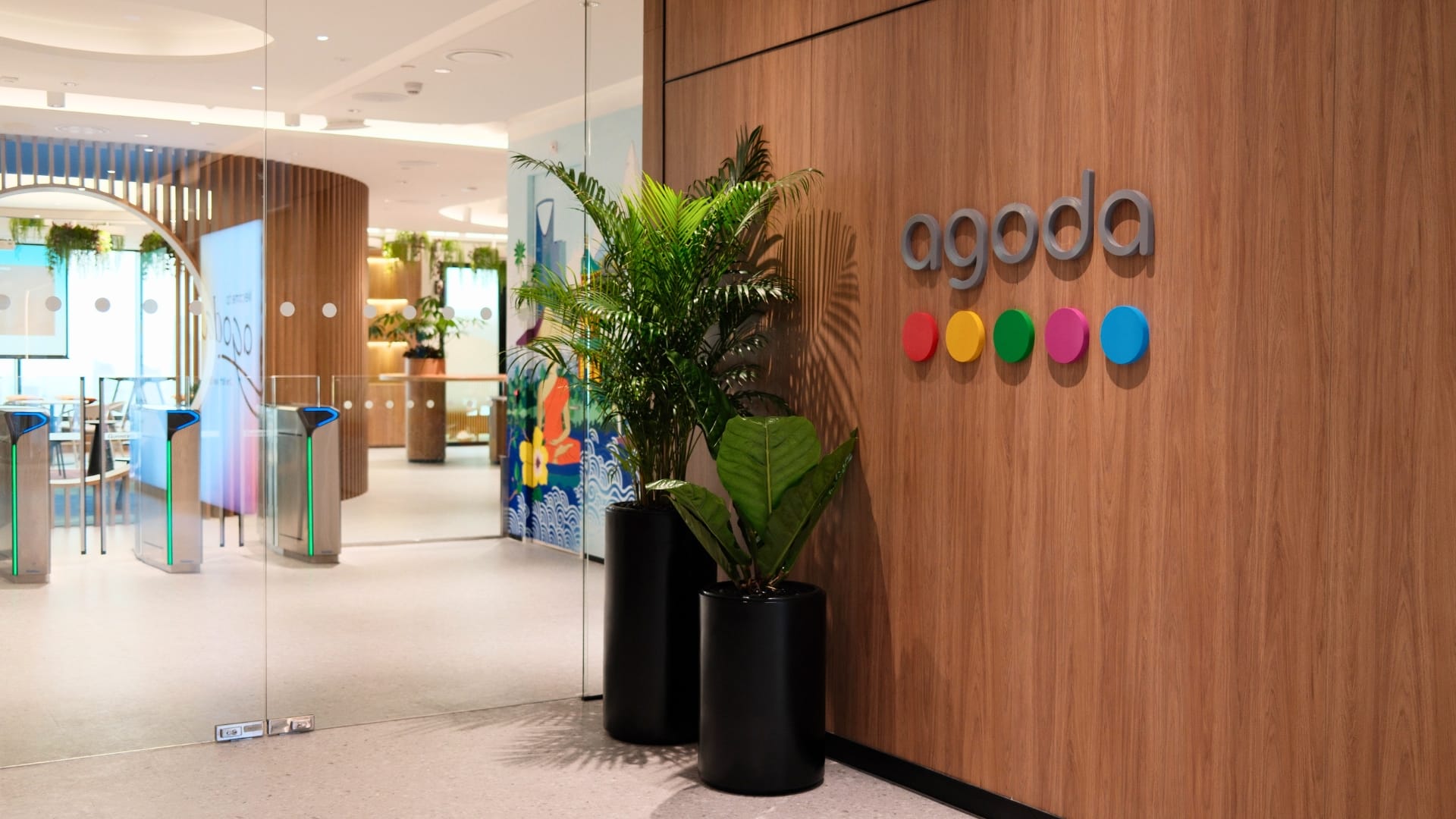
Agoda has relocated its Thailand operations into a new regional technology hub in Bangkok, bringing nearly 4,000 employees into a single campus designed to support engineering, platform operations, and content production across Asia Pacific.
The office, located within the One Bangkok development, spans more than 26,000 square metres across seven floors and marks the company’s first office move in Thailand in two decades. The move reflects Agoda’s continued investment in centralised infrastructure to support its travel platform, which connects more than 6 million properties, over 130,000 flight routes, and more than 300,000 activities.
A campus built around platform operations
The new site is structured as a campus-style office, with facilities designed to support the day-to-day operation of a global digital platform. Dedicated infrastructure includes a Network Operations Center zone for real-time systems monitoring and adjacent war rooms intended for coordinated response during incidents.
Collaboration and content capabilities are also embedded into the workspace. The office includes connected meeting rooms for distributed teams, alongside a professional studio and audio room for internal and external production. These facilities reflect Agoda’s dual focus on platform reliability and content-driven engagement.
Omri Morgenshtern, CEO at Agoda, said, “We’re excited to open this new space at One Bangkok designed to support how our teams innovate, collaborate and grow. The state-of-the-art facilities reflect our investment in creating an environment where people can do their best work and continue building world-class tech that delivers exceptional travel experiences.”
The office layout is complemented by shared amenities such as wellness pods, exercise rooms, and multi-faith spaces, alongside services including massage stations staffed by visually impaired therapists. These elements extend beyond workplace design into employee retention and workplace sustainability, particularly in a market where competition for engineering talent remains high.
Designed for scale and long-term growth
Agoda’s decision to move into One Bangkok was shaped by the development’s large floorplates and build-to-suit flexibility, which allow teams to operate within a unified environment while maintaining room for expansion. The campus spans levels 27 to 33 of Tower 5, with each floor adopting a distinct design theme aligned with culture, geography, and travel.
The broader development provides direct access to Bangkok’s mass transit network and carries LEED Platinum certification for neighbourhood development, alongside WiredScore and SmartScore certifications for digital connectivity and smart building systems. These factors position the site as both a technical and operational base for Agoda’s regional activities.
The relocation reinforces Agoda’s footprint across Asia, where it was founded and continues to anchor key functions despite its global scale. By consolidating engineering, operations, and business teams into a single hub, the company is placing emphasis on proximity between technical and operational roles, a structure that typically supports faster iteration and response cycles in platform businesses.
Regional hub supports platform breadth
The Bangkok hub supports Agoda’s broader platform, which spans accommodation, flights, and travel experiences across multiple markets. Bringing these functions into a centralised environment aligns with the company’s need to coordinate supply, pricing, and user experience across a fragmented regional travel landscape.
While the company remains headquartered in Singapore, the new Bangkok site strengthens its operational base in Southeast Asia, particularly in engineering and product development. The relocation suggests a continued emphasis on regional execution rather than a shift in corporate structure, with the hub acting as a working centre for platform development rather than a symbolic expansion.