

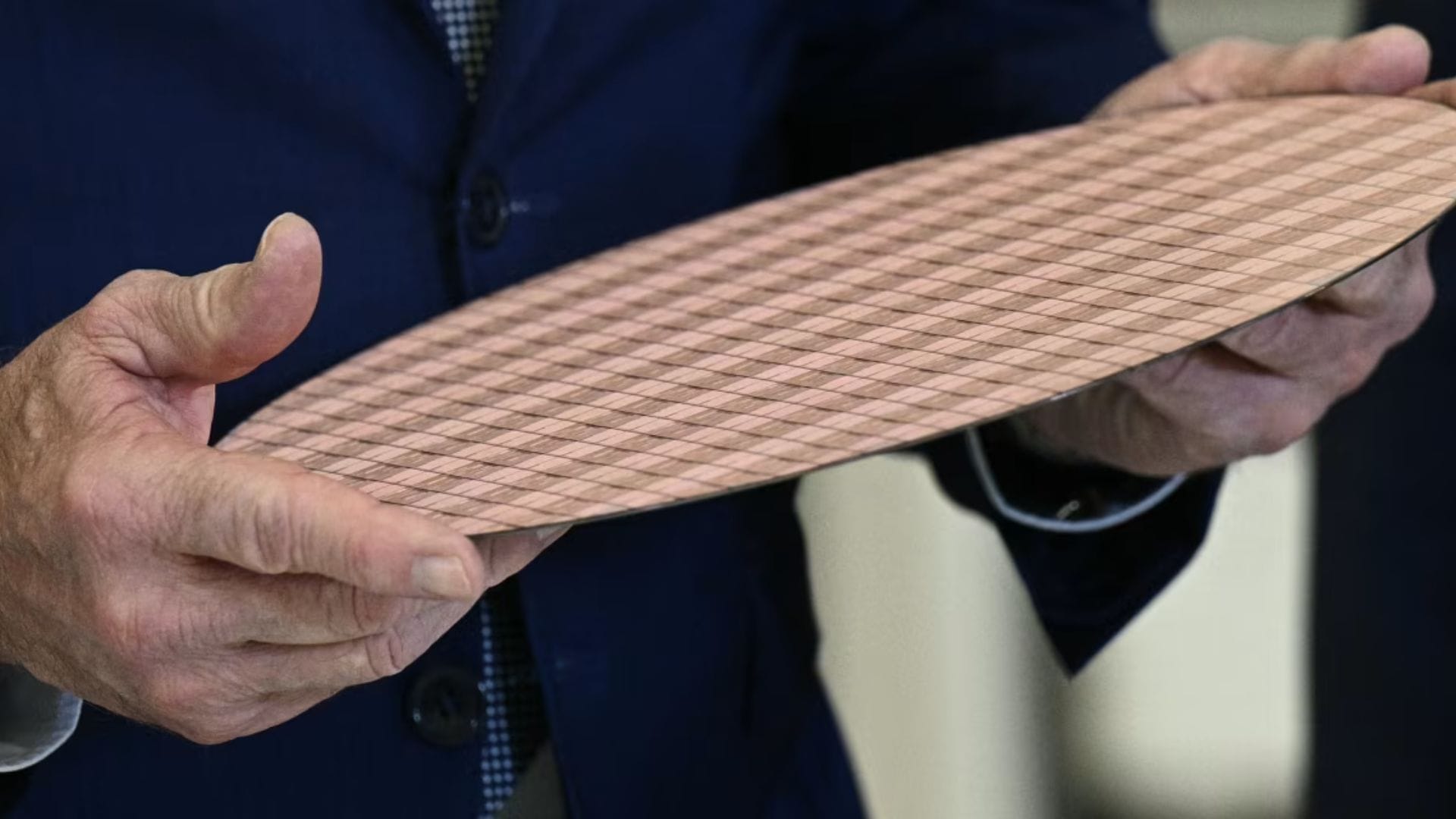
Apple has reportedly signed a preliminary agreement with Intel to manufacture some of the chips used in its devices, marking a possible new chapter in the long and complicated relationship between the two technology companies.
According to a report by The Wall Street Journal, the deal follows more than a year of discussions between the companies. While the exact scale of the agreement remains unclear, the partnership could become significant given Apple’s vast semiconductor demand across its product range, including iPhones, iPads and Mac computers.
Apple ships more than 200 million iPhones each year and requires a stable supply of chips for millions of additional devices. Neither company has publicly confirmed the agreement. Apple did not respond to requests for comment, while Intel declined to comment on the report.
Apple and Intel revisit a former partnership
The reported agreement would represent a notable shift in the relationship between Apple and Intel. Before Apple introduced its own Apple Silicon processors in 2020, Intel was one of the company’s most important hardware partners for more than a decade.
Apple first adopted Intel processors for Mac computers in 2006, a move announced by late Apple co-founder Steve Jobs. The transition helped revive the MacBook line and enabled Apple to gain improved performance and compatibility during a crucial period for the company’s computer business.
The partnership extended beyond personal computers. In 2019, Apple acquired most of Intel’s smartphone modem business in a deal valued at US$1 billion. Around 2,200 Intel employees moved to Apple as part of the agreement, along with intellectual property and equipment linked to modem development.
That acquisition later contributed to Apple’s efforts to build its own communications technology, including the development of its in-house C1 modem. However, the broader relationship between the two firms gradually weakened as Apple increased investment in its own chip designs.
Apple began designing custom processors as early as 2010 with the launch of the Apple A4 chip, which powered the first iPad and the iPhone 4. Over time, the company moved more of its hardware strategy in-house, aiming to improve efficiency, performance and battery life across its devices.
Industry observers also pointed to frustrations with Intel’s processor roadmap during the late 2010s. Apple’s 12-inch MacBook, launched in 2015, highlighted some of these concerns. The ultra-thin laptop introduced a fanless design and featured Intel’s low-power processors, but it received criticism for its performance and keyboard reliability.
Intel seeks to rebuild its position
Intel’s standing in the technology industry has changed dramatically over the past decade. Once the dominant force in computer processors, the company struggled to respond to growing competition from Qualcomm and the wider shift towards ARM-based chip designs in mobile devices.
The company also lost market share in personal computers as AMD gained momentum with its Ryzen processor range. By 2020, Intel was facing increasing pressure from rivals across both consumer and enterprise markets.
Recent geopolitical developments and government support in the United States appear to have improved Intel’s prospects. The Wall Street Journal reported that US Commerce Secretary Howard Lutnick met repeatedly with Apple executives over the past year, including outgoing chief executive Tim Cook, to encourage closer ties between Apple and Intel.
Intel also underwent leadership changes in 2025 when Lip-Bu Tan was appointed chief executive, replacing Pat Gelsinger. Tan initially faced criticism from US President Donald Trump over his previous business links to China. President Trump reportedly called for Tan’s resignation before relations between the administration and Intel later improved.
Later in 2025, the White House announced it would take a 10 per cent stake in Intel, signalling stronger federal backing for the company’s manufacturing ambitions. The move formed part of broader efforts to strengthen domestic semiconductor production and reduce reliance on overseas suppliers.
Intel subsequently secured several high-profile agreements to rebuild its contract manufacturing business. In September, the company signed a reported US$5 billion deal with NVIDIA to manufacture processors for artificial intelligence systems and data centres.
Political backing and future implications
In April, Intel also announced an agreement connected to Elon Musk’s Terafab project. Under the arrangement, Intel is expected to manufacture chips for Tesla, SpaceX and xAI, expanding its role in advanced semiconductor production.
The reported preliminary agreement with Apple could become another important milestone in Intel’s attempt to restore its position as a major global chip manufacturer. While details remain limited, the deal would provide Intel with a highly valuable customer and reinforce confidence in its foundry business.
The Wall Street Journal also reported that President Trump personally encouraged Apple to work with Intel during a White House meeting with Tim Cook. The involvement of senior government officials reflects the growing political importance of semiconductor manufacturing in the United States.
Governments worldwide have increasingly treated chip production as a strategic priority due to supply chain disruptions, trade tensions and rising demand for artificial intelligence technologies. In the United States, both public funding and political pressure have been used to encourage domestic manufacturing partnerships.
For Apple, the reported deal may provide additional flexibility in securing manufacturing capacity while continuing to expand its own chip development efforts. The company already works with several manufacturing partners globally and has consistently sought to diversify its supply chain.
Although it remains unclear which products or chips may be involved, the agreement suggests that Apple and Intel could once again become closely linked after years of moving in different directions.