

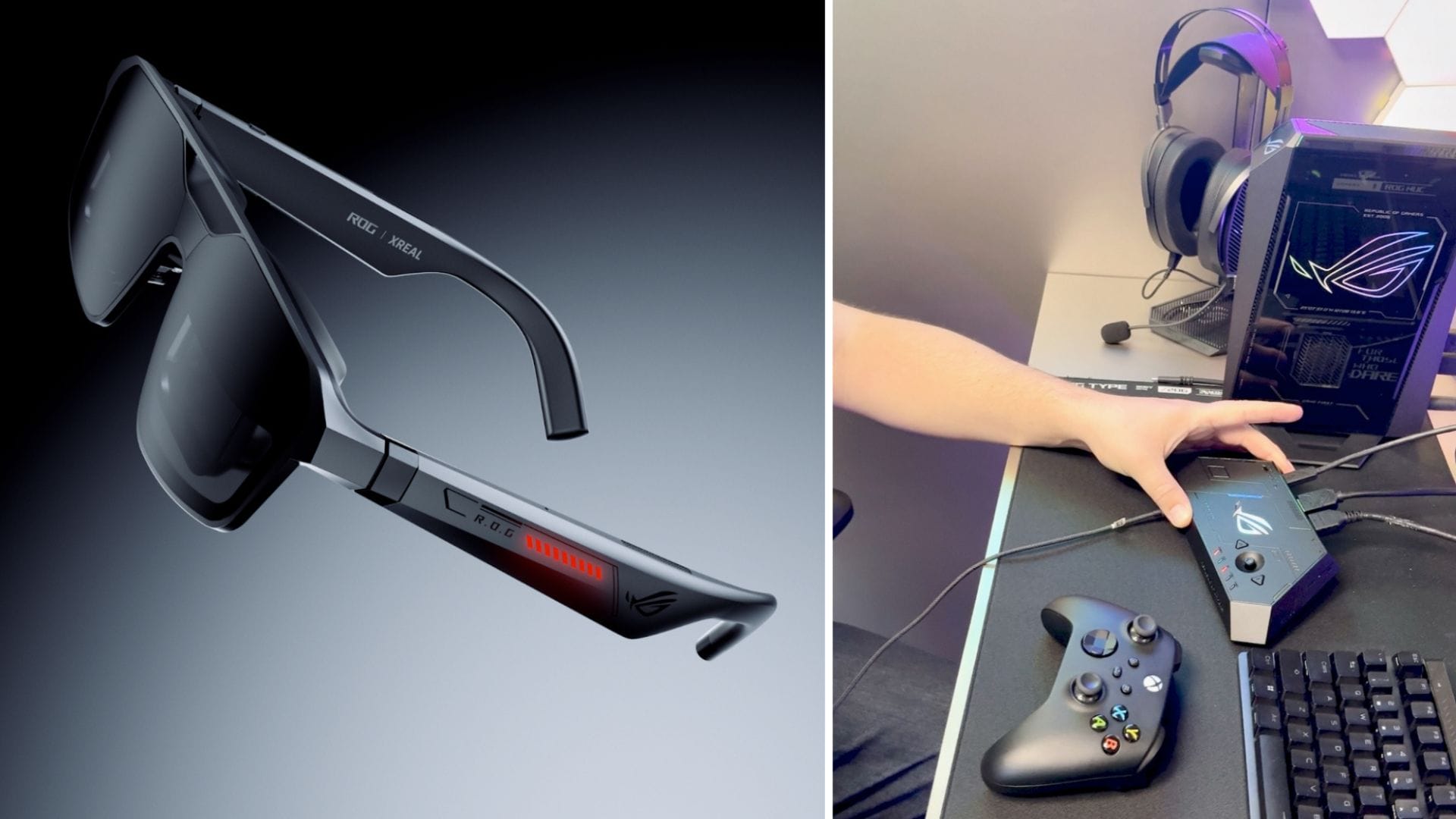
Asus has entered the wearables market with the launch of its ROG Xreal R1 augmented reality gaming glasses. The company unveiled the device at CES in collaboration with AR technology specialist Xreal.
While smart glasses from gaming brands have appeared before, Asus is positioning the R1 as a dedicated gaming peripheral. Previous attempts, such as Razer’s Anzu, launched in 2021, were not marketed explicitly for gaming. Other devices, including Viture’s Luma Pro XR and Beast glasses, offered limited gaming features, such as Switch and Remote Play compatibility. Still, these were only part of a broader product focus.
By contrast, the ROG Xreal R1 is designed to integrate fully with gaming setups. Asus has tailored the glasses to deliver a high-performance gaming experience, with display technology and compatibility with its broader device ecosystem.
Design and technical specifications
The R1 appears to be based on Xreal’s existing One Pro model. Both feature a 171-inch virtual screen, a 57-degree field of view, and a Bose-tuned sound system. Asus has, however, enhanced the display to reach refresh rates of up to 240Hz. The glasses use a micro-OLED panel running at 1080p with a peak brightness of 700 nits.
Asus has also developed an ROG Control Dock to complement the R1. The dock connects via USB-C and includes two HDMI 2.0 ports and a DisplayPort 1.4 port, enabling users to switch quickly between devices such as PCs and gaming consoles. The USB-C connection also allows the glasses to display content from smartphones or Asus’s ROG Ally handheld console.
The R1 features two viewing modes. Follow Mode tracks head movements so that the display follows the user’s gaze, supporting both 3 and 6 Degrees of Freedom. Anchor Mode, on the other hand, keeps the display fixed in place, offering a more stationary viewing experience.
Performance and user experience
Xreal’s X1 system-on-chip powers the glasses. Despite the advanced hardware, the R1 weighs 91 grams. Asus describes this as lightweight, though prolonged use may still feel uncomfortable due to the weight resting on the face. The company appears to be focusing on gaming sessions rather than all-day wear, reflecting the device’s positioning as a dedicated gaming accessory.
At present, Asus has not provided pricing or availability details for the R1. Industry observers suggest that the device could be priced similarly to Xreal’s One Pro, which retails for US$649, or potentially higher, given the enhanced features. The ROG Xreal R1 represents a significant step in merging augmented reality technology with gaming, and it highlights Asus’s ambition to expand its hardware ecosystem into new form factors.