

Asus has begun selling its NUC 16 Pro mini PC months after first revealing the compact desktop earlier this year. The small form-factor computer, introduced at CES 2026, is now appearing in online listings with a mid-range configuration aimed at users seeking strong performance in a compact system.
The newly available version is powered by an Intel Core Ultra 7 365H processor based on Intel’s Panther Lake platform. Although it is not the most powerful configuration expected in the NUC 16 Pro range, it still delivers a significant upgrade compared with earlier NUC systems. Retail listings show the device is currently available for US$999, though buyers should note that the unit is sold as a barebone system without memory or storage installed.
Mini PCs have grown steadily in popularity in recent years as users seek powerful desktop machines that take up far less space than traditional towers. With the NUC 16 Pro, Asus continues to target professionals and enthusiasts who want compact hardware without sacrificing expansion options or connectivity.
Compact design with desktop-class hardware
The Asus NUC 16 Pro keeps the small footprint associated with the NUC line while housing relatively powerful hardware. The mid-tier model now appearing online features Intel’s Core Ultra 7 365H processor, part of the company’s latest Panther Lake family. This chip is designed to deliver improved efficiency and stronger performance compared with previous generations used in earlier NUC systems.
Despite its tiny chassis, the system offers substantial memory capacity. The mini PC supports up to 128GB of DDR5 RAM through two SO-DIMM slots, which is unusually generous for a computer of this size. Such capacity allows the device to handle demanding workloads such as software development, content creation and multitasking-heavy office environments.
Graphics processing in this configuration relies on Intel’s Xe3 integrated graphics. While integrated solutions typically target general computing rather than high-end gaming, the Xe3 architecture is designed to offer improved visual performance and efficiency. For everyday productivity, media playback and light creative tasks, it should provide more than enough capability for most users.
The NUC 16 Pro family will also include more powerful versions equipped with Intel Core Ultra X-series processors. Those higher-end models are expected to feature Intel Arc B390 integrated graphics, offering stronger graphics performance for more demanding workloads. However, the currently available variant prioritises balanced performance over top-tier specifications.
Flexible storage and expansion options
Another notable aspect of the Asus NUC 16 Pro is its storage flexibility. The compact machine features two M.2 SSD slots, enabling users to install a large amount of high-speed storage despite its small footprint. Combined, the slots can support up to 16TB of total storage, giving users the option to build a powerful local data setup inside the tiny chassis.
The first M.2 slot supports PCIe Gen 5 x4 SSDs, allowing the use of the latest high-performance drives with extremely fast read and write speeds. The second slot supports PCIe Gen 4 x4 SSDs, which still deliver strong performance and remain widely available at lower prices. This combination allows users to balance cost and speed depending on their needs.
Because the system is sold as a barebone configuration, buyers must install their own memory and storage. While this adds to the final cost, it also provides flexibility. Users can choose the amount of RAM and storage that best fits their workload, rather than being locked into a preconfigured system.
This approach is common in the mini PC market, where enthusiasts and professionals often prefer to customise their systems. By allowing users to install their own components, Asus ensures that the NUC 16 Pro can serve a range of purposes, from compact office machines to specialised workstation builds.
Connectivity designed for modern workspaces
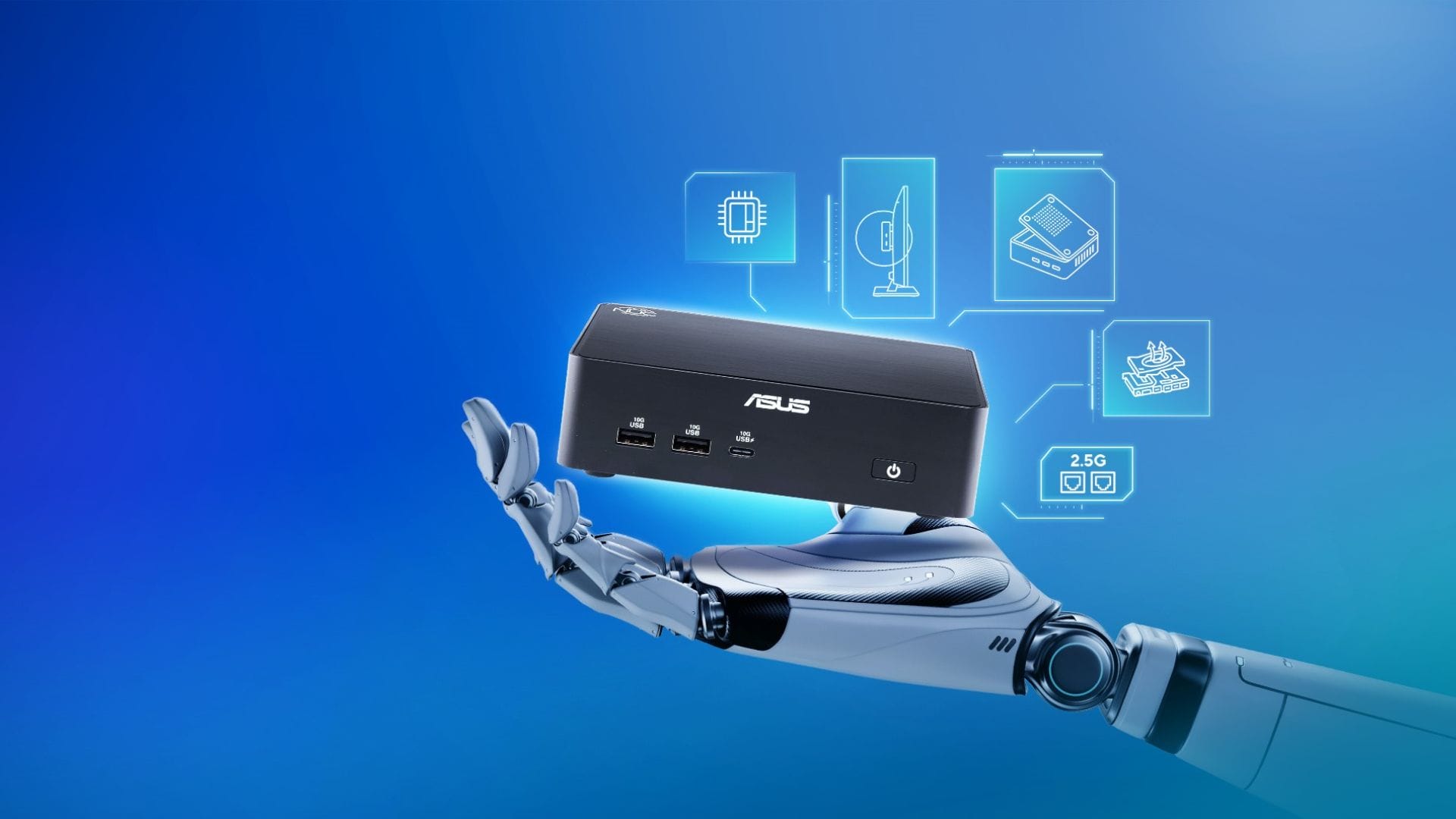
Although the NUC 16 Pro is small, Asus has equipped it with a wide range of modern connectivity options. The device includes two Thunderbolt 4 ports, which allow high-speed data transfers, external storage connections and support for multiple displays. Thunderbolt also enables compatibility with docking stations and external GPUs in certain setups.
Networking capabilities are also robust for a system of this size. The mini PC features dual 2.5Gb Ethernet ports, providing faster wired network speeds than standard gigabit connections. This can be useful for offices, small servers or users working with large files across local networks.
Wireless connectivity is equally modern, with support for WiFi 7 and Bluetooth 6. These technologies offer faster speeds, lower latency and improved device connectivity compared with previous wireless standards. For users relying on wireless peripherals or high-speed internet connections, these features help future-proof the system.
In addition, the mini PC includes multiple display outputs, enabling multi-monitor setups often used in productivity and professional environments. Combined with the system’s compact size, these features make the NUC 16 Pro suitable for desks with limited space where performance and connectivity remain essential.
The listing of the mid-tier configuration online suggests that Asus is beginning a broader rollout of the NUC 16 Pro lineup. As more variants become available, buyers will likely see additional options featuring more powerful processors and graphics capabilities.