

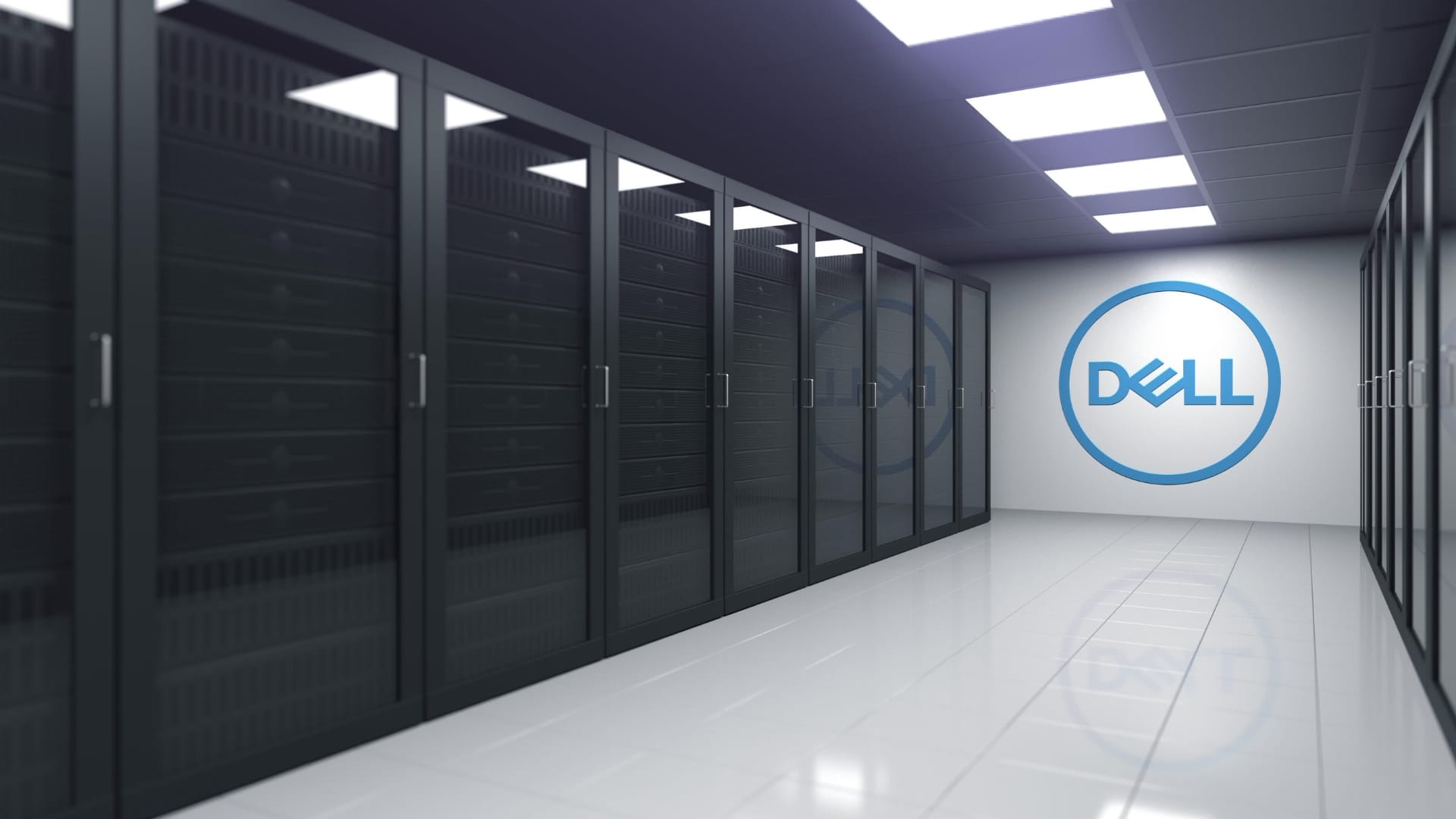
Dell Technologies has introduced a new generation of data centre products spanning storage, compute, cyber resilience, private cloud and automation, as enterprises look to support AI and traditional workloads within the same infrastructure environment.
The announcement includes Dell PowerStore Elite, new 18th generation PowerEdge servers, Dell PowerProtect One, Dell Cyber Detect, expanded Dell Private Cloud capabilities, and the Dell Automation Platform. Dell is positioning the portfolio around higher performance, improved infrastructure density, stronger recovery capabilities and simplified operations for IT teams managing more complex data centre environments.
Storage and compute take priority
Dell PowerStore Elite is the main storage update in this announcement. The platform combines AI-driven software, next-generation hardware and non-disruptive modernisation, with Dell claiming three times the performance and density of prior generations. It can pack up to 5.8 petabytes of effective capacity into a single 3U appliance and is backed by a 6:1 data reduction guarantee.
The system is built on industry-standard E3 flash and keeps components such as drives, controllers and networking modular and field-upgradable. For organisations managing storage refresh cycles, Dell is pitching PowerStore Elite as a way to improve performance and capacity without downtime or data migration.
Dell is also expanding its PowerEdge server portfolio with eleven new systems across air-cooled and liquid-cooled environments. The 18th generation PowerEdge servers deliver up to 70% better performance and 13-to-1 consolidation compared with the previous generation, according to Dell.
The liquid-cooled Dell PowerEdge M9825 uses 6th Gen AMD EPYC processors and is designed for AI and high-performance computing workloads in factory-integrated IR7000 racks. Dell is also adding the air-cooled PowerEdge XE5845 and next-generation XE7845 for PCIe-based AI deployments, alongside the R9825 and R9815 for high-performance air-cooled compute with up to 256 cores per system.
Cyber resilience is folded into storage and backup
Dell PowerProtect One brings PowerProtect Data Manager and PowerProtect Data Domain under a single control plane for protection management, orchestration and secure protection storage. Dell says the platform can cut management overhead by 50% while supporting third-party environments and centralised visibility.
Dell Cyber Detect extends AI-powered ransomware detection into Dell PowerStore and Dell PowerMax enterprise storage. The system is trained on thousands of ransomware variants and inspects data at the byte level with 99.99% accuracy, according to Dell. It is designed to identify the last known clean copy of data so organisations can recover more quickly after an attack.
Matt Kimball, VP & Principal Analyst at Moor Insights & Strategy, said IT teams are being asked to support AI, cyber defence and infrastructure modernisation while managing headcount constraints.
“IT teams are being asked to support AI, defend against increasingly sophisticated threats, and modernise infrastructure – often without adding headcount. Dell’s approach stands out because it addresses the operational reality across the full stack. PowerStore Elite helps eliminate the traditional storage refresh cycle, PowerEdge enables meaningful infrastructure consolidation and PowerProtect One simplifies cyber resilience. Together, these technologies reduce operational complexity, which remains one of the largest hidden costs in enterprise IT.”
Automation becomes a management layer
Dell is using the Dell Automation Platform as the common foundation for private cloud deployments and infrastructure automation. The platform supports Dell Private Cloud, allowing organisations to deploy cloud stacks from Broadcom, Microsoft, Nutanix and Red Hat on open, disaggregated Dell infrastructure with automated lifecycle management.
Dell Private Cloud now supports VMware Cloud Foundation 9.1, Microsoft Azure Local and Dell PowerStore integration with Nutanix AHV. Dell says the platform can scale compute and storage independently and deliver up to 65% cost savings versus HCI.
Dell Distributed Private Cloud, formerly Dell NativeEdge, extends private cloud capabilities to edge and distributed environments. Its features include two-node high-availability clusters, automatic failover, enhanced VM live migration, built-in zero-trust security and zero-touch endpoint support.
The Dell Automation Platform also introduces agentic AI capabilities through a generative user experience that adapts to how teams design, operate and manage infrastructure. Dell Automation Studio adds AI-assisted orchestration for compute, storage and networking workflows, allowing organisations to build automation processes across infrastructure and applications.
Dell PowerStore Elite will be available in July 2026. Dell PowerProtect One and Dell Distributed Private Cloud are available now, while Dell Automation Studio will be available in June 2026. The first new PowerEdge systems will arrive in 2H 2026, with additional models following in Q1 2027 and later in 2027.