


Sunday, 28 December 2025
28.4 C
Singapore
29.3 C
Thailand
26.5 C
Indonesia
27.3 C
Philippines

Facebook and Google employees allowed to continue working from home until the end of the year

[output_post_excerpt]

Both Facebook and Google have announced plans to reopen their offices soon, but they will allow more employees to continue working from home to allow flexibility. Google had initially said that it would keep the work from home policy until first June, but now the policy will run for seven more months.

Facebook said that it would start reopening offices from July 6, 2020, as COVID-19 lockdowns are gradually lifted.

Sundar Pichai, Google’s chief executive, said that employees who require offices would be able to return from this July with enhanced safety measures in place. But most of the employees who can carry out their jobs from home will continue to do so until the end of 2020, added Mr Pichai.

This announcement coincides with the one from Facebook as more companies start rolling out strategies to get back to work.

“Facebook has taken the next step in its return to work philosophy. Today, we announced anyone who can do their work remotely could choose to do so through the end of the year,” Facebook’s spokesman said. “As you can imagine, this is an evolving situation as employees and their families make important decisions return to work.”

Facebook has not yet determined the employees who will be asked to come in, added the spokesperson. The social media giant was among the first companies to ask its employees to work from home. It gave its employees US$1,000 bonuses for their work-from-home, plus childcare costs.

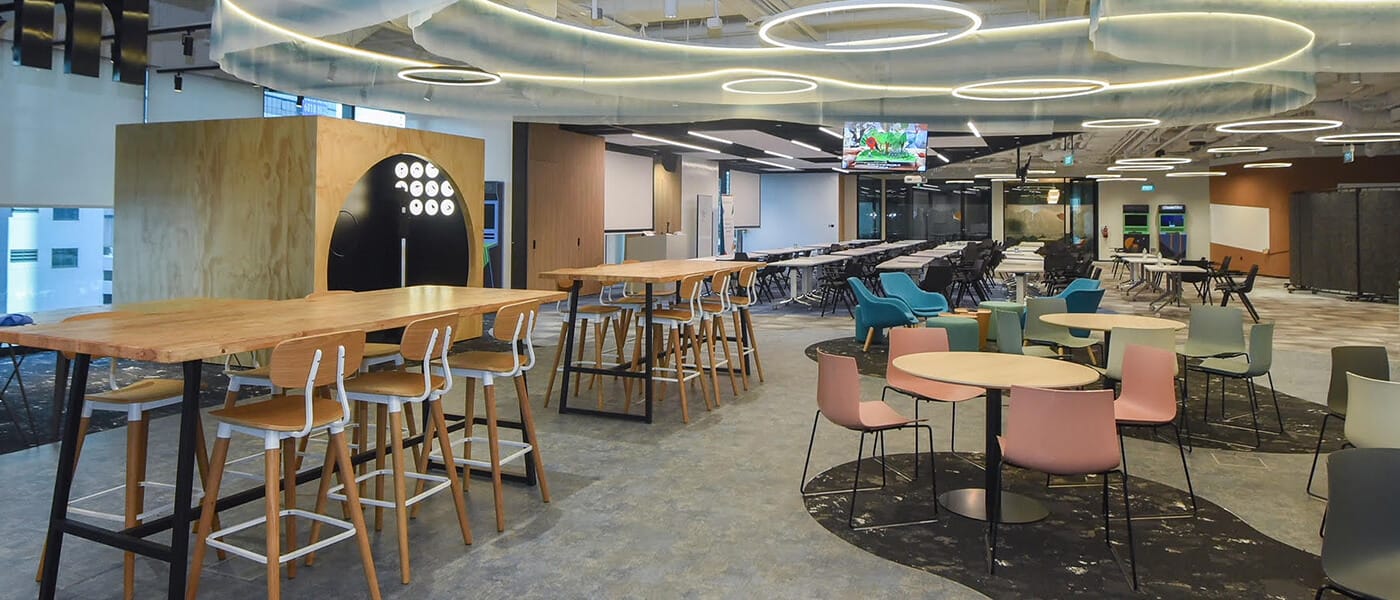
The trend of working remotely may suit some companies while they continue to redesign their offices to cater for the social distancing rules. Some employees are still nervous about returning to work during this pandemic, though.

Hot this week

Thoughtworks: Singapore’s financial OS upgrade, agentic AI and the race for the future of wealth

How agentic AI could reshape wealth management in Singapore by enhancing personalisation, improving responsiveness and elevating the role of advisers.

Samsung unveils Exynos 2600 as first 2nm mobile processor

Samsung unveils the Exynos 2600, the world’s first 2nm mobile chip, expected to debut in the Galaxy S26 in early 2026.

Square Enix releases Final Fantasy VII Remake Intergrade demo on Switch 2 and Xbox

Free demo for Final Fantasy VII Remake Intergrade launches on Switch 2 and Xbox, letting players carry progress into the full 2026 release.

IATA raises concerns over potential 5G interference with aviation systems

IATA warns uneven global 5G rules could pose aviation risks, even as Singapore reports no interference with aircraft systems.

How Southeast Asia’s smart cities can unlock the next wave of AI with real-time, connected data

How Southeast Asia’s cities can use real-time, connected data to unlock AI-driven operations, improve resilience, and enhance urban services.

How Southeast Asia’s smart cities can unlock the next wave of AI with real-time, connected data

How Southeast Asia’s cities can use real-time, connected data to unlock AI-driven operations, improve resilience, and enhance urban services.

Square Enix releases Final Fantasy VII Remake Intergrade demo on Switch 2 and Xbox

Free demo for Final Fantasy VII Remake Intergrade launches on Switch 2 and Xbox, letting players carry progress into the full 2026 release.

AI designs a Linux computer with 843 parts in a single week

Quilter reveals a Linux computer designed by AI in one week, hinting at a future where hardware development is faster and more accessible.

Super Mario Bros inspired Hideo Kojima’s path into game development

Hideo Kojima reveals how Super Mario Bros convinced him that video games could one day surpass movies and led him into game development.

Related Articles