

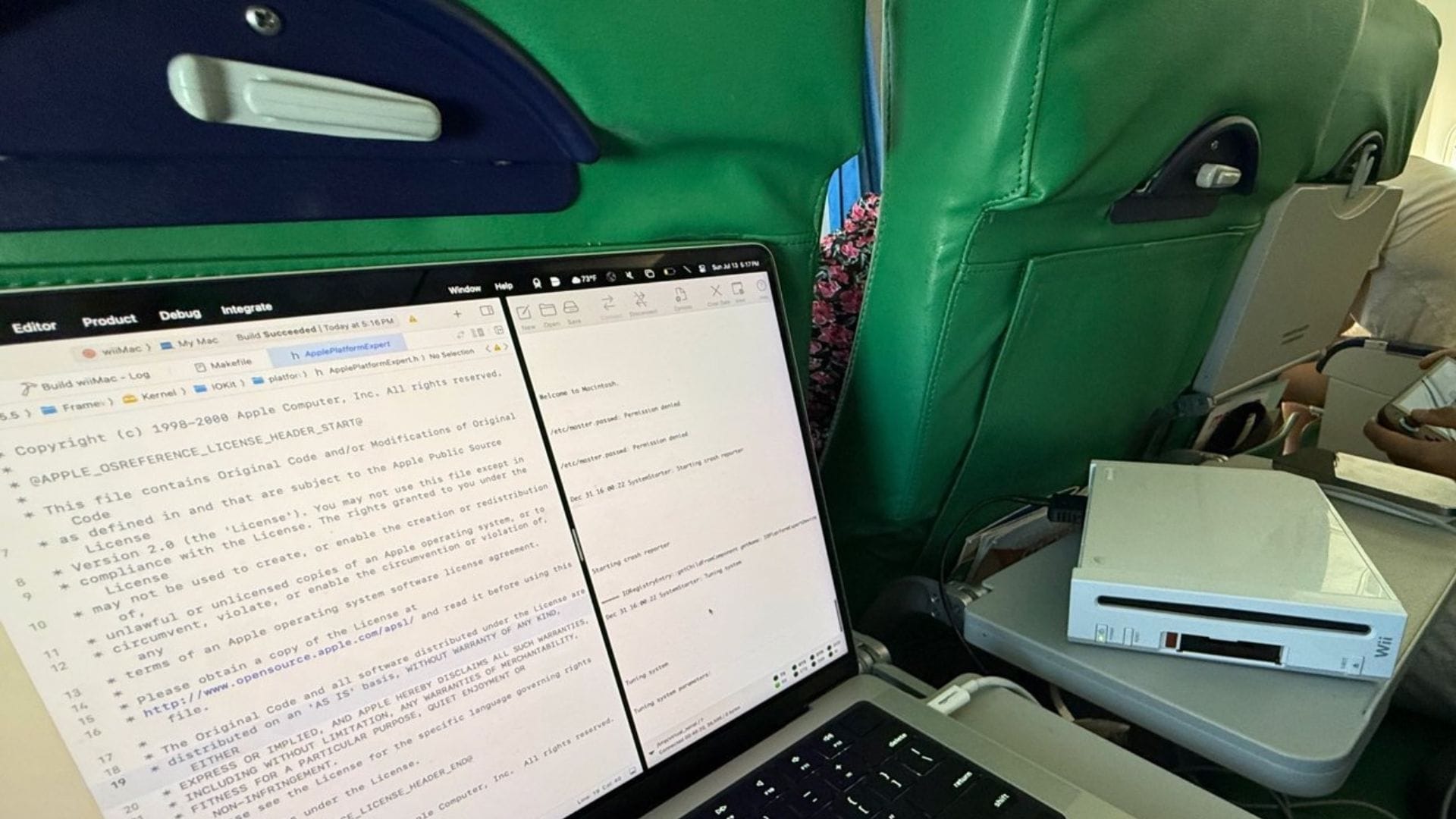
A software developer has successfully run an early version of Apple’s Mac operating system on a Nintendo Wii, turning the ageing games console into an unlikely computing platform. The achievement highlights both the flexibility of older hardware and the persistence of hobbyist developers determined to test technical limits.
Bryan Keller, an independent developer, managed to install Mac OS X 10.0, also known as Cheetah, on the Nintendo Wii, a console originally released in 2006. The unusual project reverses the more familiar approach of running Wii games on computers through emulators, instead adapting desktop software to function on gaming hardware.
A project sparked by doubt and curiosity
Keller first considered the idea in 2013 while studying at university, but the project did not gain momentum until several years later. Renewed interest came after an online comment from a Reddit user who claimed that running Mac OS X on the Wii had “a zero per cent chance of this ever happening”.
That sceptical statement proved to be a turning point. Keller later explained that the comment provided unexpected motivation to begin serious work on the concept. The developer described feeling encouraged by the challenge and began experimenting with ways to adapt Apple’s early operating system to the Wii’s hardware.
The project involved installing Mac OS X 10.0, a version released in the early days of Apple’s transition to modern Unix-based systems. At the time of its original launch, the software was designed to run on older Macintosh computers rather than gaming consoles built for entertainment titles such as Wii Sports or Super Mario Galaxy.
Keller also cited another development milestone as motivation. After learning that Microsoft’s Windows NT operating system had previously been ported to the Wii by other enthusiasts, the developer felt inspired to push forward with the Mac project. “Last year, when I saw that Windows NT had been ported to the Wii, I felt a renewed sense of motivation,” Keller wrote. “Even if my lack of low-level experience resulted in failure, attempting this project would still be an opportunity to learn something new.”
Technical challenges behind the unusual port
Running Mac OS X on the Wii required overcoming several technical hurdles. The console was never designed to function as a traditional computer, meaning much of the supporting software infrastructure had to be created from scratch.
Keller explained that the Wii’s hardware made the task challenging but not impossible. The console is widely known among enthusiasts for being relatively easy to modify compared with newer gaming systems. Over the years, hobbyists have adapted the Wii to run a variety of operating systems, including Windows 95, Windows NT, Linux and NetBSD.
One advantage came from the Wii’s processor design. The console uses a PowerPC chip, a type of processor also used in older Macintosh computers before Apple transitioned to Intel-based chips. This shared lineage gave Keller confidence that the core processing requirements could be met without fundamental incompatibility.
“Given this close lineage, I felt confident that the CPU wouldn’t be a blocker,” Keller wrote in an explanation of the project’s development. However, compatibility alone was not enough to make the system work. The developer needed to build several custom components to ensure the operating system functioned correctly.
Among these components was a custom boot loader that enables the system to boot the operating system from storage. Keller also modified the operating system’s kernel to ensure it could communicate effectively with the Wii’s hardware. Additional drivers were written to enable essential features, including USB support, allowing a mouse and keyboard to be connected to the console.
These steps transformed the Wii into a device capable of performing tasks typically associated with a desktop computer rather than a gaming console. While the console’s hardware capabilities limit performance, the system demonstrates the adaptability of both the Wii and early Mac software.
A learning experience that highlights hacker culture
For Keller, the technical achievement was only part of the project’s value. The developer described the overall process as rewarding, particularly given the initial scepticism surrounding the idea. The experience reinforced the importance of experimentation within the broader community of hobbyist programmers and hardware enthusiasts.
The developer said the work provided deeper insights into low-level programming, an area that involves direct interaction with computer hardware. Such skills are often considered difficult to master but are essential for tasks such as operating system development and hardware integration.
Keller reflected on the journey with a sense of satisfaction, noting that the outcome exceeded initial expectations. “In the end, I learned (and accomplished) far more than I ever expected,” Keller wrote. “And perhaps more importantly, I was reminded that the projects that seem just out of reach are exactly the ones worth pursuing.”
Detailed technical documentation has been shared online through Keller’s personal blog, providing step-by-step explanations of the development process. The source code has also been published on GitHub, allowing other developers to explore the methods used and attempt the project themselves.
The achievement illustrates how older hardware continues to attract creative experimentation long after its commercial life cycle has ended. As computing enthusiasts seek new ways to repurpose ageing devices, projects such as this demonstrate that even discontinued gaming consoles can still serve as platforms for innovation and learning.