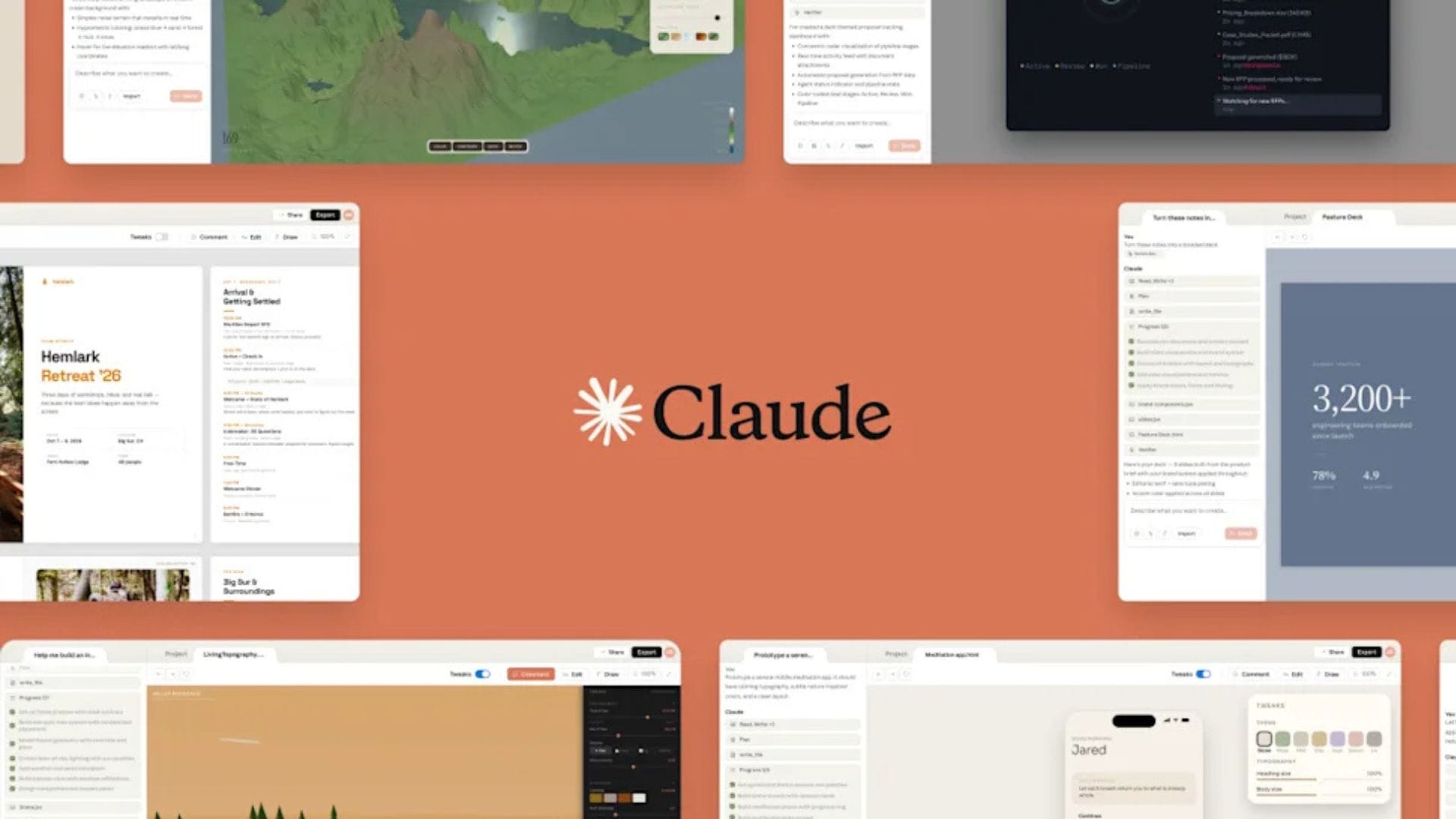
Anthropic has introduced a significant update to Claude Design, its AI-powered design assistant, strengthening connections between the platform and the company’s broader suite of tools. The update arrives two months after Claude Design was first released in preview to subscribers and aims to streamline the process of turning design concepts into working software.
The latest changes allow designers and developers to move more smoothly between design and coding tasks. Anthropic says the update reduces the need for manual work and helps teams create interfaces using assets and components already in their products.
Claude Design now works directly with existing codebases
One of the most notable additions is the ability for Claude Design to begin projects using a local codebase. This means the tool can access existing design elements and components already used within a company’s software products, helping maintain visual consistency across projects.
By working from established code and assets, Claude Design can generate designs that more closely match a company’s current interface and branding. Users no longer need to provide screenshots to communicate their design intentions, as the system can draw context directly from the existing project structure.
Anthropic has also improved collaboration between Claude Design and Claude Code, the company’s AI coding assistant. Once a design has been created, it can be handed over directly to Claude Code, which can then build the interface without requiring developers to start from scratch. The company says this should help reduce development time and improve workflow efficiency.
For users who prefer to work primarily within Claude Code, Anthropic has introduced the ability to create and modify designs directly from the coding environment. By entering the command “/design” in the terminal, developers can access design capabilities without switching applications.
New tools aim to improve workflow and design quality
Alongside the integration updates, Anthropic has introduced several usability improvements intended to simplify the design process.
The company has expanded its import capabilities, allowing users to build complete design systems using GitHub repositories and raw files. This feature enables Claude Design to work more effectively with existing project resources and organisational standards.
Anthropic explained the enhancement by stating: “Claude builds with your components, checks its output against your design system, and makes corrections before you see it.”
The platform’s built-in image editor has also received upgrades. According to the company, users now have more fine-grained control over the positioning, sizing and alignment of design elements. These adjustments are intended to provide greater precision when refining layouts and visual assets.
Additional changes include easier access to Claude Design through the Claude desktop application. Users can now launch the tool directly from the sidebar. Web users can also access it more quickly by navigating to the dedicated Claude Design web address.
Taken together, these updates suggest Anthropic may be preparing to move Claude Design beyond its preview phase and towards wider availability.
Anthropic addresses usage limits as adoption grows
Anthropic has also changed how Claude Design usage is measured. The company said the tool now shares usage limits with other Claude products, including Claude Code and the standard Claude chatbot.
According to Anthropic, most users should encounter usage restrictions less frequently under the new system. The company has also improved the tool’s token efficiency, which should reduce resource consumption while lowering the likelihood of errors during operation.
The update comes at a time when usage limits have become a topic of discussion among customers. Earlier this week, The Wall Street Journal reported that a Washington, DC resident had filed a lawsuit against Anthropic. The complaint alleges that the company misled consumers regarding the usage limits associated with its Max subscription plans.
Despite the scrutiny surrounding usage policies, Anthropic highlighted growing interest in Claude Design. The company said more than one million people used the tool during its first week of availability, indicating strong demand for AI-assisted design and development workflows.
As competition in the artificial intelligence sector intensifies, Anthropic appears focused on creating closer links among design, development, and content creation tools. The latest update reflects a broader industry trend toward integrated AI platforms that support multiple stages of the software development process within a single ecosystem.