


Wednesday, 10 December 2025
30.3 C
Singapore
30.6 C
Thailand
23.5 C
Indonesia
28.3 C
Philippines

Messenger’s new community chats no longer need Facebook groups

Meta introduces new Messenger community chats, allowing you to connect with up to 5,000 people, even if you're not connected through Facebook groups.

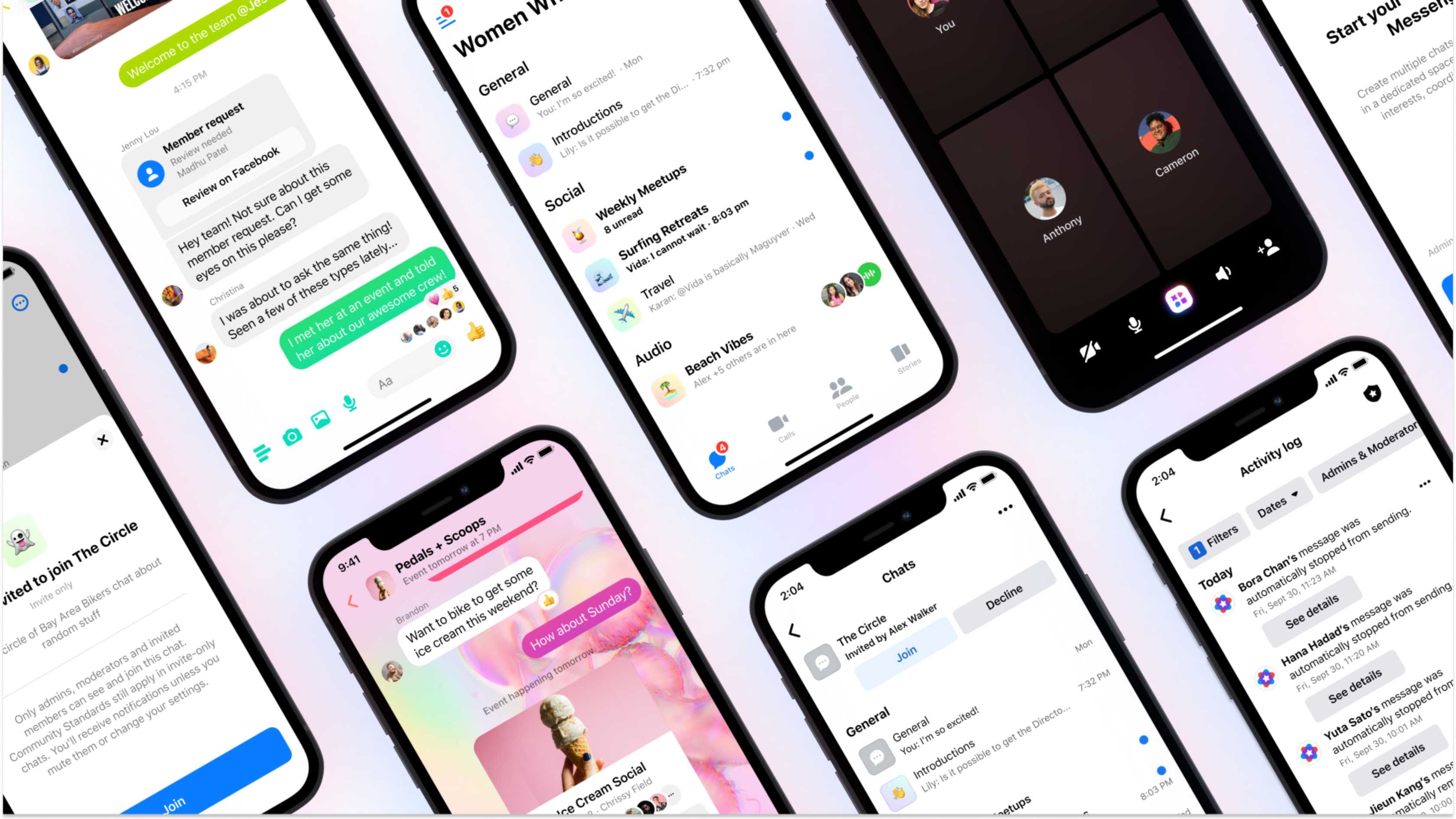
Meta has introduced a new feature that empowers you to effortlessly create large community chats on Messenger without the need for Facebook groups. In 2022, Meta launched community chats for Facebook Groups, enabling group members to communicate in real-time. This new feature takes it a step further, allowing you to connect with up to 5,000 people on Messenger, even if you have no prior connection.

A new way to connect

Meta has confirmed this feature’s rollout to TechCrunch, though they haven’t made a formal announcement. In the updated Messenger app, you will find all community chats grouped in one place, each featuring a “Home” space where administrators can post updates and announcements. According to Meta’s Help page, this feature is currently available on iOS and Android platforms. If you see the option to create a new community in your Messenger app’s left menu on mobile, you are part of the rollout.

Managing your community

Creating a community chat on Messenger grants you several administrative powers. You can remove participants, report or remove inappropriate content, and delete the chat if necessary. We understand that privacy and safety are important, so we’ve implemented measures to ensure your community remains secure. While any member can issue shareable invites, allowing communities to expand beyond the initial circle, this also means you need to be cautious about what you share. Your messages will be visible to not only current members but also any future members invited by others.

Potential uses and benefits

This new feature opens up exciting possibilities. It could be used to create chats for schools, organisations, neighbourhoods, and other groups with many potential members. This feature might offer a more convenient and superior alternative to WhatsApp’s community chats, as Messenger does not require a phone number connection.

Hot this week

HPE expands hybrid cloud portfolio with new virtualisation, security and AI capabilities

HPE expands its GreenLake cloud portfolio with new virtualisation, security and AI capabilities to support modern hybrid cloud demands.

Ulanzi MT-74 review: A compact and versatile tripod for action cameras

The Ulanzi MT-74 is a lightweight magnetic quick-release tripod offering versatility, stability, and seamless vertical-horizontal shooting.

Tiger Brokers: Bringing institutional-grade AI intelligence to global retail investors

AI is redefining retail investing as platforms like Tiger Brokers’ TigerAI integrate verified intelligence, personalisation, and long-term wealth management to empower global investors.

HPE expands AI-native networking portfolio and outlines vision for self-driving IT operations

HPE expands its AI-native networking portfolio with new AIOps features, hardware, and hybrid cloud tools designed for self-driving IT operations.

UnionBank adopts Amazon Quick Suite to accelerate data-driven decision making

UnionBank deploys Amazon Quick Suite to expand access to data analytics and speed up decision making across its organisation.

ByteDance faces growing resistance as Chinese apps block its AI-driven smartphone

Chinese apps restrict ByteDance’s new AI smartphone as developers raise concerns over automation, security and privacy.

Pudu Robotics unveils new robot dog as it expands global presence

Pudu Robotics unveils its new D5 robot dog in Tokyo as part of its global push into service and industrial robotics.

Nintendo launches official eShop and Switch Online service in Singapore

Nintendo launches the Singapore eShop and Switch Online service, giving local players full access to digital games, subscriptions, and regional deals.

2026 Predictions Part 1: The five forces reshaping Asia’s digital economy

Five forces are redefining Asia’s digital economy in 2026, from AI adoption and data sovereignty to new security and workforce demands.

Related Articles

Popular Categories