


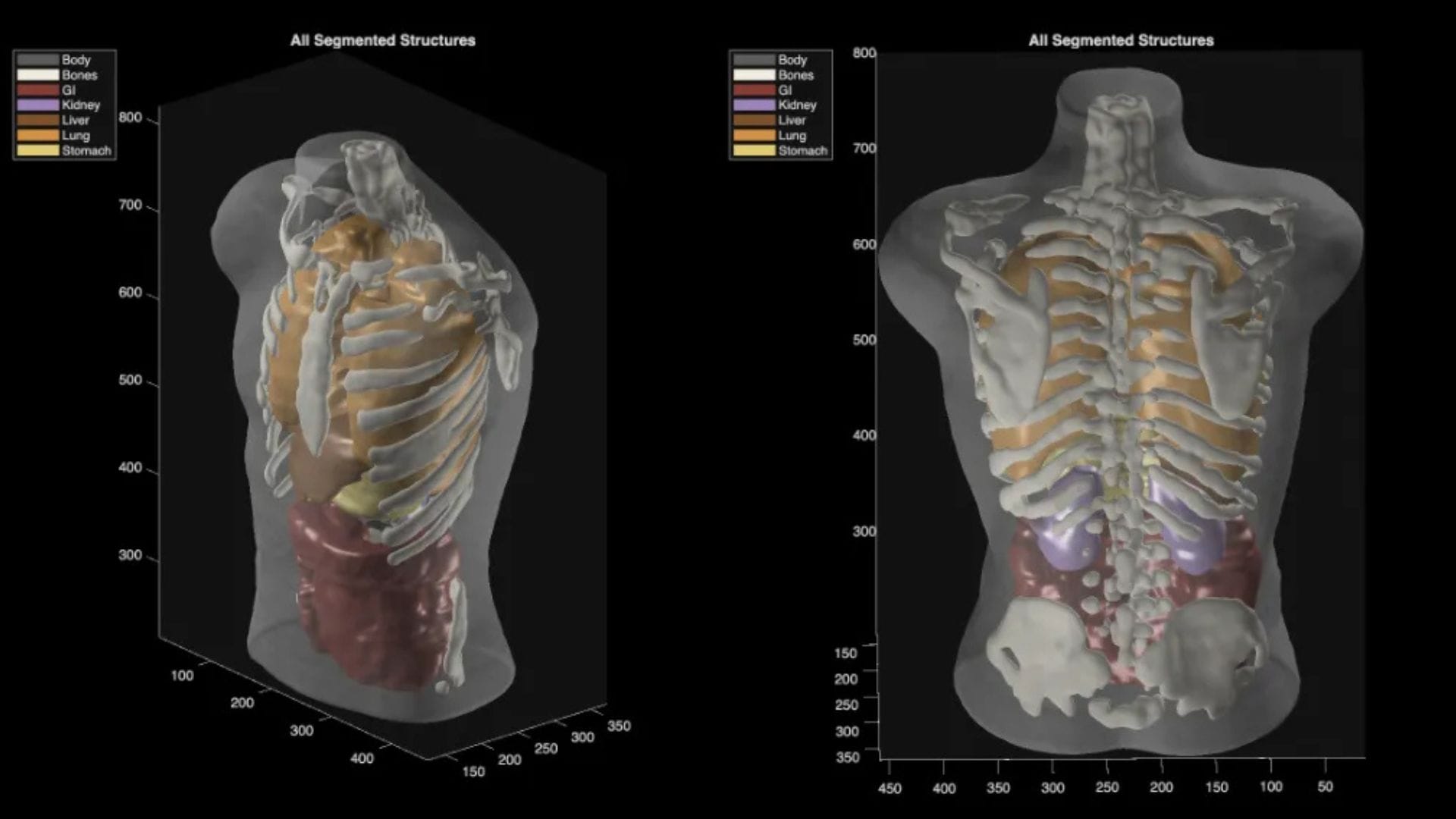
Midjourney, the company best known for its artificial intelligence image-generation platform, has announced an ambitious move into healthcare technology: the development of a full-body ultrasonic scanner. The new device is designed to create detailed internal body images in less than 60 seconds, marking a significant departure from the firm’s established focus on AI-generated artwork.
The project is being developed under a new division called Midjourney Medical. Alongside the scanner, the company also plans to establish dedicated wellness centres where people can undergo scans in a spa-like environment. The announcement marks one of the most unexpected expansions by a technology company in recent years, taking Midjourney beyond software into medical hardware.
A new direction for Midjourney
In its announcement, Midjourney acknowledged that the scanner project is unlike anything it has previously developed. The company said it had been reflecting on its future direction and considering how it could differentiate itself from other technology firms.
As part of that vision, Midjourney Medical has been created to focus on healthcare innovation, with the scanner becoming its first hardware product. The company described the project as an effort to combine the capabilities of advanced medical imaging with the accessibility of a routine wellness experience.
“We’ve dreamed of something as powerful as MRI, and as casual as a trip to the spa, and we’re unveiling a path to that – today,” the company stated in its announcement.
The scanner is designed to operate in a water-filled environment. During the procedure, a person stands on a platform and is gradually submerged at approximately 2 inches per second. As the body passes through the system, it is surrounded by a specialised ring containing around 500,000 microscopic ultrasonic elements.
Each of these elements can emit ultrasound waves and capture signals reflected from the body. According to Midjourney, this process enables the creation of highly detailed internal images while dramatically reducing scanning times compared with conventional imaging methods.
How the scanner works
Midjourney compares the scanner’s operation to the echolocation techniques used by dolphins. The company said the large number of ultrasonic emitters allows the body to be examined from virtually every angle simultaneously.
The resulting scan produces, the company says, a three-dimensional map of the human body with extremely high precision. Midjourney claims the images could offer a level of detail comparable to modern magnetic resonance imaging (MRI) systems while operating at nearly 100 times the speed.
Traditional full-body MRI examinations can take 60 to 90 minutes. By contrast, Midjourney aims to complete a full-body scan in under one minute. If successful, the technology could significantly reduce the time required for comprehensive medical imaging.
The project is being developed in partnership with ultrasound technology company Butterfly Network. In November 2025, Midjourney signed a licensing agreement that granted it exclusive rights to use Butterfly Network’s ultrasound-on-chip technology for the scanner project.
Development is being led by Ahmad Abbas, who joined Midjourney in late 2023. Before joining the company, Abbas worked on the development of the Apple Vision Pro at Apple.
Over the next year, Midjourney plans to refine both the scanner hardware and the software algorithms that process imaging data. The company also intends to conduct research trials and continue developing a second-generation version of the device.
Expansion plans and long-term ambitions
Midjourney expects to open its first scanning spa in San Francisco in 2027. The facility will serve as an early deployment site for the technology while the company continues to gather data and improve performance.
A major milestone will be obtaining U.S. Food and Drug Administration approval for the scanner’s diagnostic capabilities. Regulatory approval would be necessary before the technology could be widely used for medical diagnosis and treatment planning.
Looking further ahead, Midjourney plans to introduce a third-generation scanner by 2028. The future system is expected to incorporate custom-designed silicon chips that the company believes will deliver substantially improved image quality and performance.
The company has outlined an ambitious expansion strategy, aiming to install scanners in multiple cities before ultimately reaching a global network. By 2031, Midjourney hopes to have 50,000 scanners operating worldwide.
The firm believes that earlier and more frequent imaging could help identify medical conditions sooner, potentially reducing healthcare costs and improving patient outcomes. In its announcement, the company said: “We think it’s completely possible that with enough early imaging in the future, the world could avoid 30 per cent of all deaths and 50 per cent of all healthcare costs.”
While those claims remain speculative and will require extensive clinical validation, the project signals Midjourney’s intention to become a significant player in healthcare technology. Whether the scanner can match the performance of established MRI systems remains to be seen. Still, the company is clearly pursuing a long-term vision that extends far beyond AI-generated images.