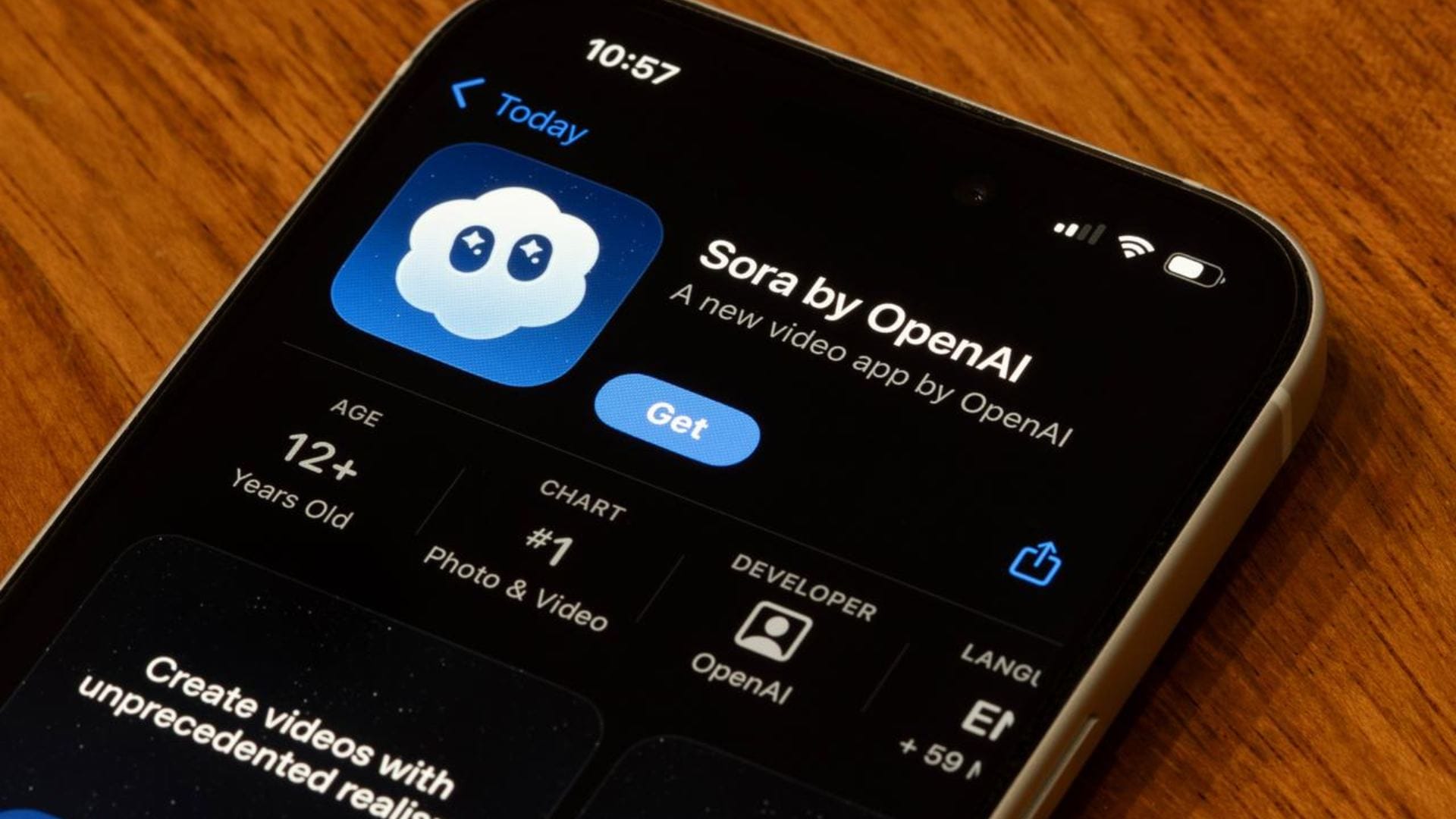
OpenAI has announced plans to shut down its Sora video generation app, marking the end of one of its more experimental consumer-facing tools. The company confirmed the decision in a post on X published on Tuesday afternoon, stating, “We’re saying goodbye to Sora.”
While the announcement makes clear that both the app and its associated API service will be discontinued, OpenAI has not yet provided a specific timeline for when access will be fully withdrawn. The company indicated that further details would be shared at a later date, leaving current users uncertain about how long the platform will remain operational.
In a statement provided to media outlets, a spokesperson explained the reasoning behind the move, saying: “We’ve decided to discontinue Sora in the consumer app and API. As we focus and compute demand grows, the Sora research team continues to focus on world simulation research to advance robotics that will help people solve real-world, physical tasks.”
We’re saying goodbye to the Sora app. To everyone who created with Sora, shared it, and built community around it: thank you. What you made with Sora mattered, and we know this news is disappointing.
— Sora (@soraofficialapp) March 24, 2026
We’ll share more soon, including timelines for the app and API and details on…
The decision reflects a shift in priorities within OpenAI, reallocating resources toward areas with greater long-term potential. Rather than continuing to develop Sora as a standalone product, the company appears to be integrating its underlying research into broader initiatives, particularly those related to robotics and simulation technologies.
Signs of Sora’s decline had been emerging for several months before the announcement. Although the app initially performed strongly, reaching the top of the US App Store charts shortly after launch, user interest appears to have diminished rapidly. Data from analytics firm Appfigures suggested that, by early 2026, Sora was experiencing consistent month-on-month declines in both downloads and user spending.
The downturn was particularly noticeable in December, a period typically associated with increased app engagement. During that month alone, Sora reportedly recorded a 32% drop in new downloads compared with November. These figures indicated that the platform was struggling to maintain momentum in a competitive, fast-moving market.
Strategic pivot towards enterprise and advanced AI systems
The discontinuation of Sora aligns closely with OpenAI’s broader strategic direction. In recent months, the company has increasingly focused on developing advanced AI systems tailored to professional users, including software developers and data analysts. This shift became more apparent following the release of its GPT-5.2 model, which was positioned as a direct response to growing competition in the AI sector.
Rival developments, particularly from Google and its Gemini 3 Pro model, have intensified competition in the field, prompting OpenAI to concentrate on areas where it believes it can achieve stronger differentiation. By prioritising tools that enhance productivity and technical workflows, the company is aiming to secure a more stable revenue stream through enterprise adoption.
This approach suggests a move away from consumer-oriented experimentation towards more commercially viable applications of artificial intelligence. While products like Sora captured public attention and demonstrated the capabilities of generative AI, they may not have delivered the sustained engagement or financial returns required to justify continued investment.
OpenAI’s emphasis on enterprise solutions reflects a broader trend within the technology sector, where companies are increasingly targeting business customers as a pathway to profitability. By focusing on high-value use cases, such as coding assistance and data analysis, the company is seeking to position itself as a critical infrastructure provider in the AI ecosystem.
At the same time, the reference to “world simulation research” highlights OpenAI’s ambition to push the boundaries of AI beyond digital applications. The integration of simulation technologies into robotics could enable machines to understand better and interact with physical environments, potentially unlocking new use cases across industries.
Partnership fallout adds financial implications
The decision to shut down Sora may also carry financial consequences for OpenAI. Reports indicate that Disney is withdrawing from a previously agreed partnership with the AI firm. The deal, signed at the end of last year, reportedly included plans for a US$1 billion investment.
According to industry sources, Disney’s exit is directly linked to OpenAI’s changing product strategy. The discontinuation of Sora, which may have been a component of the collaboration, appears to have altered the terms of engagement between the two companies. As a result, the anticipated investment will no longer proceed.
This development underscores the risks associated with rapid strategic shifts in the technology sector. While refocusing on enterprise solutions may strengthen OpenAI’s long-term prospects, it can also disrupt existing partnerships and lead to the loss of significant funding opportunities.
Despite these challenges, OpenAI’s leadership appears confident in its revised direction. By focusing on advanced AI capabilities and enterprise applications, the company is positioning itself to compete more effectively in a crowded, rapidly evolving market.
The closure of Sora therefore represents not only the end of a specific product, but also a broader transition in how OpenAI approaches innovation and commercialisation. As the company continues to refine its strategy, further changes to its product portfolio may be expected in the months ahead.