

Apple is reportedly considering new sources of memory chips as it continues to deal with the effects of the global memory shortage and rising component costs. Reports suggest the company is in discussions with two major Chinese semiconductor manufacturers to strengthen its supply chain for products sold in China.
The reported move reflects Apple’s efforts to secure a stable supply of key components while managing increasing production costs. If agreements are reached, the strategy could help reduce pressure on the company’s operations in one of its largest markets. However, any partnership with Chinese chipmakers is expected to attract close political scrutiny in the United States.
Apple seeks alternative memory chip suppliers
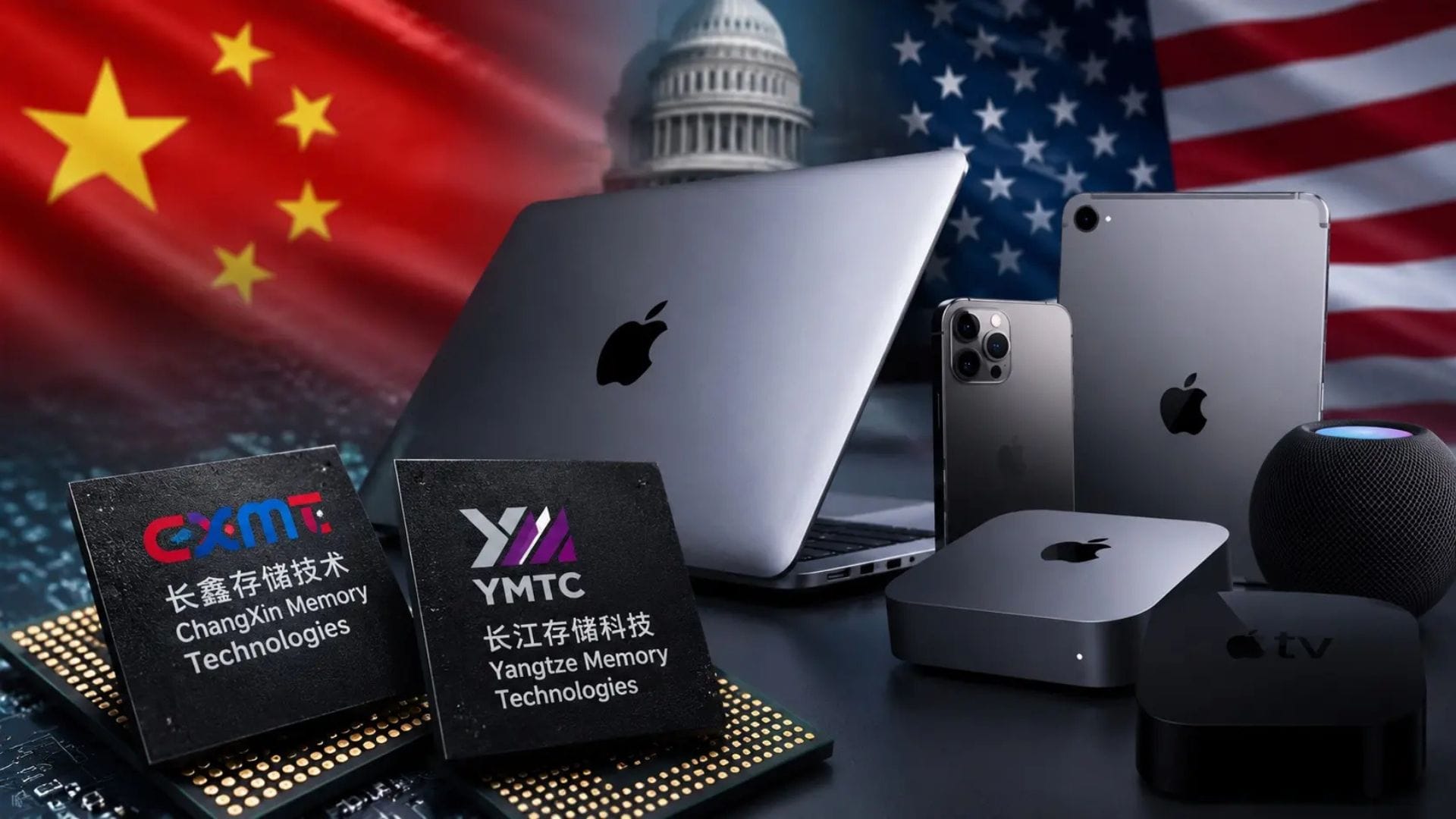
According to reports from the Financial Times and Bloomberg, Apple is in talks with ChangXin Memory Technologies (CXMT) and Yangtze Memory Technologies (YMTC) about supplying memory chips for devices intended for the Chinese market.
The discussions are said to be part of Apple’s broader effort to reduce the impact of the ongoing global shortage of memory chips. By adding more suppliers, the company hopes to improve supply stability while limiting the financial effects of rising memory prices, which have increased manufacturing costs across the technology industry.
The reports also state that Apple is focusing on memory components used in products sold within China rather than expanding the arrangement across its worldwide product range. This approach could help the company meet local demand while reducing pressure on existing suppliers.
Apple has not publicly confirmed the reported negotiations. However, manufacturers across the technology sector have increasingly looked to diversify their supply chains following years of disruption caused by component shortages, geopolitical tensions and changing trade policies.
Political scrutiny could complicate any agreement
The reports further claim that Apple Chief Executive Officer Tim Cook has sought support from the US government regarding the proposed sourcing strategy. Although the company does not require formal approval to purchase components from the Chinese suppliers, any agreement is expected to attract significant political attention.
US policymakers have repeatedly expressed concerns about the growing role of Chinese technology companies in global supply chains. President Donald Trump and several members of Congress have continued to advocate reducing American dependence on Chinese technology, particularly in sectors considered strategically important.
Because of these concerns, any commercial relationship between Apple and Chinese semiconductor manufacturers could become the subject of political debate in Washington. The company would likely face questions over supply chain security, national security implications and its long-term sourcing strategy.
At the same time, Apple continues to balance commercial realities with political expectations. China remains one of the company’s largest manufacturing bases and one of its most important consumer markets, making supply chain decisions increasingly complex.
Higher component costs continue to affect Apple
Apple recently confirmed that it had raised prices on several products after memory chip costs climbed to record levels. The company said it had absorbed higher component expenses for as long as possible before concluding that continuing to do so was no longer financially sustainable.
The reported discussions with CXMT and YMTC may help reduce future cost pressures if successful, but any benefits are unlikely to appear immediately. Before memory chips can be used in Apple products, the company would need to complete supplier agreements, conduct extensive product qualification and testing, and integrate new suppliers into its manufacturing and logistics network.
These procedures are known to be rigorous and typically require several months before components are approved for mass production. As a result, even if negotiations are completed successfully, customers are unlikely to see any immediate impact on product pricing or availability.
Apple’s reported exploration of additional memory suppliers highlights the continuing challenges facing global electronics manufacturers. With supply chain resilience becoming increasingly important, major technology companies are expected to continue reviewing sourcing strategies to reduce risk while maintaining production capacity in key markets.