


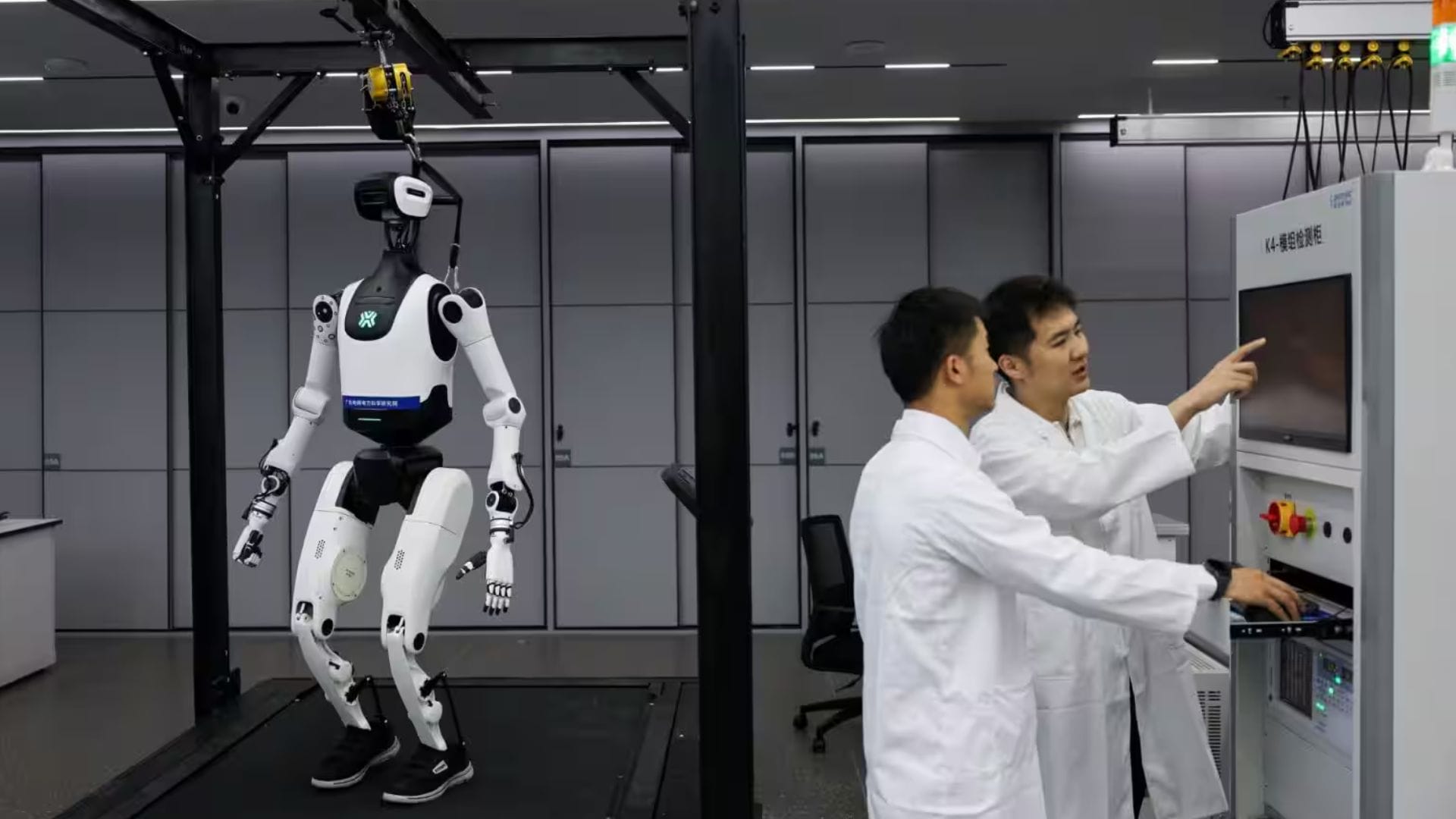
The US is tightening restrictions on foreign-made robots to strengthen domestic manufacturing and reduce reliance on overseas technology. The move places advanced robotic devices on the Federal Communications Commission’s (FCC) Covered List, a national security measure previously used to restrict equipment from Chinese technology companies.
The new policy affects a broad range of robotic products, including humanoid robots, quadrupeds, robot vacuums and robotic lawn mowers. Under the rules, new foreign-made models will generally need to be assembled in the US and meet strict domestic sourcing requirements before they can be sold in the country.
The changes are intended to encourage companies to develop a stronger US-based robotics industry. However, the policy is creating challenges for startups that depend on components manufactured abroad. While the government wants to increase domestic production, many of the parts required to build sophisticated robots are not yet readily available from US suppliers.
New rules set domestic sourcing requirements for robots
The FCC added “advanced robotic devices” to its Covered List last month. The list has become a key tool for restricting technologies considered to pose potential national security risks. Previous additions have included telecommunications equipment from companies such as Huawei and ZTE.
Under the new robotics rules, new models made outside the US cannot enter the American market unless they meet the required domestic manufacturing conditions. To qualify, products must be assembled domestically and source at least 65% of their component value from within the US. That requirement is scheduled to increase to 75% by 2029.
The policy does not explicitly name China or any other country. However, its introduction comes as US officials seek to reduce dependence on Chinese manufacturing across strategically important technology industries. Robotics is increasingly viewed as such an industry because robots rely on technologies including advanced sensors, batteries, motors, actuators and computer systems.
There are some exceptions. Robots that were already being sold in the US before the new restrictions took effect are not affected. Products imported solely for research and development purposes are also exempt for now, allowing companies and researchers to continue using foreign-made machines for development work without intending to sell them commercially.
Robotics startups warn that US-made parts are difficult to source
For many robotics startups, meeting the 65% domestic sourcing threshold is proving difficult. Companies developing robots often depend on specialised components from established international suppliers because comparable parts are either unavailable from US manufacturers or significantly more expensive.
The problem is particularly serious for smaller companies with limited budgets that need components quickly to build and test prototypes. Some founders have reportedly resorted to bringing parts from China in their luggage to avoid delays in development.
Michael Perry of Persona AI highlighted the difficulty of forcing companies to change their supply chains without providing enough support for domestic manufacturing. “You need to provide the carrot as well as the stick,” Perry said.
The new policy has nevertheless received support from some American robotics companies. Oregon-based Agility Robotics and San Francisco-based Nori Robotics have welcomed the restrictions, arguing that stronger barriers against cheaper foreign competition could eventually give US manufacturers more room to grow.
The disagreement reflects a wider challenge facing the American robotics sector. Restricting imports could help domestic manufacturers in the long term, but companies still need access to competitive suppliers in the short term. Building new factories and developing specialised manufacturing capabilities can take years, while robotics startups need parts immediately to continue developing their products.
China’s manufacturing lead makes the transition harder
China’s strong position in robotics manufacturing is one of the main reasons the US is struggling to replace foreign suppliers quickly. The country has spent decades developing its manufacturing infrastructure, supported by large-scale investment and a deep pool of engineering talent.
The growth of China’s electric vehicle industry has also helped create a large supply chain for components that are increasingly important to robotics. Batteries, motors, sensors and actuators can be used across both industries, giving Chinese manufacturers access to production capacity and suppliers that are difficult for newer US companies to replicate.
That existing industrial base has helped Chinese companies become major players in the global humanoid robotics market. Research firm Omdia estimated that Chinese-made humanoid robots accounted for nearly 90% of worldwide sales in 2025.
For US policymakers, the challenge is therefore not simply preventing foreign robots from entering the domestic market. The country must also develop the manufacturing ecosystem needed to build competitive alternatives at scale.
The new sourcing requirements could encourage investment in American component manufacturing if companies see sufficient demand to justify building new facilities. However, until that capacity develops, robotics companies may face higher costs, longer development times and difficulty obtaining specialised parts.
The policy ultimately represents a trade-off between protecting and developing a domestic robotics industry and maintaining access to an established global supply chain. Whether the US can close that gap will depend on how quickly American manufacturers can expand their ability to produce the components that modern robots require.