


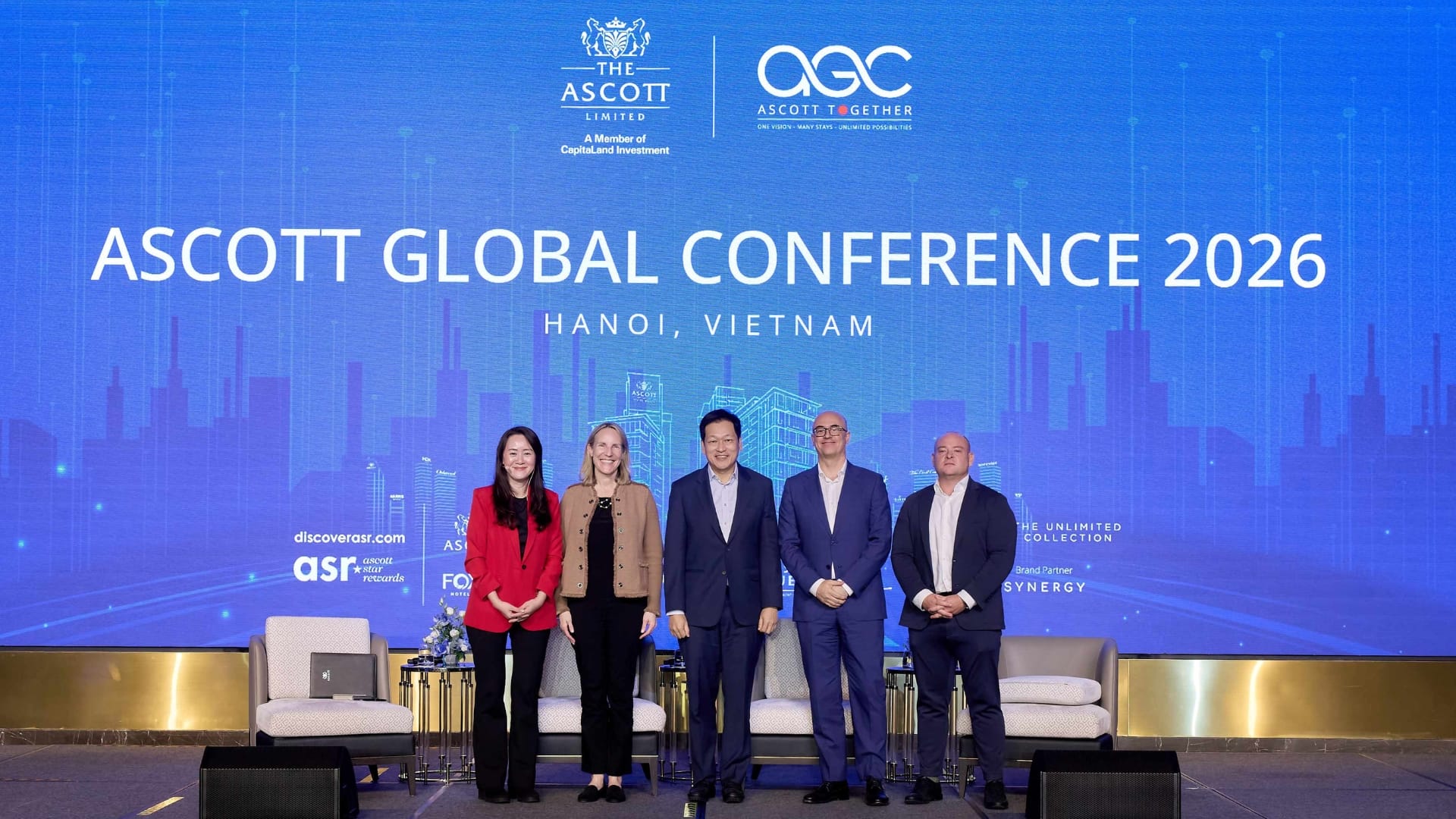
The Ascott Limited has outlined a multi-part strategy to prepare its business for agentic commerce, where AI systems increasingly mediate how travellers search, plan, and book accommodation. The initiative centres on building AI-ready infrastructure across its operations, supported by partnerships with Accenture, Amadeus, and EHL Hospitality Business School.
The company is positioning this shift as a structural change in how hospitality distribution and guest engagement will function. Rather than layering AI tools onto existing systems, Ascott is redesigning core workflows, data structures, and service delivery to operate in environments where decisions are made inside algorithms rather than traditional booking channels.
Building the architecture for agentic travel
Ascott’s collaboration with Accenture focuses on designing the underlying digital architecture needed to support AI-enabled travel interactions. This includes integrating its central reservation, property management, customer relationship management, and loyalty systems into a unified framework that allows seamless data exchange.
The company is testing capabilities such as large language model-driven applications, model context frameworks, and early-stage unified commerce concepts. These systems are intended to support machine-mediated interactions, where AI agents can search, compare, and transact without manual intervention or system workarounds.
A key part of this effort is the evolution of Cubby, Ascott’s digital concierge launched in 2023. The platform has already handled more than 900,000 guest enquiries, managing most routine interactions and contributing to booking activity. The next phase extends its role from conversational assistant to an agent capable of planning itineraries, comparing accommodation options, and completing bookings on behalf of users.
This transition introduces a different model of personalisation. Instead of responding to queries, the system is expected to anticipate needs and act on them within defined parameters.
Reshaping distribution for AI-driven discovery
Ascott’s partnership with Amadeus addresses a separate constraint in hospitality systems. Traditional reservation platforms are structured around fixed room types and pricing, which can limit how properties are presented and matched in AI-driven environments.
To address this, Ascott is implementing the Amadeus Central Reservations System. The system uses an API-first architecture and supports attribute-based inventory, allowing properties to be defined by a broader set of characteristics beyond standard room categories.
This approach changes how accommodation is surfaced in search and recommendation systems. Instead of matching users to predefined room types, AI agents can evaluate properties based on specific attributes and preferences, such as stay purpose, duration, or property features.
Operationally, the model also allows faster activation of promotions, more consistent rate logic, and reduced friction when introducing new offers. For a portfolio that spans serviced residences, hotels, resorts, and social living formats, the shift is intended to improve both internal efficiency and external discoverability.
Workforce development and operational alignment
Alongside its technology investments, Ascott is focusing on workforce readiness through its partnership with EHL Hospitality Business School. The programme is delivered through the Ascott Global Brand Academy and is designed to develop internal trainers who can support the rollout of new operating models across regions and property types.
The training focuses on equipping teams with the tools and frameworks needed to manage AI-supported operations while maintaining service standards. The objective is to concentrate staff effort on higher-value guest interactions, while routine processes are handled through automated systems.
The rollout begins with the Ascott brand and will extend to others within its portfolio, including Oakwood and Citadines.
Expanding AI capabilities across operations
Ascott’s broader AI strategy extends beyond guest-facing systems. The company has already deployed AI across marketing, revenue management, loyalty, and sales functions. This includes redesigning workflows such as pricing, lead-to-deal conversion, and content creation to integrate AI support.
At the same time, it is building a content ecosystem that improves how its properties are represented in AI-powered search and generative platforms. This involves strengthening guest interactions and digital advocacy, which feed into how properties are ranked and recommended.
The company is tracking outcomes including booking value, operational efficiency, time to market, and visibility within AI-driven environments. These metrics reflect a shift in how performance is measured, moving beyond traditional traffic and conversion indicators to include how effectively systems engage with machine intermediaries.