

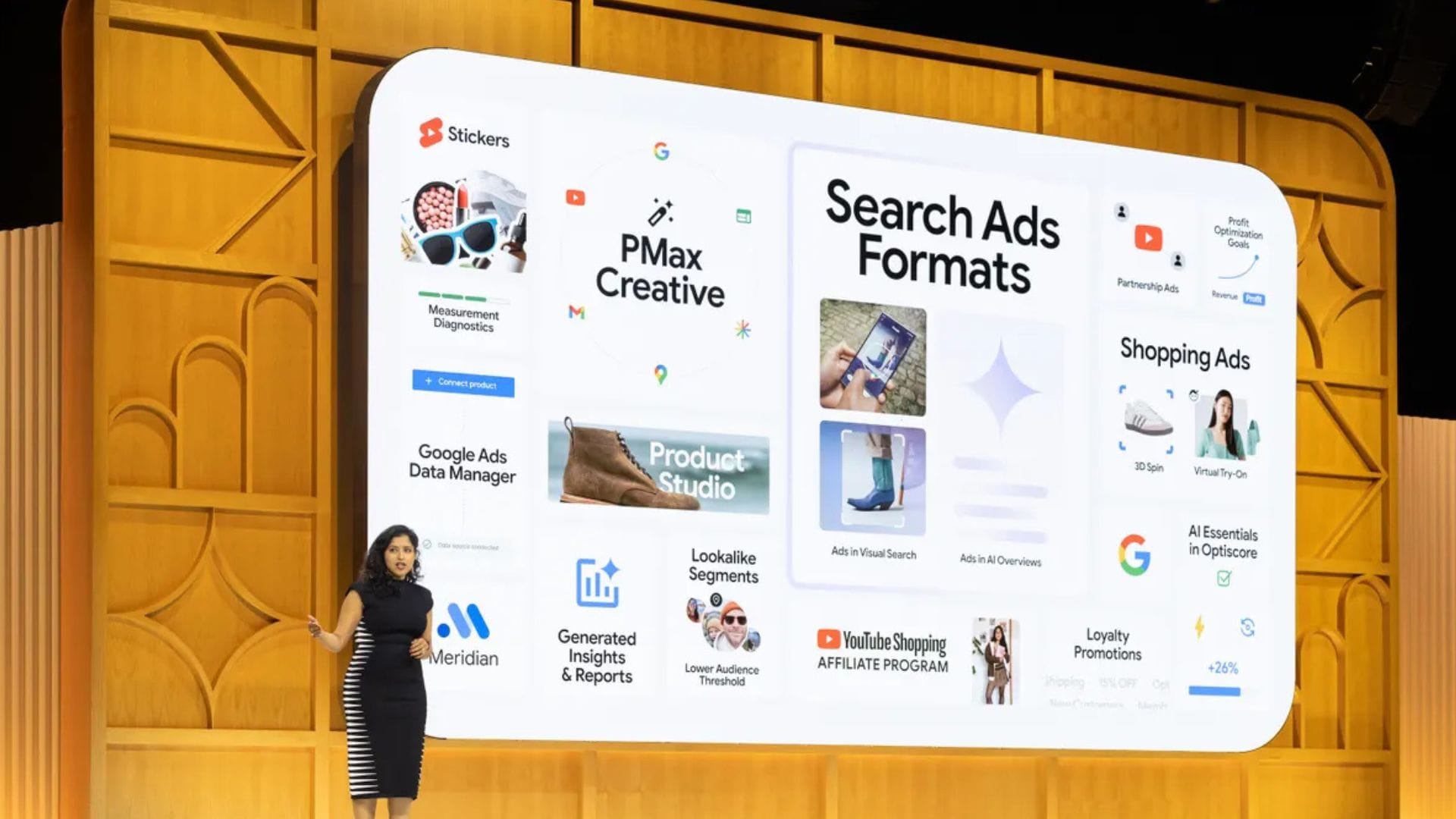
Google has unveiled a series of new advertising formats designed for its expanding AI-powered search experience, marking a significant step in the company’s efforts to blend conversational artificial intelligence with digital advertising. The announcements were made during the Google Marketing Live, where Google outlined how its Gemini AI model will increasingly shape the future of search and online shopping.
The new advertising tools will appear across Google Search and AI Mode, the company’s conversational search experience. Google said all AI-generated advertising placements will be clearly marked as “sponsored” to distinguish them from organic search responses.
The move reflects Google’s broader strategy to transform search from a traditional list of links into a more interactive and personalised experience powered by generative AI. As the company introduces these features, advertisers are offered new ways to engage users directly through AI-generated answers and recommendations.
Google expands conversational advertising in AI Mode
Among the newly announced formats are Conversational Discovery Ads, which are designed to appear directly within AI-generated responses in AI Mode. Google said these advertisements are intended to answer specific user questions conversationally, allowing brands to present products or services as part of an AI-generated explanation.
According to the company, “your ad answers a person’s specific question”. The advertisements are powered by what Google describes as an “independent AI explainer”, which generates responses based on the advertiser’s information and the user’s search query.
Another feature being tested is Highlighted Answers. This format inserts sponsored recommendations into AI-generated lists and suggestions. For example, if a user asks Google for the best language-learning apps, a sponsored recommendation for a service like Duolingo could appear alongside AI-generated results.
These additions are part of Google’s broader push to integrate advertising more naturally into conversational search experiences. Rather than relying solely on traditional search ads displayed above or beside search results, the company is aiming to place promotional content directly within AI-generated discussions and recommendations.
Google’s decision to label all AI-generated advertising as sponsored appears intended to address transparency concerns. As AI-generated search becomes more prominent, technology companies have faced increasing scrutiny over how paid content is presented to users and whether advertising can be clearly distinguished from editorial or algorithmic recommendations.
AI shopping and branded assistants arrive in search
Google also announced plans to introduce AI-Powered Shopping Ads into standard Google Search over the coming months. These advertisements are primarily aimed at larger consumer purchases, such as televisions, refrigerators, and espresso machines.
When users search for these items, Gemini AI will generate customised explanations that highlight specific sponsored products based on the user’s search intent. Google explained the system to advertisers by stating, “Gemini will pull up your most relevant products and instantly write a custom explainer highlighting why your product may be the right choice for them.”
The company believes the format could simplify product research by combining product listings, reviews and AI-generated summaries into a single search experience. At the same time, it gives advertisers more direct opportunities to influence purchasing decisions during the research stage.
Google also previewed a new advertising tool called Business Agent for Leads. This feature places an AI-powered chatbot, described by Google as a “smart brand agent”, directly within sponsored search results. The chatbot can answer questions on behalf of a company and interact with users in real time.
For instance, a student searching for information about universities may see a sponsored search result containing a “Chat” or “Ask a question” option. By selecting the feature, users can communicate directly with an AI assistant representing the institution or brand.
The introduction of chatbot-style advertising reflects the growing role of conversational AI in customer service and sales. Rather than directing users to external websites immediately, Google is aiming to keep interactions within its search environment while giving advertisers more engaging tools.
Personalised offers and integrated checkout expand further
In addition to conversational advertising, Google said it is expanding its Direct Offers feature to provide more personalised promotions and shopping incentives. Users may begin seeing AI-generated product bundles, targeted discounts, giveaways and local coupons within search results.
The company is also introducing a built-in checkout feature that lets users complete purchases without leaving Google Search. The feature is intended to reduce friction during online shopping by shortening the path between product discovery and payment.
Google said AI-generated travel deals will also become more visible in AI-assisted trip planning. As users search for destinations, hotels or travel itineraries, personalised offers and recommendations may appear alongside AI-generated travel guidance.
These developments highlight how Google is increasingly positioning search as an all-in-one platform for discovery, research, customer engagement and transactions. By combining AI-generated answers with personalised advertising and integrated shopping tools, the company aims to create a more seamless digital experience for users while expanding opportunities for advertisers.
The announcements also demonstrate how generative AI is reshaping the online advertising industry. Technology companies are racing to integrate AI into search, shopping and customer interactions, with major platforms seeking new revenue streams tied to conversational experiences.
Although Google has emphasised transparency through sponsored labels, the wider adoption of AI-driven advertising is likely to raise ongoing questions about user trust, data privacy, and the balance between helpful recommendations and commercial influence in AI-generated search results.