

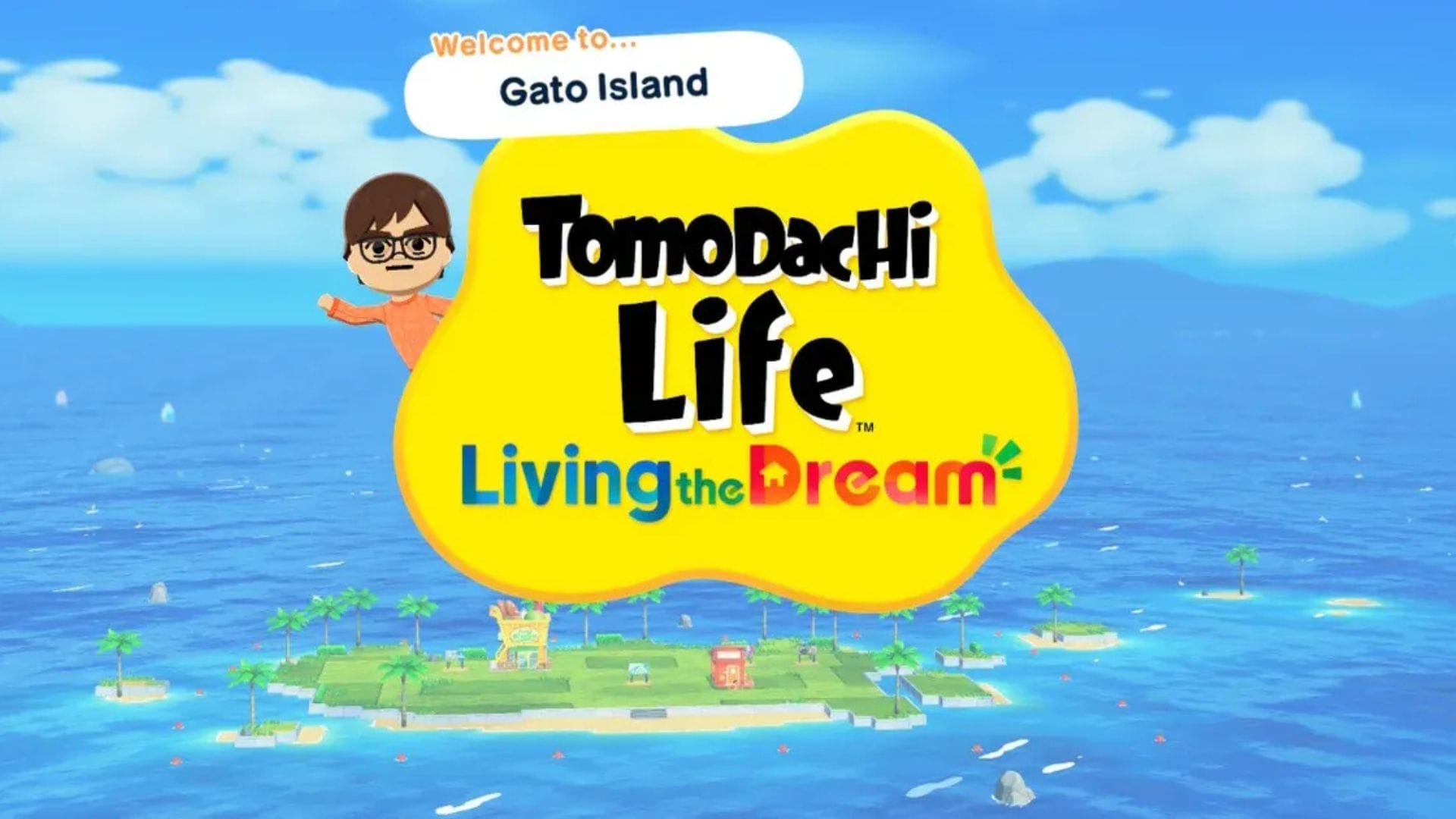
Nintendo has confirmed that Tomodachi Life: Living the Dream will not support the Nintendo Switch 2’s recently introduced handheld resolution boost feature, explaining that the game already runs at a higher resolution by default.
The clarification follows the release last month of a major system update for the Nintendo Switch 2, which introduced a new feature called Handheld Mode Boost. The feature was widely requested by players and is designed to improve the visual quality of existing Nintendo Switch titles when played in handheld mode.
Handheld Mode Boost works by running compatible Nintendo Switch games using their docked graphics settings rather than the lower-resolution handheld preset. This allows players to experience games at up to 1080p resolution on the handheld screen, instead of the standard 720p typically used in handheld mode on the original Nintendo Switch.
Nintendo explains the lack of compatibility with the handheld boost
In a recently published FAQ, Nintendo addressed players’ questions about whether Tomodachi Life: Living the Dream would support the new feature on the Nintendo Switch 2. The company stated that the game already runs at a higher resolution in handheld mode on the newer console, making the additional boost unnecessary.
“When playing Tomodachi Life: Living the Dream in handheld mode on the Nintendo Switch 2, you can play at a higher resolution (1080p) than using handheld mode on Nintendo Switch, regardless of whether Handheld Mode Boost is enabled or disabled,” Nintendo said.
“For that reason, this game does not support Handheld Mode Boost.”
The explanation indicates that the game’s visual performance on the Nintendo Switch 2 is already optimised to use higher-resolution settings without relying on the new feature. As a result, enabling Handheld Mode Boost would not provide any additional graphical benefit to players using newer hardware.
Nintendo also provided details about how the feature behaves with the game’s demo version, which is currently available to players. The company noted that Handheld Mode Boost can be enabled during the Tomodachi Life: Living the Dream – Welcome Version demo, though doing so introduces certain limitations.
Demo behaviour and touchscreen limitations
According to Nintendo, players who enable Handheld Mode Boost during the demo will not be able to use the touchscreen. This restriction affects gameplay options that rely on touch input, which remains an important part of the Tomodachi Life experience.
“We recommend playing the demo version with Handheld Mode Boost disabled, as you will still be able to play at the higher resolution and use the touch screen,” Nintendo added. “After the next system update, Handheld Mode Boost will no longer be applied to the demo version.”
The company’s guidance suggests that turning off the feature provides the best overall experience for demo players, as it preserves touchscreen functionality while maintaining the improved resolution available on the Nintendo Switch 2 hardware.
The announcement highlights how certain newer titles may be built to take advantage of the enhanced capabilities of updated hardware without needing additional compatibility features. While Handheld Mode Boost remains beneficial for many older Nintendo Switch games, titles designed for the Nintendo Switch 2 may already deliver improved visuals by default.
Launch details and Switch 2 compatibility
Tomodachi Life: Living the Dream is scheduled to launch on both the Nintendo Switch and Nintendo Switch 2 on 16 April 2026. The release marks one of the first major titles arriving after the introduction of the handheld resolution boost feature.
At present, there is no indication that the game will receive a separate upgraded edition specifically for the Nintendo Switch 2. Instead, it appears that the same version of the game will run on both consoles, with the newer hardware automatically delivering enhanced visual output where supported.
This approach reflects a broader trend in cross-generation releases, where developers aim to maintain compatibility across multiple devices while still taking advantage of improved hardware performance. In this case, players using the Nintendo Switch 2 are expected to experience sharper visuals in handheld mode without requiring any additional settings or upgrades.
Nintendo’s clarification also underscores the importance of understanding how new hardware features interact with individual games. While Handheld Mode Boost has been widely welcomed as a way to improve older titles, its absence in specific cases does not necessarily indicate reduced performance. Instead, as demonstrated with Tomodachi Life: Living the Dream, some games may already achieve the desired visual results without relying on the optional feature.
With the launch date approaching, players interested in the life-simulation title can expect full compatibility with both consoles, along with improved handheld visuals on the Nintendo Switch 2, even without enabling the new resolution boost function.