

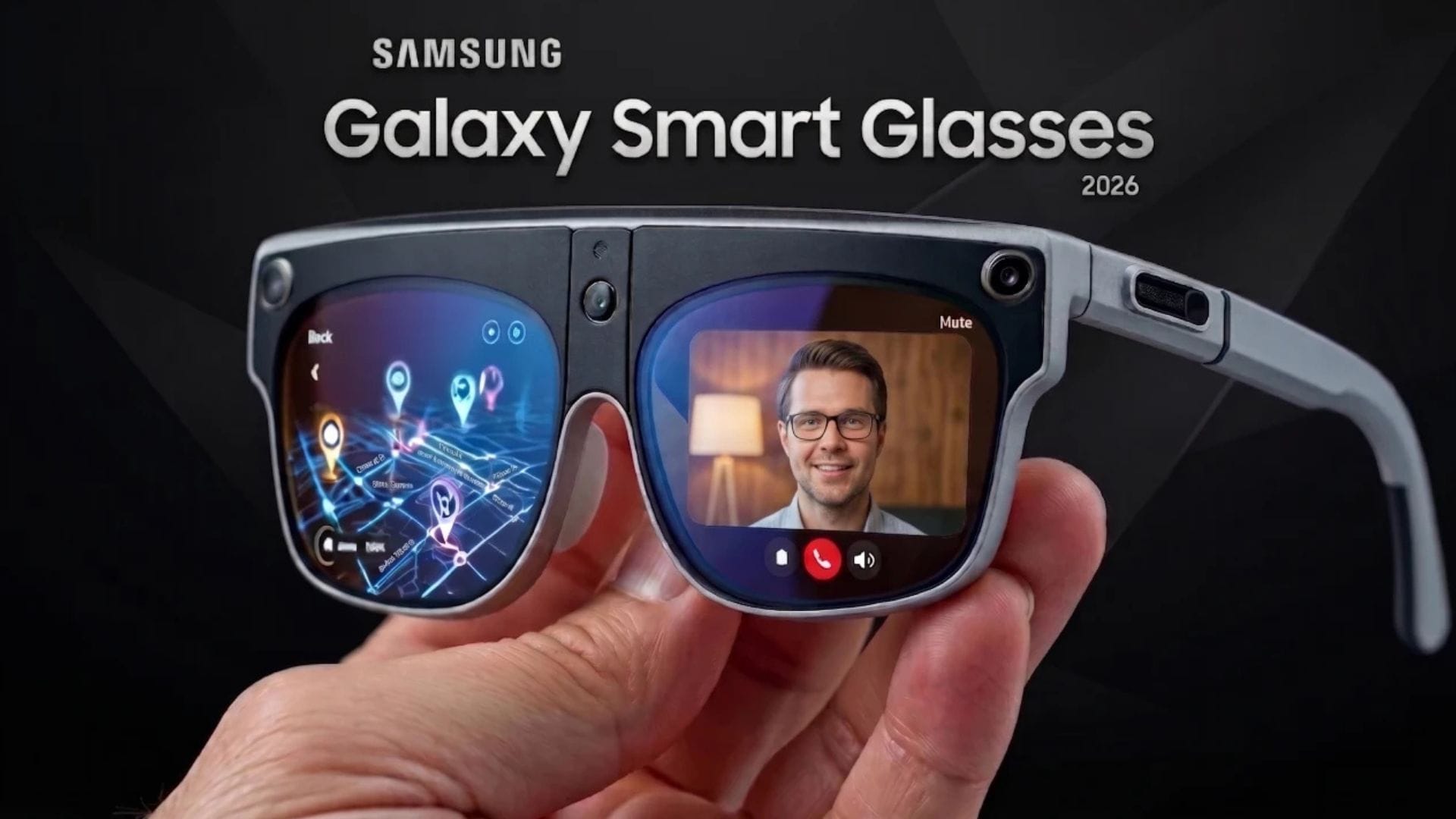
Samsung’s long-rumoured entry into the smart glasses market appears to be moving closer to reality, with new images and technical details surfacing online. The leak, first reported by Android Headlines, provides what are believed to be the first visual references to Samsung’s wearable device, offering an early look at the company’s ambitions in augmented and connected eyewear.
The images suggest that Samsung’s first smart glasses are being developed under the codename Jinju. The device is expected to carry a retail price between US$380 and US$500, placing it in the same general pricing range as competing smart eyewear. Although the company has not confirmed any details, the appearance of images and specifications indicates that development has reached an advanced stage.
According to the report, Samsung’s initial smart glasses will share features with existing devices, such as Meta’s Ray-Ban smart glasses, and with future products from Google. The Jinju model is said to operate on the Android XR platform, a system designed specifically for extended reality wearables. Integration with Google’s Gemini artificial intelligence assistant is also expected to play a central role, allowing users to access conversational AI features directly through the glasses.
First-generation model focuses on core features
The leaked information indicates that Samsung’s first-generation smart glasses may prioritise core functionality rather than advanced visual displays. Reports suggest that the Jinju model will not include a built-in visual display, a design choice that could help reduce complexity, weight and cost during the initial rollout. Instead, the device is expected to focus on camera-based features, audio output and AI-powered assistance.
Among the reported hardware specifications is a 12-megapixel camera, which could allow users to capture photos and video directly from their point of view. The glasses are also said to feature directional speakers that use bone-conduction technology, enabling audio to be transmitted through vibrations along the wearer’s skull. This approach allows sound to be heard without blocking the ears, maintaining environmental awareness.
Processing duties are expected to be handled by Qualcomm’s Snapdragon AR1 chip, a processor designed specifically for augmented reality applications. While these specifications provide an early glimpse into the device’s capabilities, industry observers note that such details often change during final development stages. As with many consumer electronics products, final hardware configurations may differ from early leaks.
Pricing is another area that could shift before launch. Although current estimates place the Jinju model between US$380 and US$500, broader economic factors may influence the final retail price. Rising costs associated with memory components and storage technology have already affected pricing across the consumer electronics industry, and smart glasses may not be immune to these pressures.
Second-generation device may introduce micro-LED display
In addition to the first-generation Jinju model, reports suggest that Samsung is already developing a more advanced version under the codename Haean. Unlike the initial release, this second-generation device is expected to include a micro-LED display, bringing visual functionality closer to full augmented reality experiences.
The addition of a micro-LED display would allow information to be projected directly into the user’s field of view. This capability could enable navigation prompts, notifications and contextual data overlays, similar to the features anticipated in other emerging augmented reality eyewear products. The Haean model is currently projected to cost between US$600 and US$900, reflecting the increased complexity of display hardware.
Industry analysts view this two-stage development strategy as a practical approach to entering a competitive market. By launching a simpler, first-generation product, Samsung could gauge consumer interest and gather user feedback before committing to more advanced, expensive hardware. This method also allows manufacturers to refine software ecosystems and improve user experience before introducing more ambitious features.
While no official release date has been announced, speculation suggests that Samsung could reveal initial details during its major Unpacked event scheduled for July. The company frequently uses this annual event to introduce new flagship devices and preview upcoming technologies. However, it is considered unlikely that the smart glasses will launch alongside established product lines such as foldable smartphones or smartwatches.
Possible reveal strategy mirrors previous XR launch
Observers believe Samsung may adopt a staggered announcement strategy similar to its past approach to extended reality hardware. Last year, the company previewed its Galaxy XR virtual reality headset ahead of its eventual release, generating interest without committing to an immediate market launch. A comparable teaser strategy could be used for the Jinju glasses.
Such a preview would allow Samsung to showcase design concepts, highlight key features and gauge public reaction. Early demonstrations also allow developers to begin building compatible applications, an important step toward establishing a functional ecosystem around new wearable devices.
The emergence of these leaked images highlights the growing competition in the smart eyewear segment. Technology companies are increasingly exploring wearable devices that combine artificial intelligence, cameras and lightweight audio systems. The emphasis on AI integration, particularly through assistants such as Google’s Gemini, reflects the broader industry shift towards conversational interfaces and contextual computing.
Despite the growing momentum, the success of smart glasses will depend heavily on practical usability, battery life and consumer comfort. Early-generation devices often struggle to balance performance and portability, and manufacturers must address privacy concerns associated with built-in cameras. Samsung’s entry into the category is therefore likely to be closely monitored by both consumers and industry analysts.
If the reported timeline proves accurate, Samsung could begin teasing its first smart glasses later this year, with a full launch expected before the end of the year. The subsequent Haean model, featuring a built-in display, is reportedly targeted for release in 2027, signalling the company’s longer-term ambitions in augmented reality hardware.